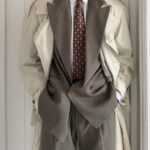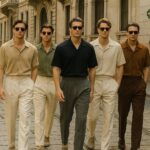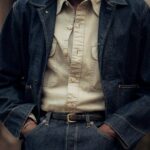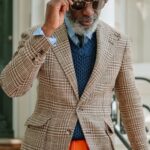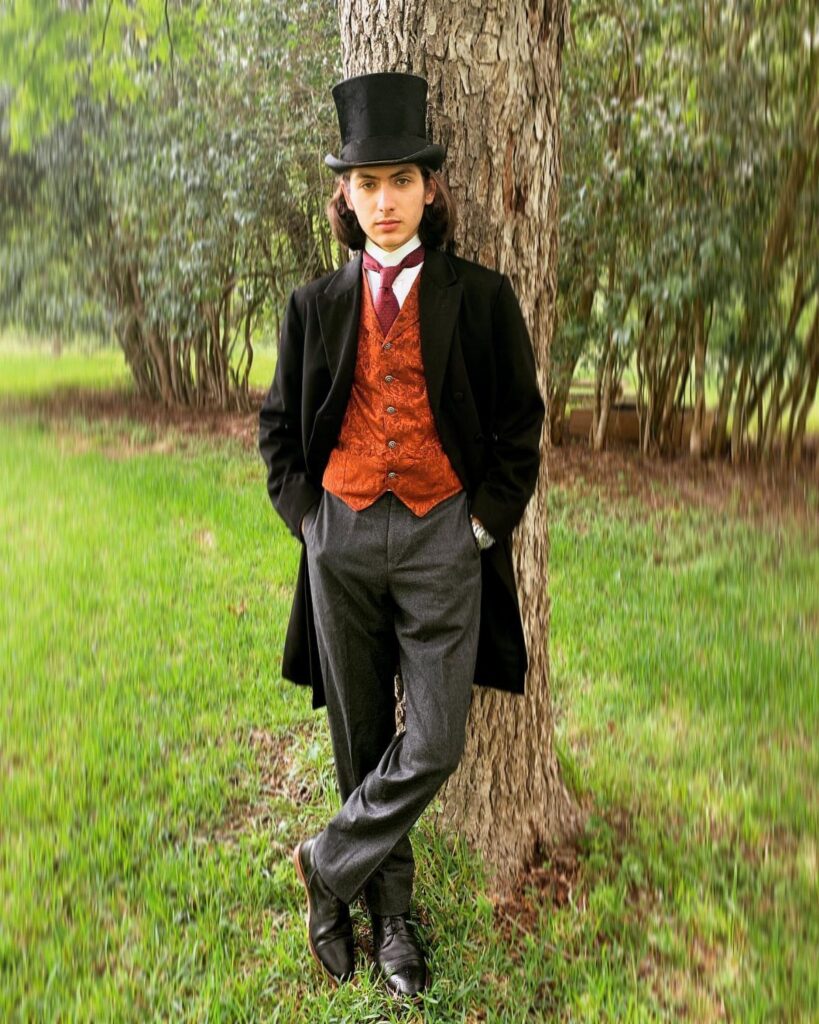
The list runs from plain shirts and trousers to a velvet-trimmed smoking jacket that never leaves the house, so how much effort you put in is mostly your choice.
Where you will be wearing it decides which piece is yours: the country calls for a belted Norfolk jacket in tweed, the office for a three-piece lounge suit, and a night out for a good coat.
Match the garment to the occasion first, then fit it closely, because narrow cuts and higher necklines are what make the 1880s look right.
1. Shirts
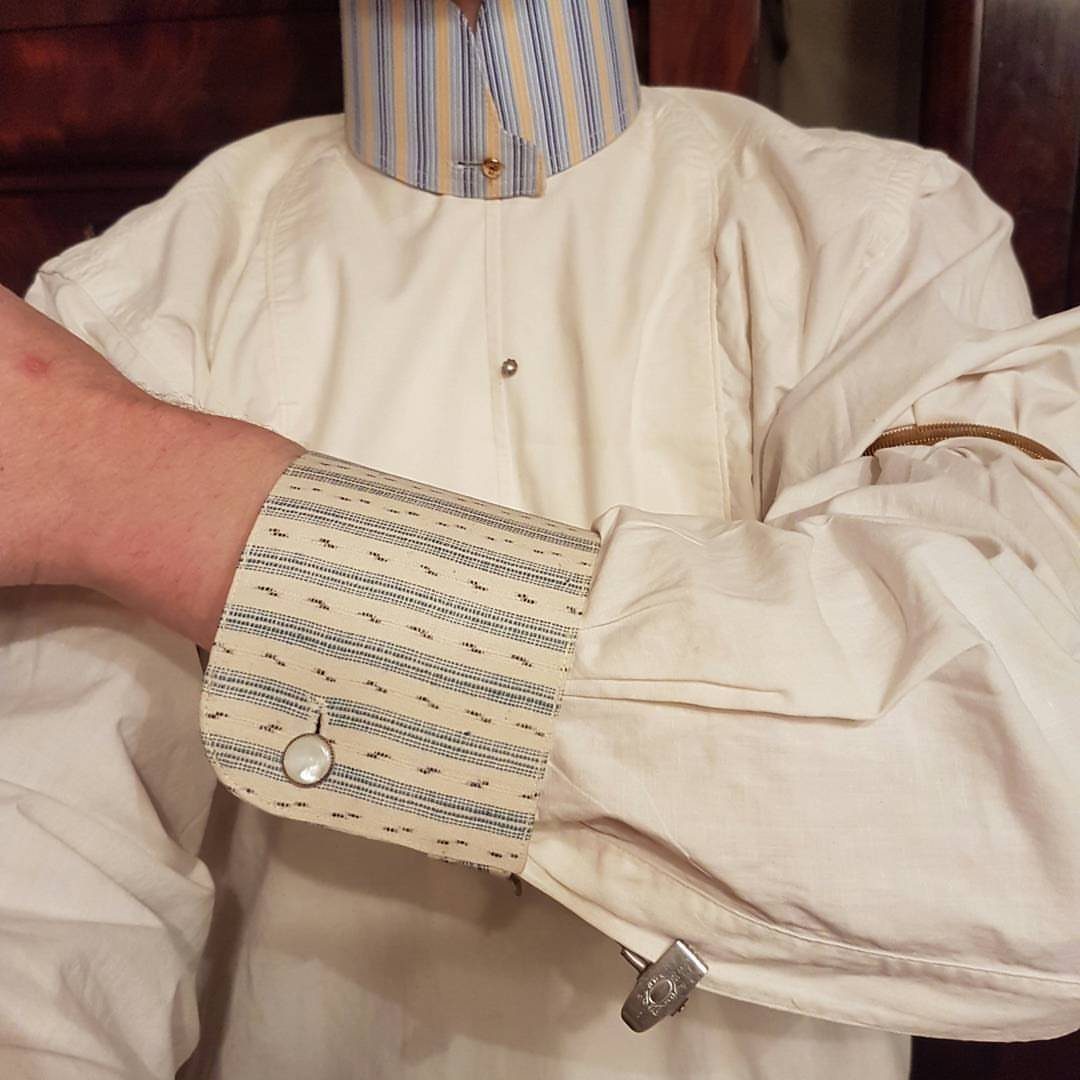
A high striped collar on a plain cream body is the detail that dates this shirt to the 1880s. Because the collar is detachable, it can be swapped while the shirt stays put.
Cotton and linen were both common, and I’d pick cotton for a first reproduction because it is easier to find and to care for.
Keep the cuffs patterned and fastened with cufflinks, and add sleeve garters if the sleeves run long.
Linen is the option for anyone who wants a more authentic cloth, at the price of more wrinkling.
2. Coats
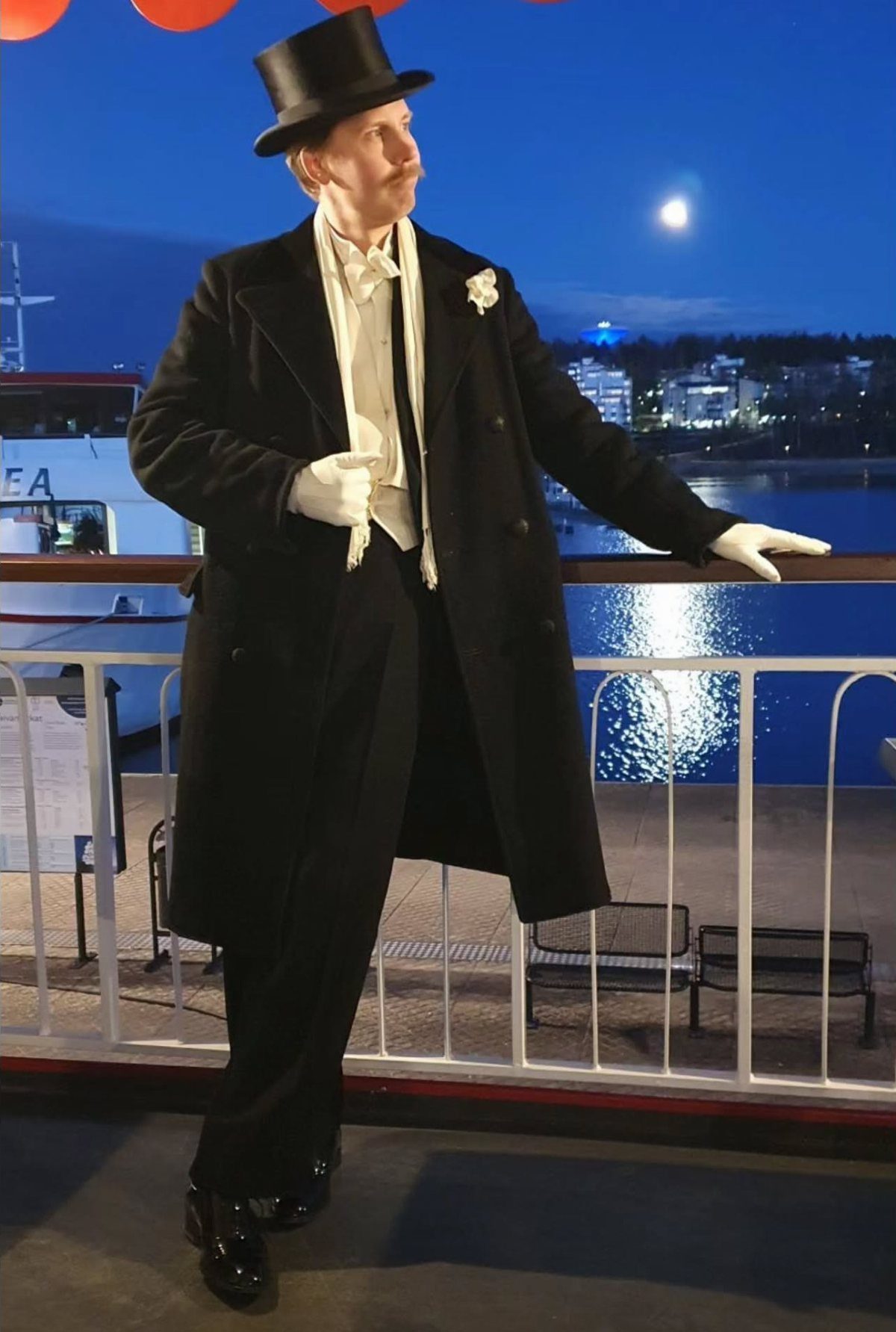
Black dominates the formal overcoat, and a long cut gives it the right silhouette for evening. Paired with a top hat, white scarf and white gloves, it reads as complete eveningwear.
Coats came in various styles in this decade, so the choice depends on the occasion. For a night out, I’d pick the long black version and keep the pieces beneath it plain.
The white scarf and gloves do the contrast work, so skip extra color elsewhere. Anything busier fights the coat’s clean line.
3. Trousers
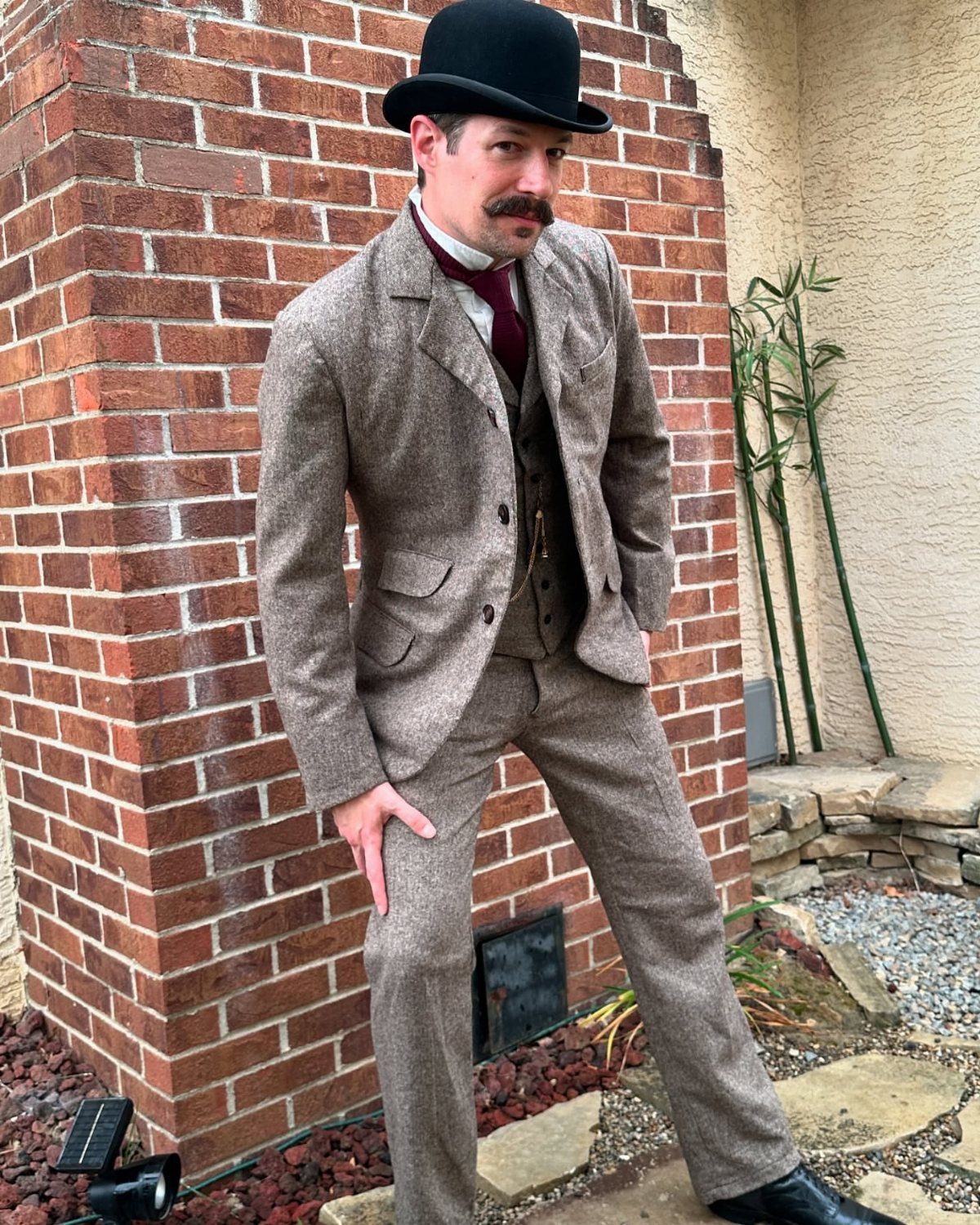
Narrow, closely fitted legs set 1880s trousers apart from the fuller cuts that came later. Cut from the same brown tweed as the waistcoat and jacket, they make a three-piece suit look unified.
If you are building this look, fit matters more than fabric.
A slim leg should follow the line of the thigh and calf without pulling, so I’d have a tailor take in a pair of off-the-rack trousers rather than accept a loose one.
4. Accessories
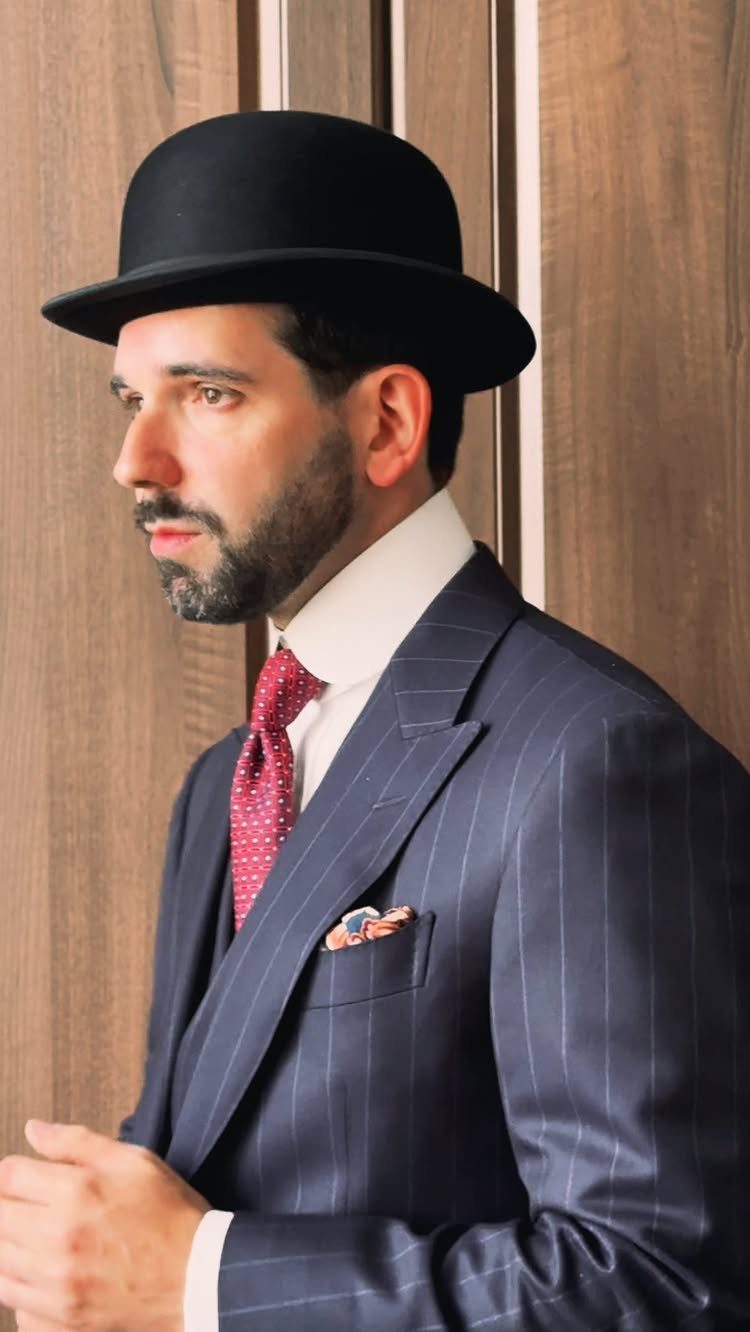
Small additions carry the period.
Add the pocket square in a quieter tone.
Accessories are the cheapest way into the look, and they let you wear a modern suit with a period feel. Layering too many at once is the main way it goes wrong.
5. Smoking Jackets
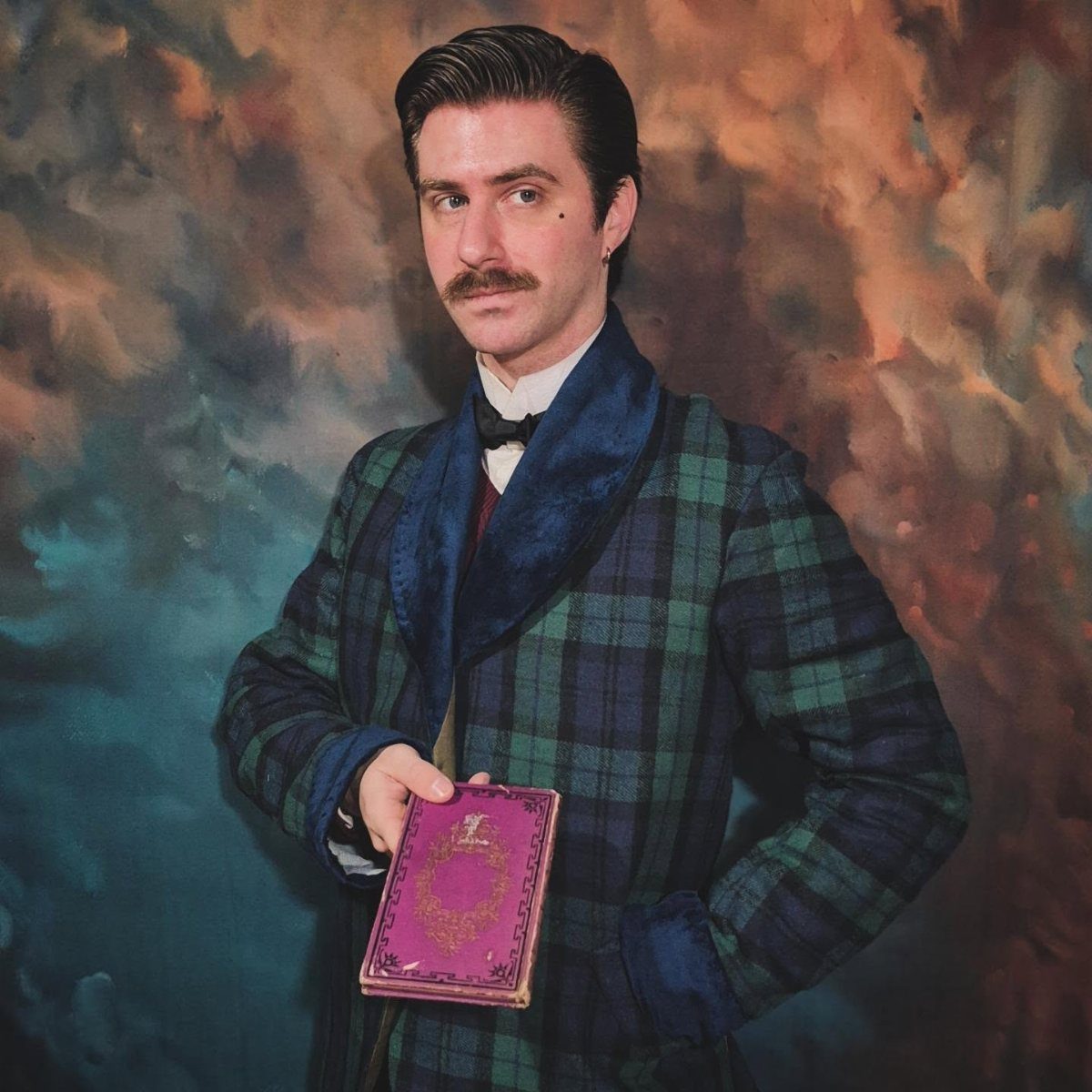
A smoking jacket was made for leisure at home, which is why it can be bolder than anything worn outdoors.
Look for a shawl collar in contrasting velvet, since that single detail marks the garment. A bowtie underneath keeps it dressed up.
It is not a street piece. Wear it indoors, with a book in hand, and let it be the most relaxed formal thing you own.
6. Norfolk Jackets
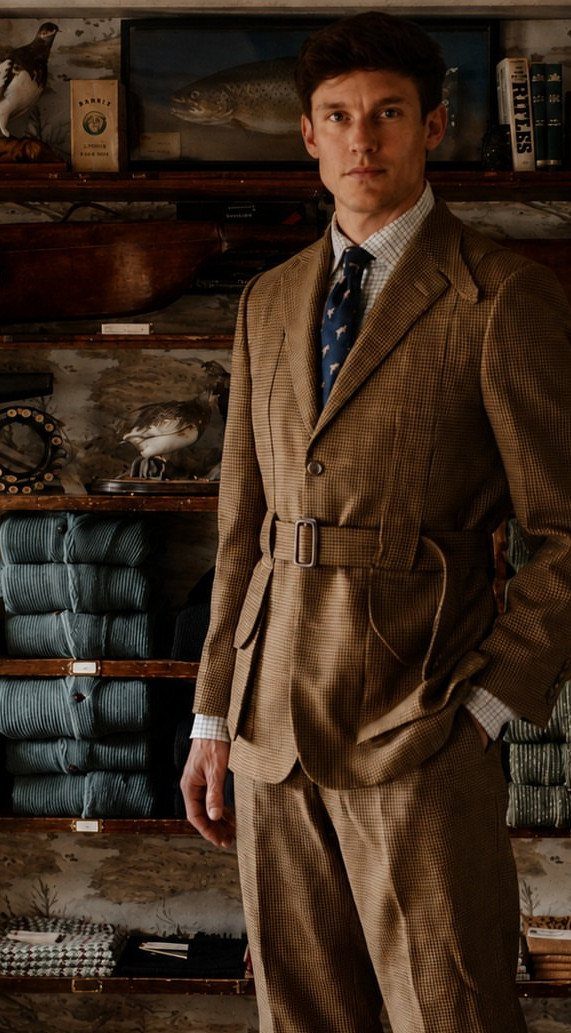
In the 1880s, a belted Norfolk jacket, usually cut from tweed, was the standard choice for country wear. The belt gives a defined waist and the cloth handles rougher settings than a town suit.
Wear the belt snug but not tight.
Matching trousers make a Norfolk suit, which is the version I’d pick for the full period effect. Wearing the jacket alone also works for a lighter commitment.
7. Three-Piece Lounge Suits
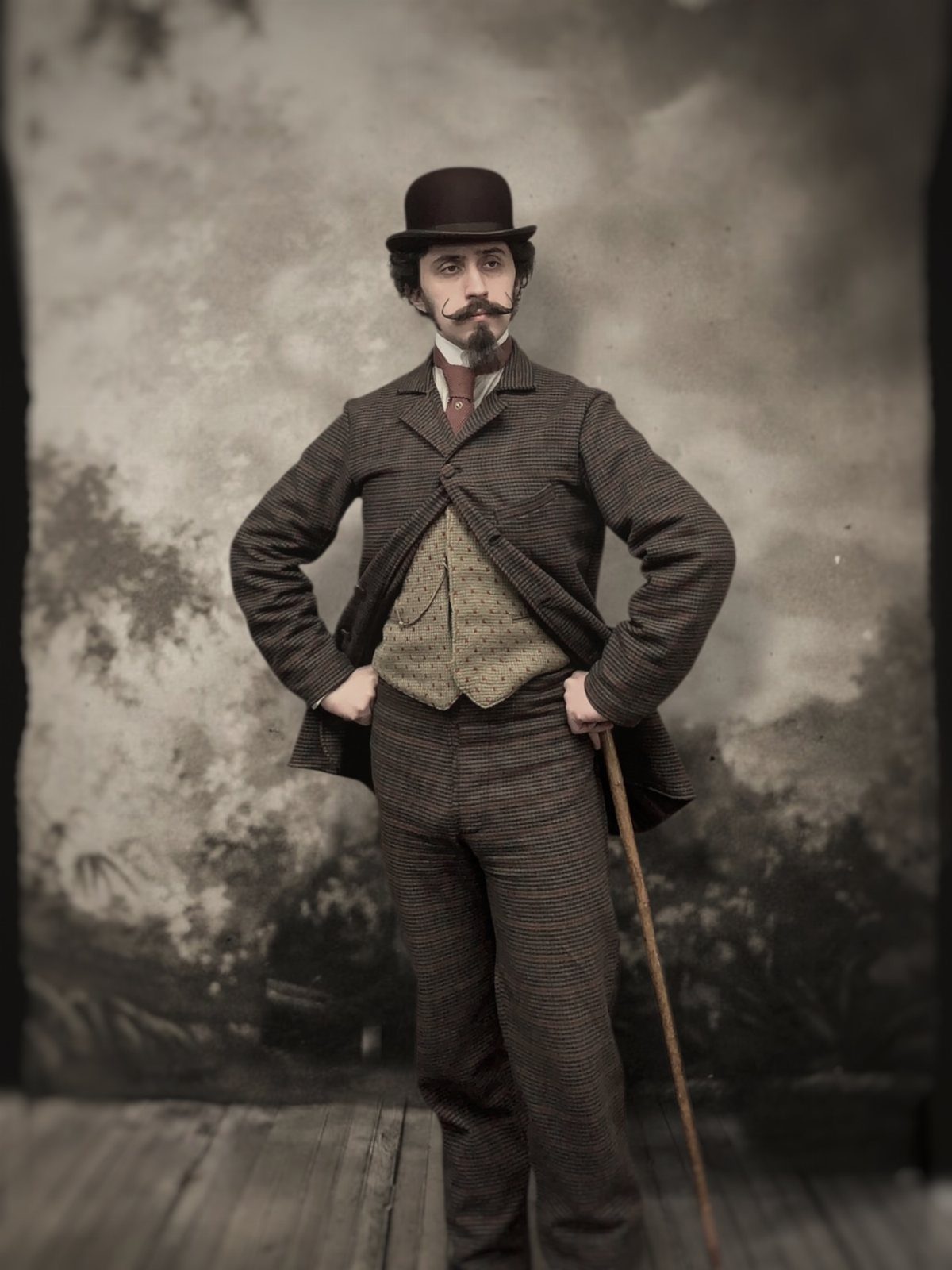
A patterned suit with a bowler hat and a cane is the whole outfit in 3 words. Jacket, waistcoat and trousers are cut to read as one set, and the pattern ties them together.
For a first attempt, I’d keep the pattern in one cloth across all three pieces. Mixed fabrics look like separate garments, and the unity is what makes it a suit.
Add the bowler and the walking stick last. They finish the look, but they shouldn’t compete with a busy cloth, so keep the accessories plain.
Historical Context of Fashion
The 1880s belong to the clerk.
By the 1880s, clerks, bookkeepers and junior managers earned enough to care how they looked, and off-the-rack clothing had grown to meet them, so a man could buy a current style without waiting on a tailor.
That explains the decade’s practical streak. The three-piece sack suit became standard business dress, which is why I’d start a modern version there: one sensible suit that does a day’s work.
Fashion Evolution
Little in the decade started from scratch. The 1870s handed over a slim, tailored, athletic silhouette, and the 1880s kept it, adding higher necklines.
For a modern wearer, that means buttoning high and cutting close. Look for a sack coat or cutaway with a higher neckline, narrower trousers, and a four-in-hand tie or flat scarf at the collar.
Headwear follows the occasion.
A bowler, which Americans usually call a derby, suits business; a silk top hat with a tailcoat suits formal evenings. I’d never mix the two.
The dress coat was gradually replaced by the frock coat that was in turn edged out by the more fashionable jacket after 1870. Thus the development of the men’s suit, as it is ultimately still worn today, was complete.
Class Distinctions in Fashion
Clothes announced your class. Office men settled on the three-piece sack suit, while laborers bought for toughness and ease of movement before anything else.
You can borrow from both.
Take the clerk’s tidy suit for work, and the laborer’s logic of sturdy cloth and plain construction for everything else. Skip decoration on a hard-wearing piece; it adds nothing there.
Frequently Asked Questions
What did lower class men wear in the 1800s?
In the 1880s, lower class men wore practical, durable clothing built for work rather than fashion.
Working men wore plain work shirts, tough trousers, vests in heavy twill or denim, boxy sack coats, and soft caps. Many owned just one work outfit and patched it again and again.
What were the main styles of men’s coats in the 1880s?
The main day coats were the cutaway, the frock and the sack. For the country, men turned to the belted Norfolk jacket, and in bad weather they reached for an overcoat such as the Chesterfield, the Inverness, or the Ulster.
What types of trousers were worn in the 1880s?
Trousers were narrow and closely fitted, mostly in dark colors, sometimes with subtle plaids, stripes or checks. Light gray or fawn also appeared.
What was typical evening wear for men in the 1880s?
Evening dress meant a black tailcoat, a matching waistcoat, and dark trousers cut narrow through the leg. A white dress shirt and white silk bow tie went with it, and a silk top hat finished the look.
A long black overcoat with a white scarf and white gloves worked for the trip out. Late in the decade the dinner jacket, later called the tuxedo in the US, began to challenge the tailcoat.