The first 3 ideas run from wide leg pants, the loosest and easiest to wear, through bell bottoms, to silk shirts, the dressiest of the group and the one that needs steaming.
Match the piece to the day: wide leg pants or bell bottoms for an ordinary afternoon, a silk shirt when the plan is a date or an event.
Dark blue bell bottoms sit in the middle, and the flare over a boot shaft is what makes them read as retro rather than costume.
1. Wide Leg Pants
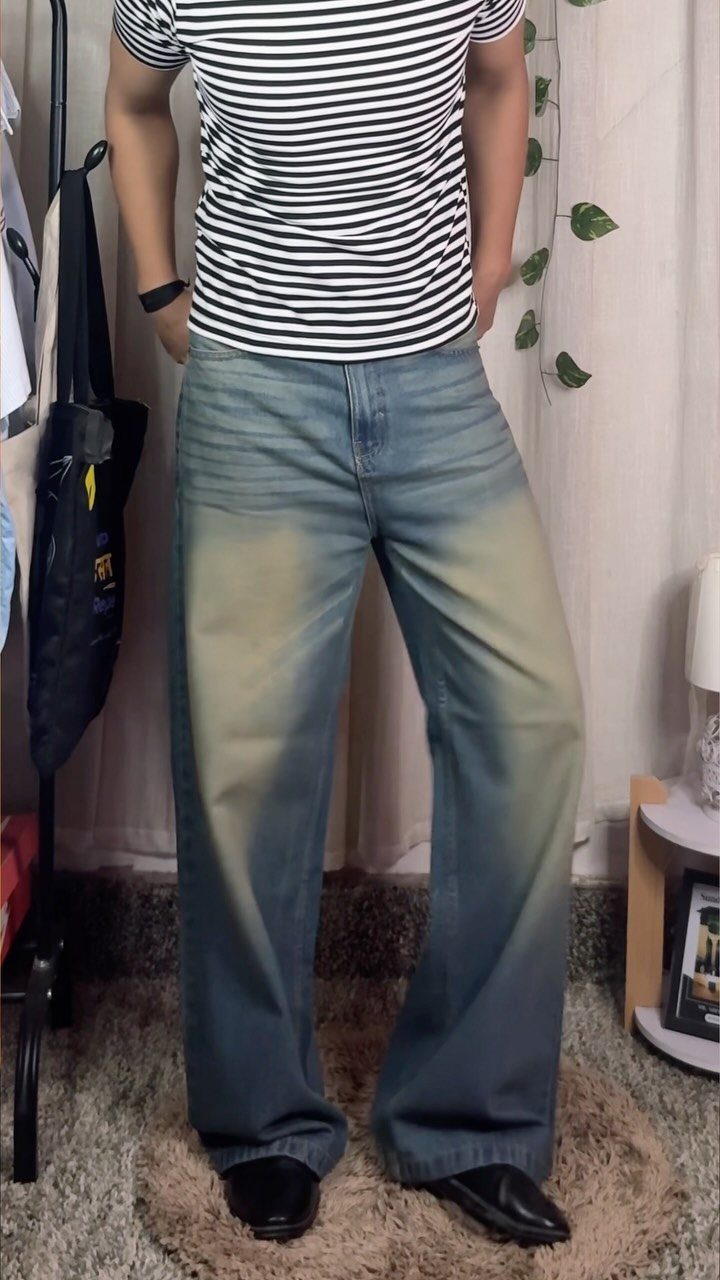
Baggy, faded light-wash denim is the easiest way to wear a retro cut without looking like a costume. A wide leg gives you volume below the knee, so keep the top half plain: a striped tee is enough.
Choose a hem that lands near the top of your shoes, and avoid a pile of fabric at the ankle. Black dress shoes sharpen wide leg jeans and make them read as a decision rather than an accident.
Thrift stores are the cheapest place to look, since older denim often already has the wash and the width.
2. Bell Bottoms
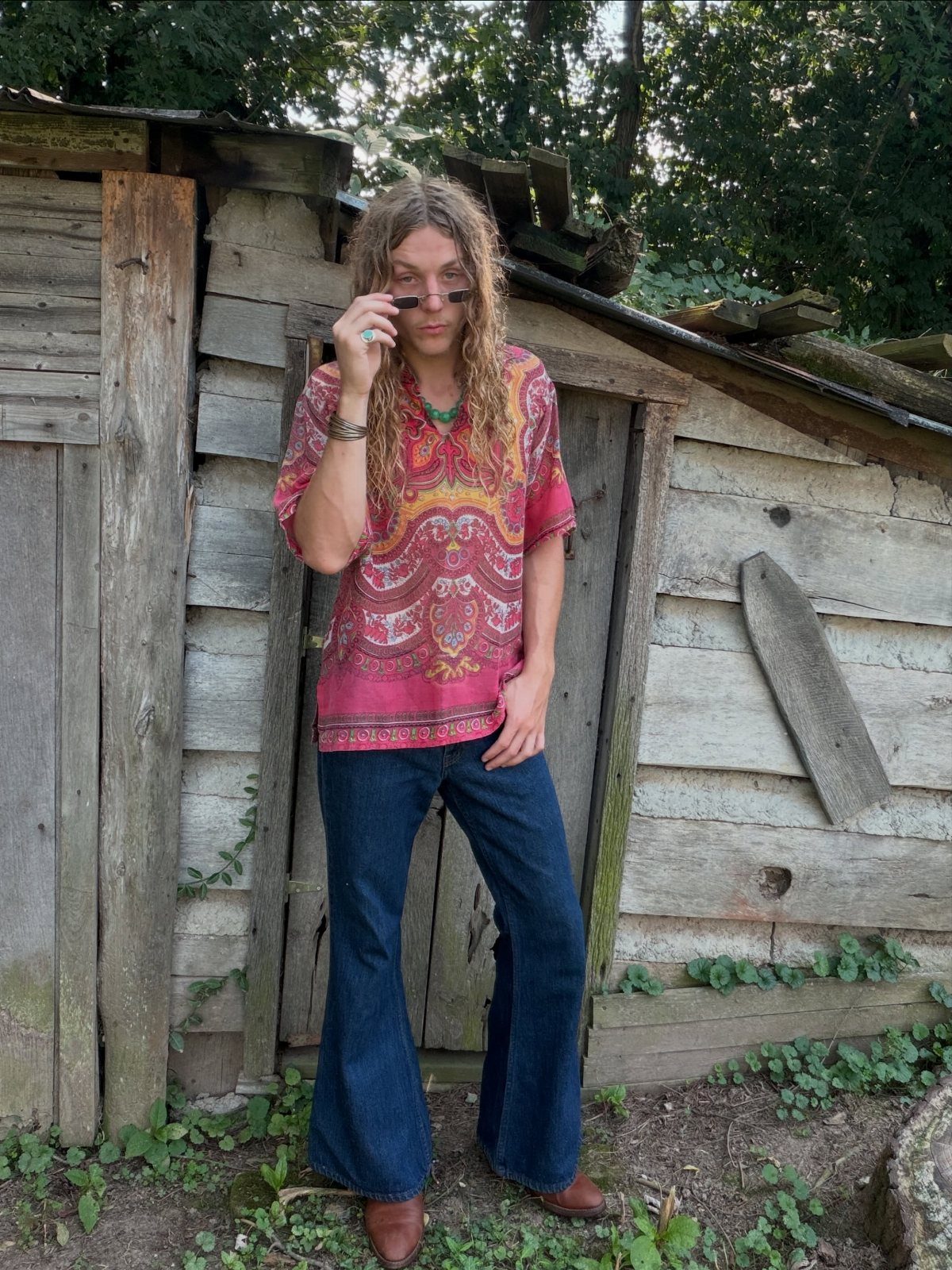
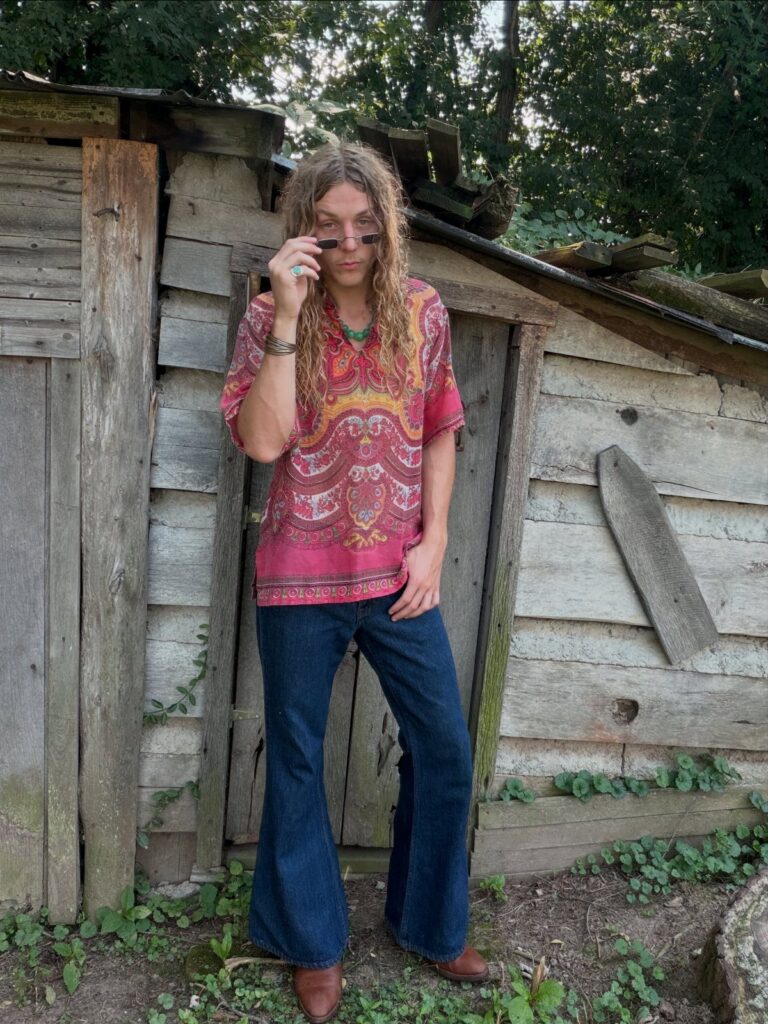
Dark blue bell bottoms fit a limited budget well because one pair carries the whole retro mood. The flare starts at the knee and opens toward the hem, so everything else can stay simple.
A patterned tunic works, but a plain tee does the job too. Boots are my pick for shoes: the flare sits over the boot shaft and keeps the leg line clean.
Go dark in wash.
It looks more grown-up than light denim and is easier to wear at 18 or at 44. Tailor the hem so it skims the ground without dragging.
3. Silk Shirts
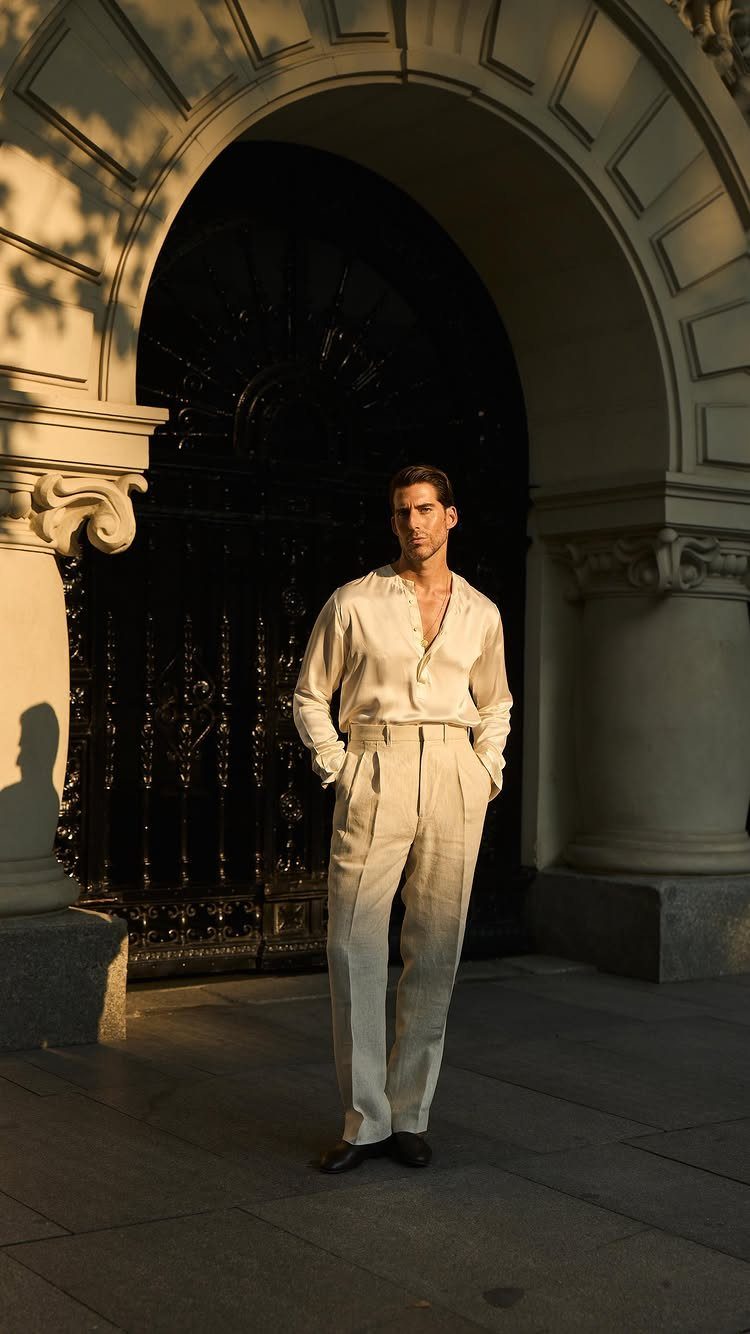
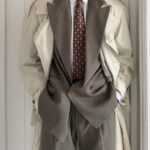
A cream silk shirt is the dressiest piece of the bunch, and it earns that with one fabric. Pair it with matching pleated trousers in a similar tone and everything reads as one long, quiet line.
Silk shows every wrinkle and every damp patch, so check the care label before buying and expect to steam it. Secondhand shops are where I would hunt on a budget.
Wear the top buttons open and keep shoes dark and simple. For a date or an event, this is the one I would choose.
Incorporating Vintage Into Modern Style
Vintage inspired style means borrowing from fashion that is 20 to 100 years old and building the outfit mostly, or entirely, from modern pieces. That makes it easier than it sounds, because you are taking an influence, not a full period costume.
Pick one vintage detail per outfit and let everything else stay current. A single old jacket over a plain modern tee and trousers reads as taste; a vintage piece from head to toe reads as a costume.
Accessories bridge the gap between eras. A watch with a vintage case, a leather belt with a plain brass buckle, or sunglasses in an older frame shape will tie a modern outfit to the past with very little risk.
Finding Vintage Clothing
Most dealers use "vintage" for clothing that is at least 20 years old and no more than about 100. It can be a quality label, a handmade piece, or deadstock, which is old clothing that was never worn.
Start with thrift stores, since they cost the least and turn over stock often. Online shops and antique shops are worth checking too; they tend to sort pieces by era, which saves time.
Before you buy, check the seams, the underarms and the lining, and try the piece on. Old sizing runs differently from modern sizing, so go by how it fits, not by the number on the tag.
Understanding Vintage Vs. Retro
Vintage is the original piece, made in its own era. Retro is new clothing designed to imitate an older style.
Each has a place. Retro is easier to size, easier to find and usually in better condition; vintage is more unusual and often better made.
Unique Vintage and Collectif are two well-known retro brands, and their specialties sit between the 1920s and the 1970s.
If you want the look without the hunt, I would start there, then add one true vintage piece when you find it.