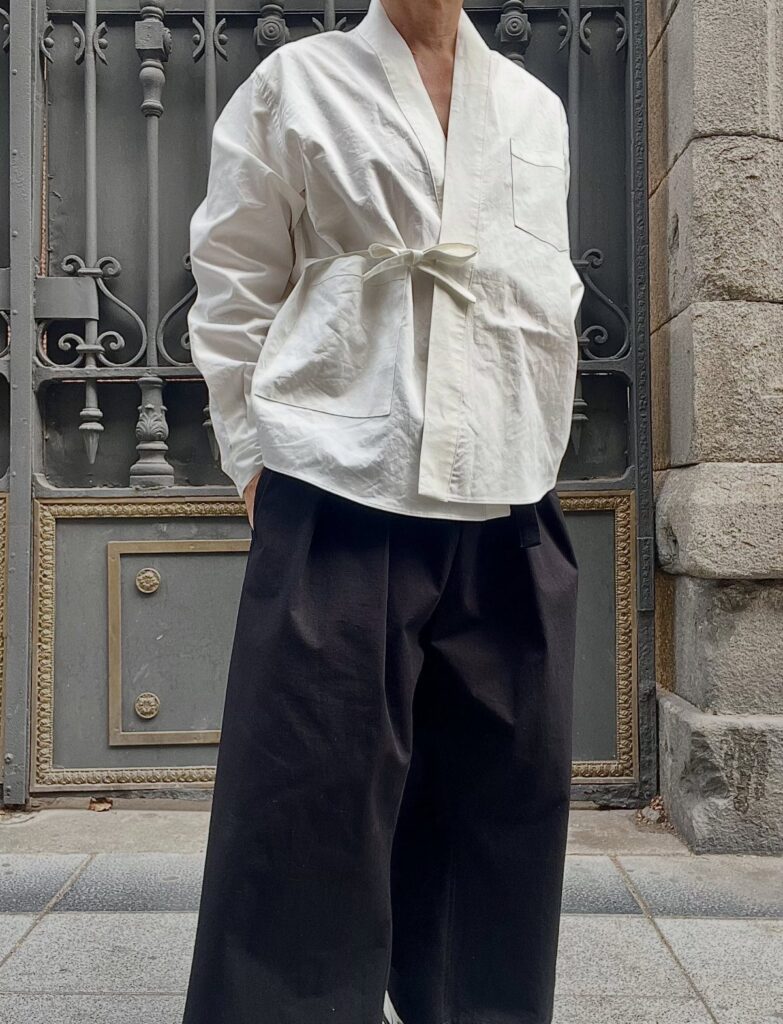
Most of these looks run on one idea: a loose, calm shape in a neutral palette, where fit, drape and fabric do the work that bold color usually does.
They range from the easy calm of a relaxed silhouette in neutral tones to all-black layered draping and voluminous baggy trousers, which take more practice to get right.
Your height and how much volume you’re willing to wear decide which one is yours; taller men carry baggy, tied-waist trousers most easily, while shorter men do better with a hem that stays clear of the shoe.
1. Calm Silhouettes
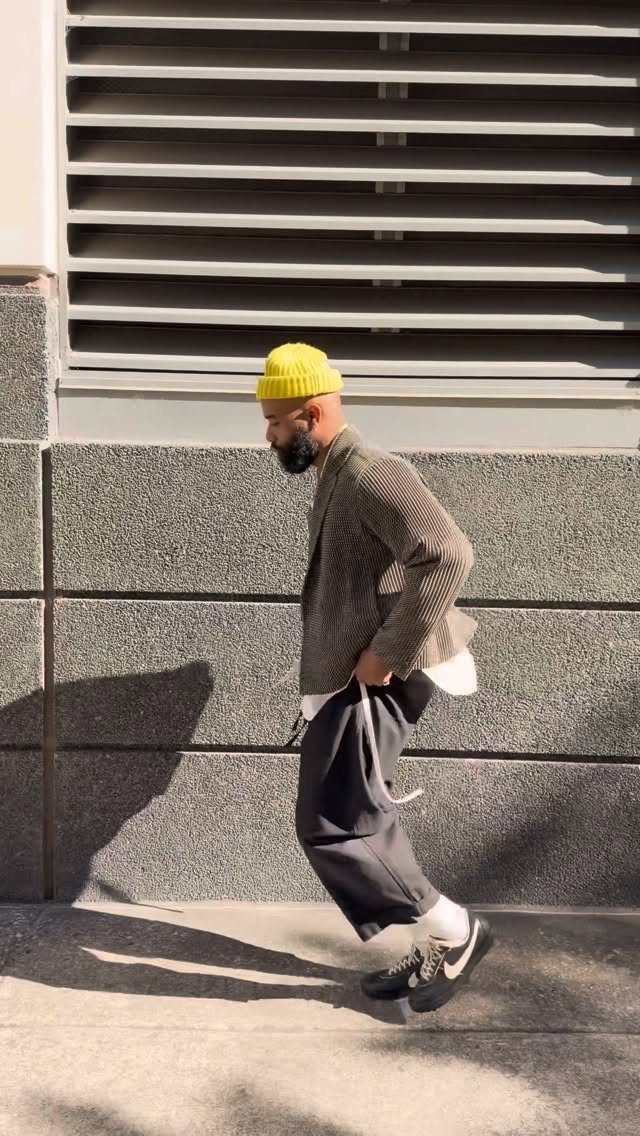
A calm silhouette means one loose, even shape from shoulder to ankle, with no single piece shouting over the others.
I like keeping the outfit to a single tone and letting one small item carry the personality, like a bright beanie. White socks and plain sneakers keep the lower half light so the trousers don’t feel heavy.
Try a slightly relaxed jacket over trousers with some room in the leg, and skip anything cut close.
2. Neutral Color Palettes
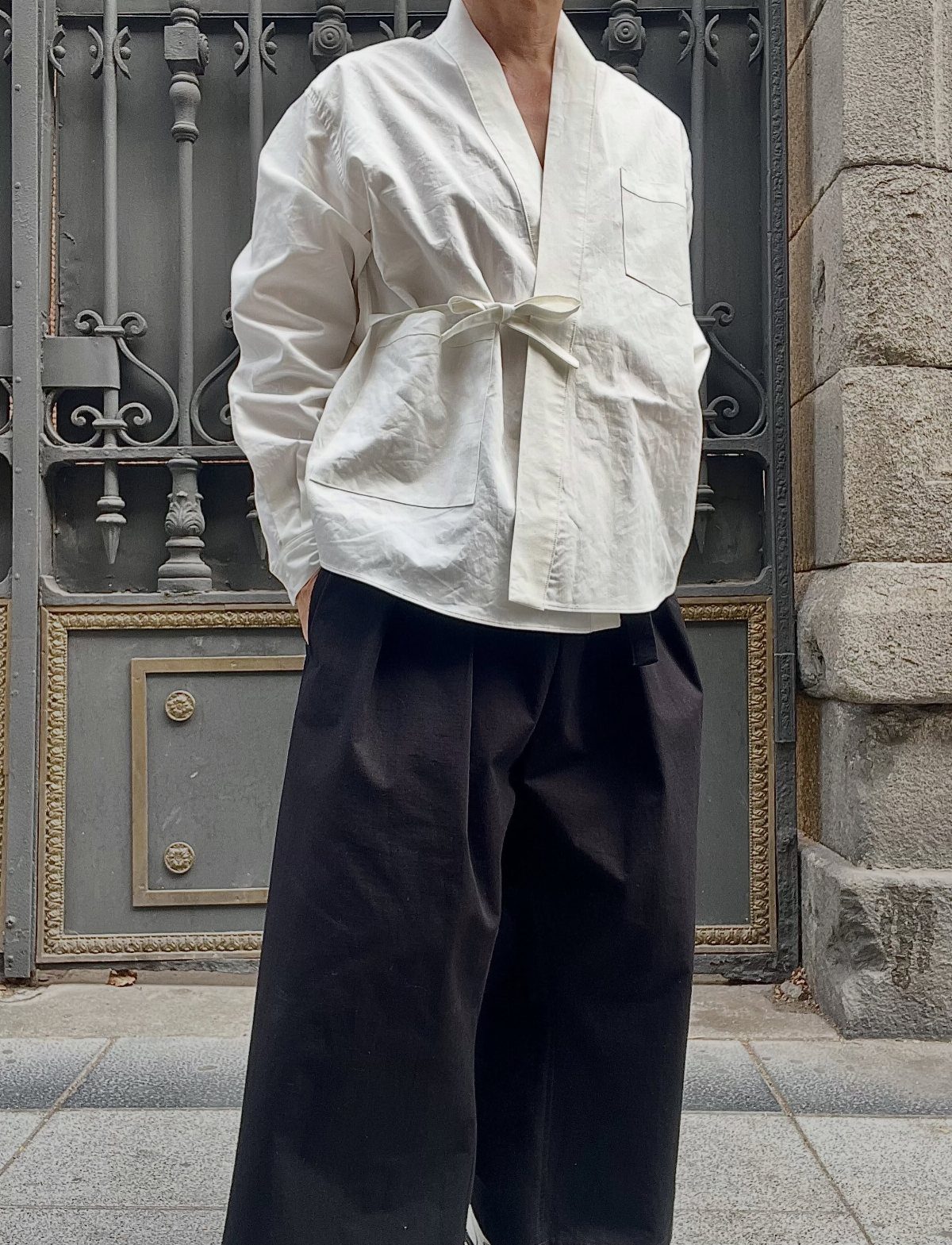
Off-white on top, black below: that two-color rule is the whole system, and it is why so few pieces can cover so many days.
A wrap shirt in a soft off-white pairs with wide-leg black trousers, and either piece also works with almost anything else you own. I would buy the trousers first, since black wide-leg pants anchor more outfits than any shirt will.
Restrained colors lean on fabric and fit to hold interest, so pick pieces with some texture or drape, like a slubby linen, a brushed wool, or a cotton that folds softly at the hem.
3. Soft Tailoring
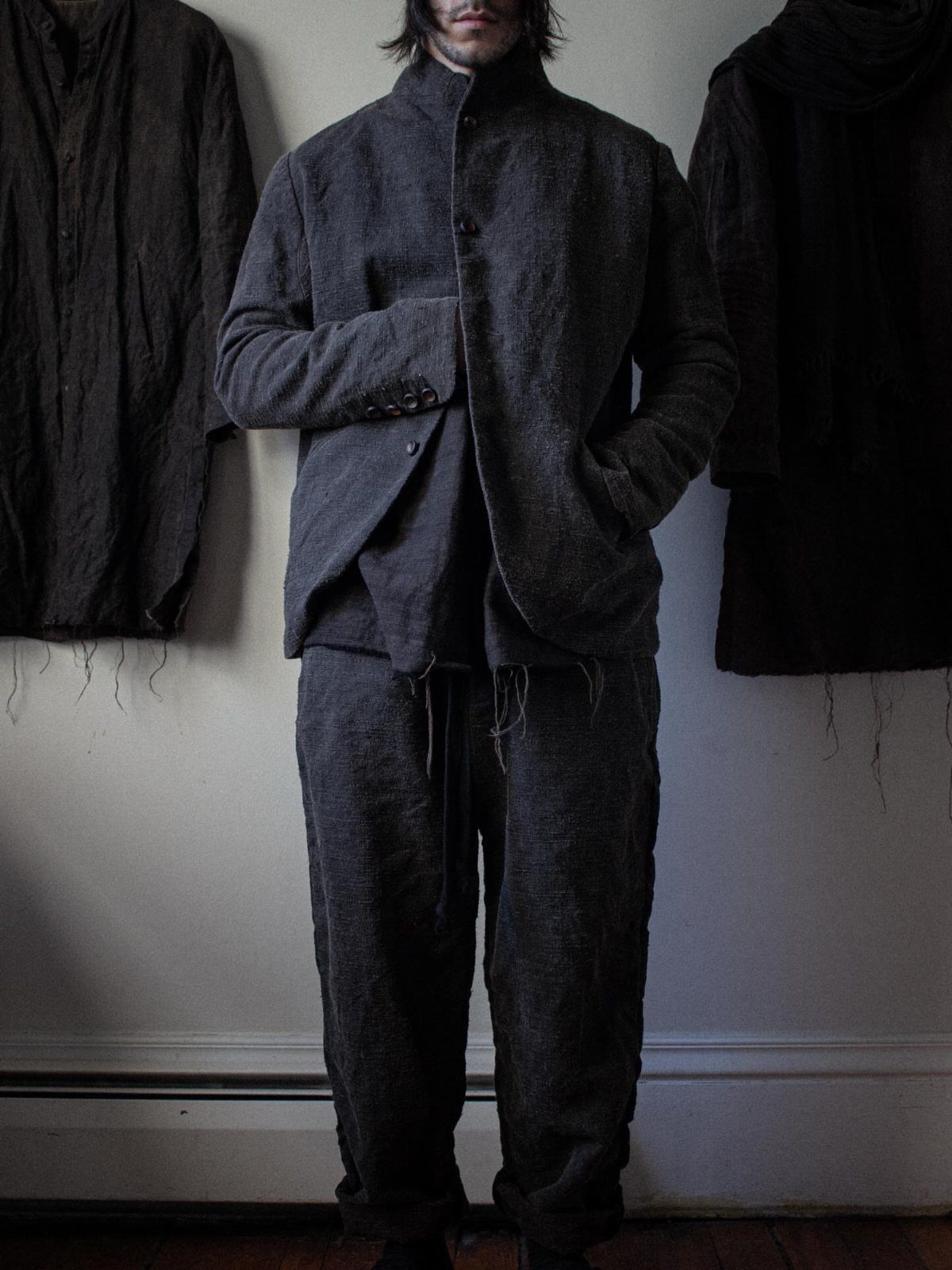
Soft tailoring keeps the logic of a suit and drops the stiffness. An unstructured jacket and loose matching trousers, with a mandarin collar in place of lapels, read as dressed without feeling formal.
I prefer a textured fabric like linen in charcoal, because the surface hides wrinkles and adds depth without color. Wear the pieces together or split them up; the jacket also works over a raw-hemmed shirt and with jeans.
Check that the shoulder sits cleanly. When the shoulder is right, the rest of the looseness looks intentional.
4. All-black Layered Draping
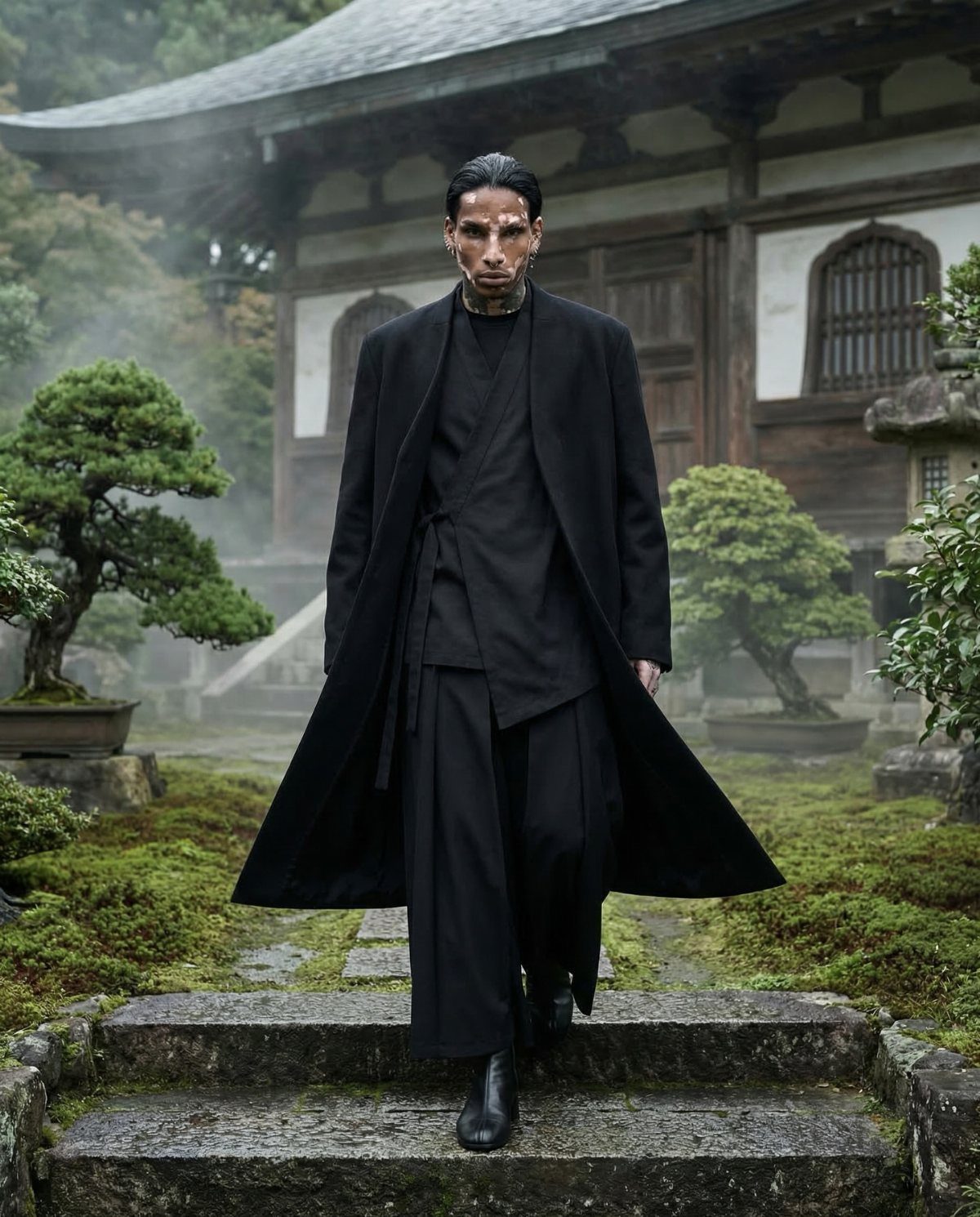
Black on black only works when the shapes differ, so layering is the point: a long coat over a flowing wrap top over wide-leg trousers gives the eye 3 silhouettes to follow.
Vary the fabrics, say something matte beside something with a little sheen, so the layers don’t merge into one dark block. A coat that falls past the hips adds the movement when you walk.
This is my pick for cooler days when you want one outfit that needs no accessories.
5. Voluminous Baggy Trousers
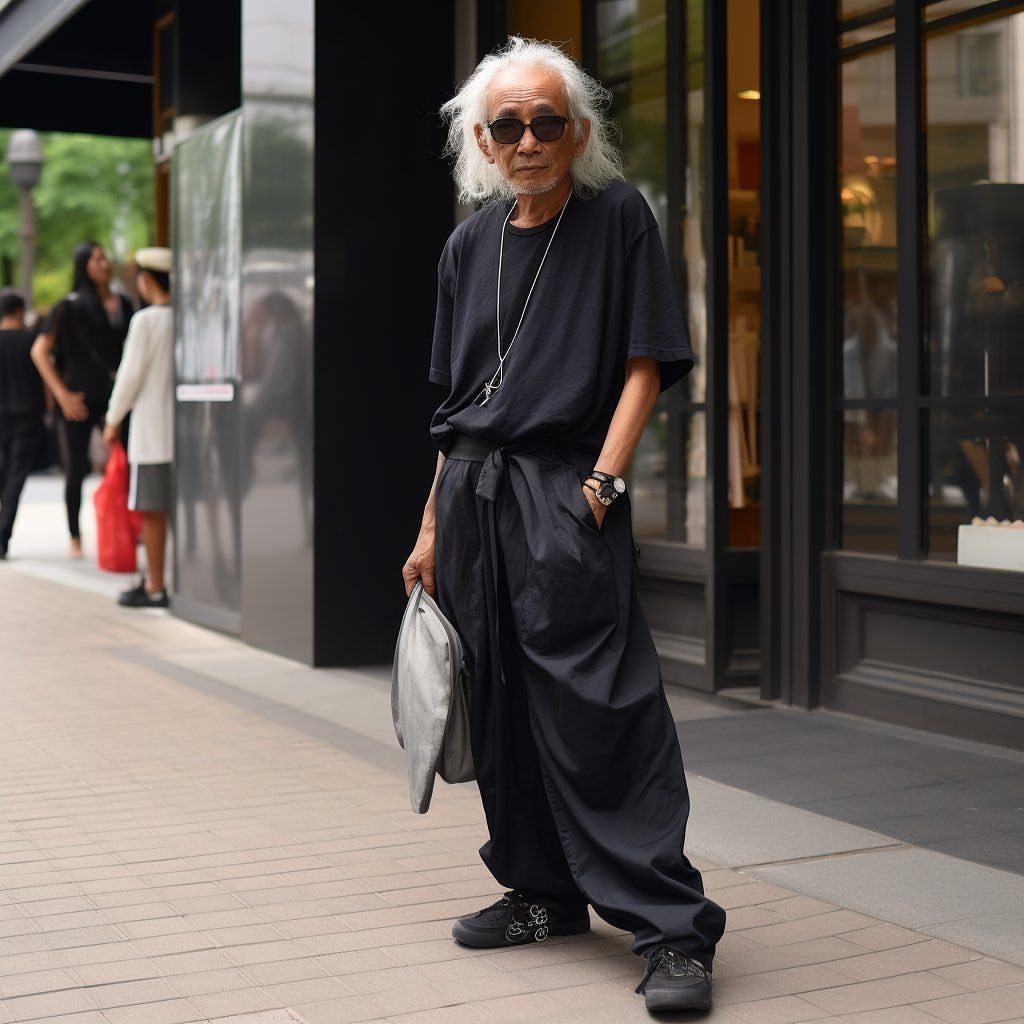
Fabric volume is the feature here: high-waisted baggy trousers, tied at the waist, pooling softly around a plain black t-shirt.
Keep the top simple and fitted enough to show where the trousers begin, or the outfit turns shapeless. Dark sneakers finish it without adding bulk at the ankle.
The tie waist adjusts as you move, which I find more comfortable than a belt. Taller men carry the volume most easily; if you’re shorter, keep the hem from covering the shoe.
Caring for Minimalist Clothing
Rotating shoes matters more than most men expect. Give each pair a day off between wears so the lining and leather dry out fully.
Heat is what wrecks loose cotton and knits, flattening the drape and shrinking the shape, so I wash cold and hang everything to dry.
Outerwear rarely needs a full wash; spot-clean it and save the machine for the pieces that touch skin.
Repair early. A loose button, a frayed pocket corner or a hem that has started to drop is a quick fix today and a real repair job if you let it sit.
A small palette makes this easier. With charcoal, navy, black, off-white and olive, every top works with every bottom, so you wear each piece often and none sits unused.
Texture, fit and patina carry this kind of wardrobe, not constant replacement. Clothes that are cared for look better after months of wear than they did on day one.
Japanese Fashion History
3 names matter most: Issey Miyake, Rei Kawakubo and Yohji Yamamoto.
Their impact on international fashion landed in the early 1980s, and their work was never one uniform. Each pursued a different line of inquiry into body, construction, technology, imperfection and beauty.
Yamamoto’s menswear is the easiest place for a man to start. It joined an antiestablishment attitude to classic tailoring through cut, form and silhouette, so the clothes read as rigorous rather than sloppy.
Black was never the daring part. What changed was how a garment sits on the body, and the designers proved that tailoring could leave the Western ideal behind.
Treat "Japanese minimalism" as a search term, not a full description.
Plenty of Japanese fashion runs loud, colorful, technical or deliberately beaten up, and once you know that, it gets easier to spot the real thing versus a black, lopsided imitation.
Frequently Asked Questions
What is Japanese minimalist style called?
Nobody has settled on one official label for this look, and "Japanese minimalism" is handier as a search phrase than as a description of what people actually wear.
The look draws on ideas like shibui, a quiet and understated beauty, and wabi-sabi, the character clothes gain through wear.
Much of what comes out of Japan is loud, colorful or worn down on purpose, which makes the quiet, pared-back strand just one corner of a much bigger scene.
What colors are most common in Japanese minimalist fashion?
Black, charcoal, navy, off-white and olive are the staples.
With a palette that small, every top works with every bottom, so each piece gets worn often. Restrained color means fabric has to carry the interest, so look for slubby linen, brushed wool or cotton that drapes softly.
Is Japanese minimalist fashion the same as normcore?
No. Rmcore is about looking plain, while this style is about intention: quality fabrics, deliberate proportions and careful cut.
The clothes can look simple, yet shoulder placement, drape and texture are doing real work. A black, lopsided imitation misses that.
How do you avoid looking boring in minimalist outfits?
Lean on texture, fit and layering instead of color.
A matte cotton next to a fabric with a soft sheen helps, and so does stacking a long coat, a wrap top and wide-leg trousers, which gives the eye 3 separate shapes to travel across.
You can also let one small item, like a bright beanie, carry the personality.