The ideas here run from ties and 1930s padded shoulders to 1970s disco, 1980s oversized suits and 1990s baggy jeans, and the effort ranges from knotting one tie to getting a whole suit tailored.
Your pick comes down to how loose or fitted you want to look on an ordinary day: the roomy cuts (1950s sack suits, 1980s oversized suits, 1990s baggy jeans) hide your shape, while the sharper ones (1930s padded shoulders, a well-tailored suit) define it.
1. Ties
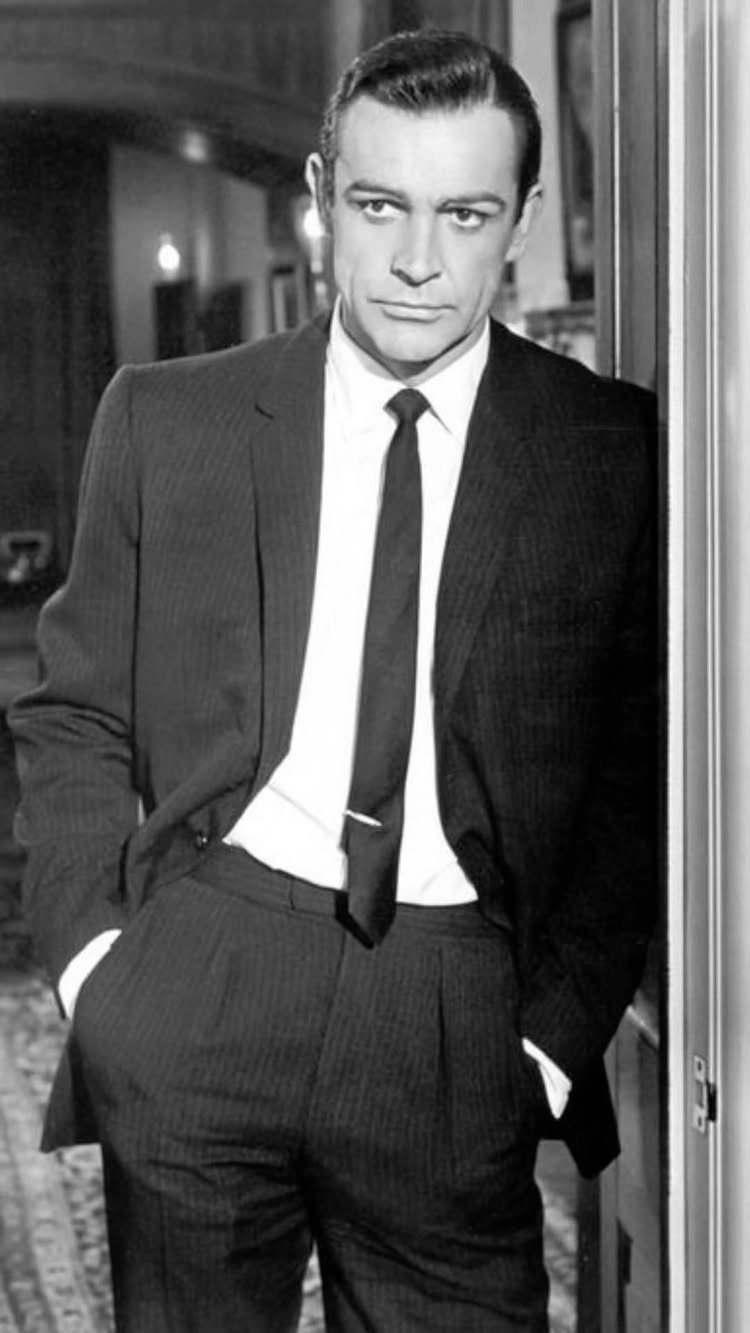
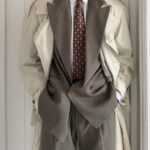
Neckties took off around the 1920s, and a slim dark one in navy or black shows why they stuck: it adds a clean vertical line to any shirt and jacket, and it goes with nearly everything.
A tie against a white shirt draws the eye to your face and tells people you made an effort.
For a pinstripe suit, I’d pick a solid dark tie so the stripes get all the attention. A tie clip keeps the blade from swinging loose, and the look stays plain and sharp.
2. 1930s Suits with Padded Shoulders
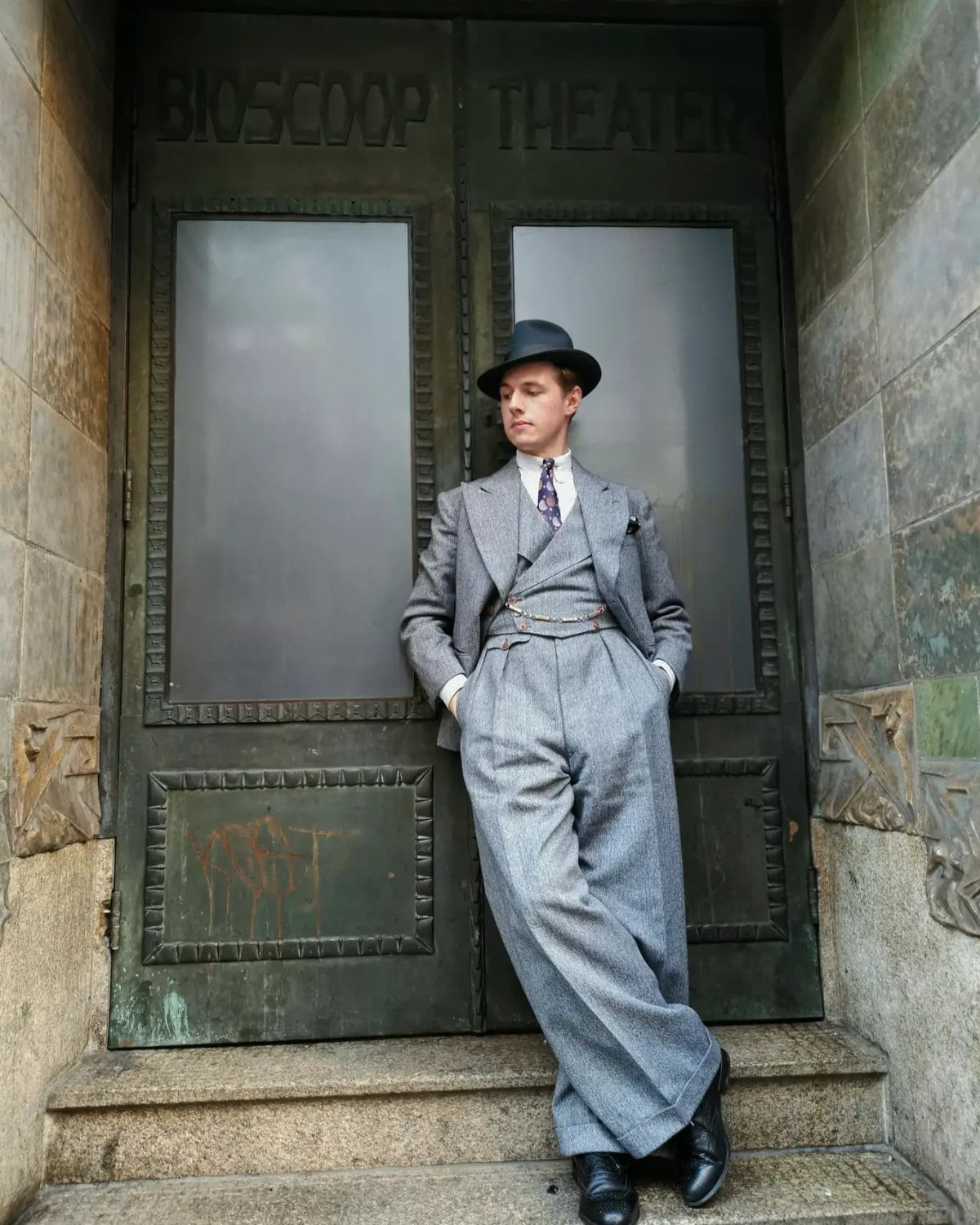
Padded shoulders are what make a 1930s suit read as 1930s. They square off the frame and make the waist look narrower, which flatters most body types.
A grey three-piece with a fedora is a lot for a weekday, so I’d wear the vest and jacket together and skip the hat unless the event calls for it. One strong piece, built around the shoulder, does the work.
3. 1970s Disco Fashion
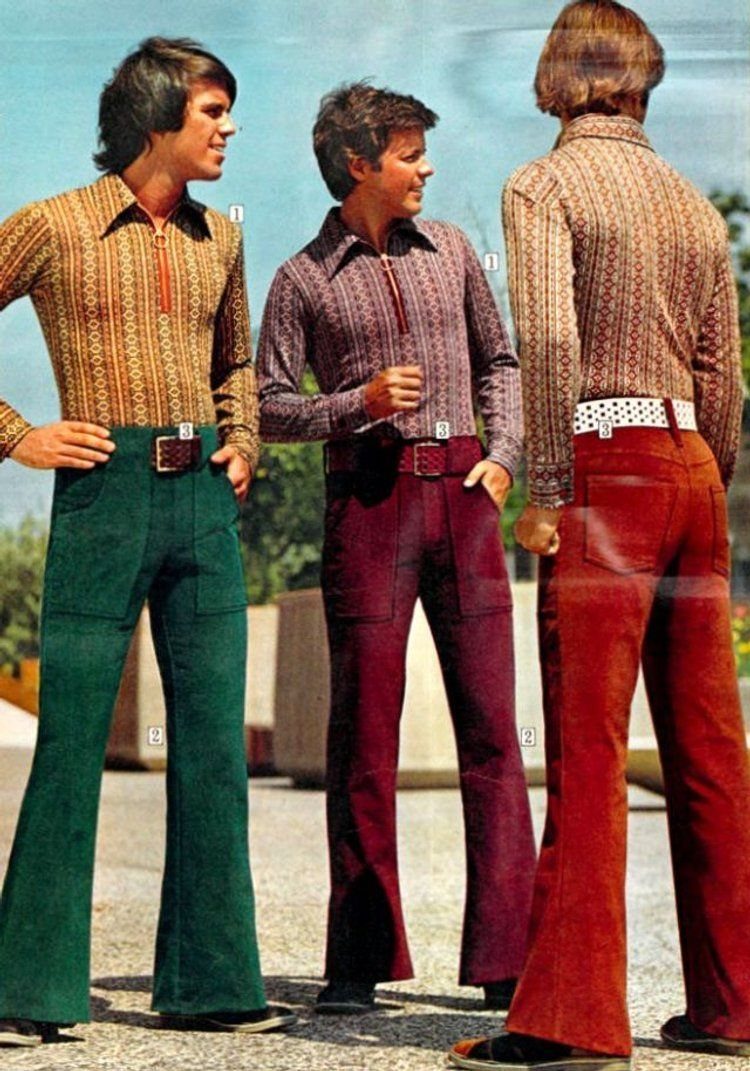
Disco clothing was loud on purpose: bold colors, patterned button-down shirts, and flared trousers that widen below the knee.
Keep it to one loud piece. A patterned shirt with plain dark trousers, or flares with a solid top, reads as a choice rather than a costume.
All 3 pieces in full color suits a party or a themed night better than a regular Tuesday, and I’d save it for those.
4. 1980s Oversized Suits
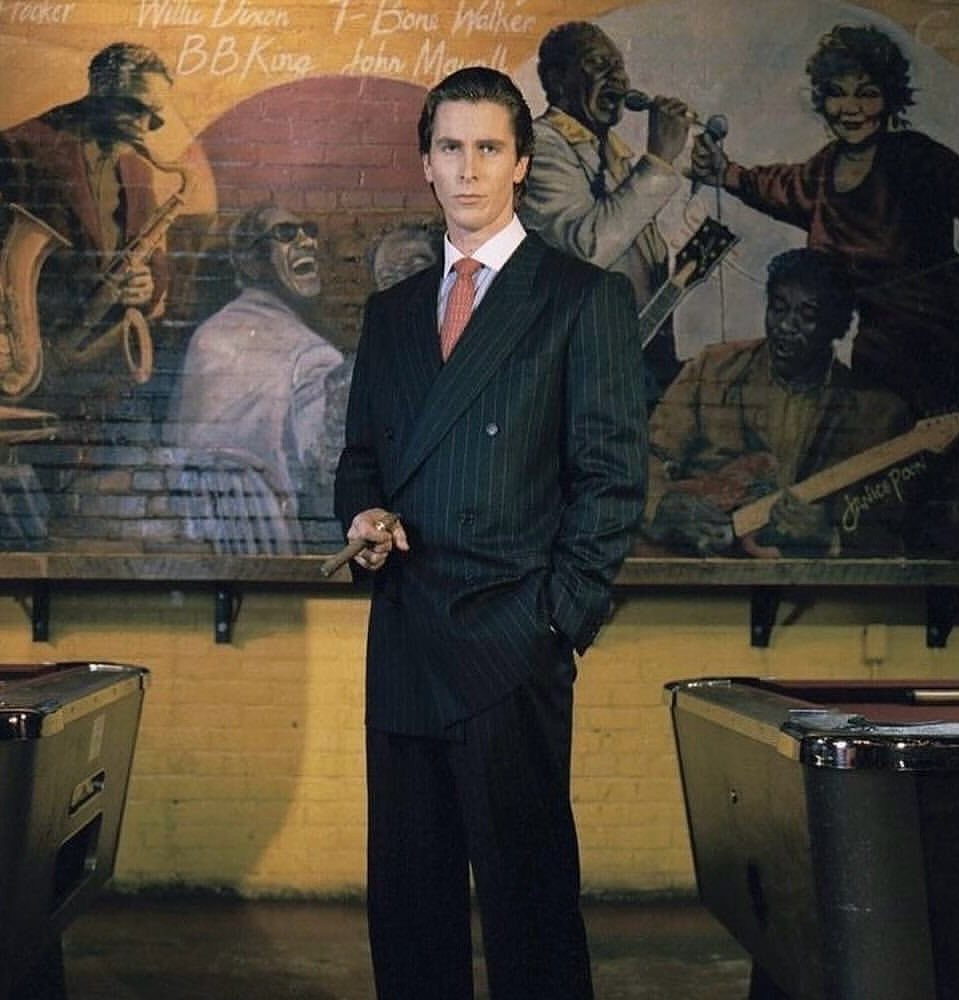
Oversized suits in the 1980s ran big through the jacket, and a double-breasted pinstripe in dark fabric gives that look its weight. Pair it with a pink shirt and red tie, and the color does the talking.
The risk is looking swallowed. If you try this, choose one roomy piece and keep the rest of the outfit fitted.
5. 1990s Baggy Jeans
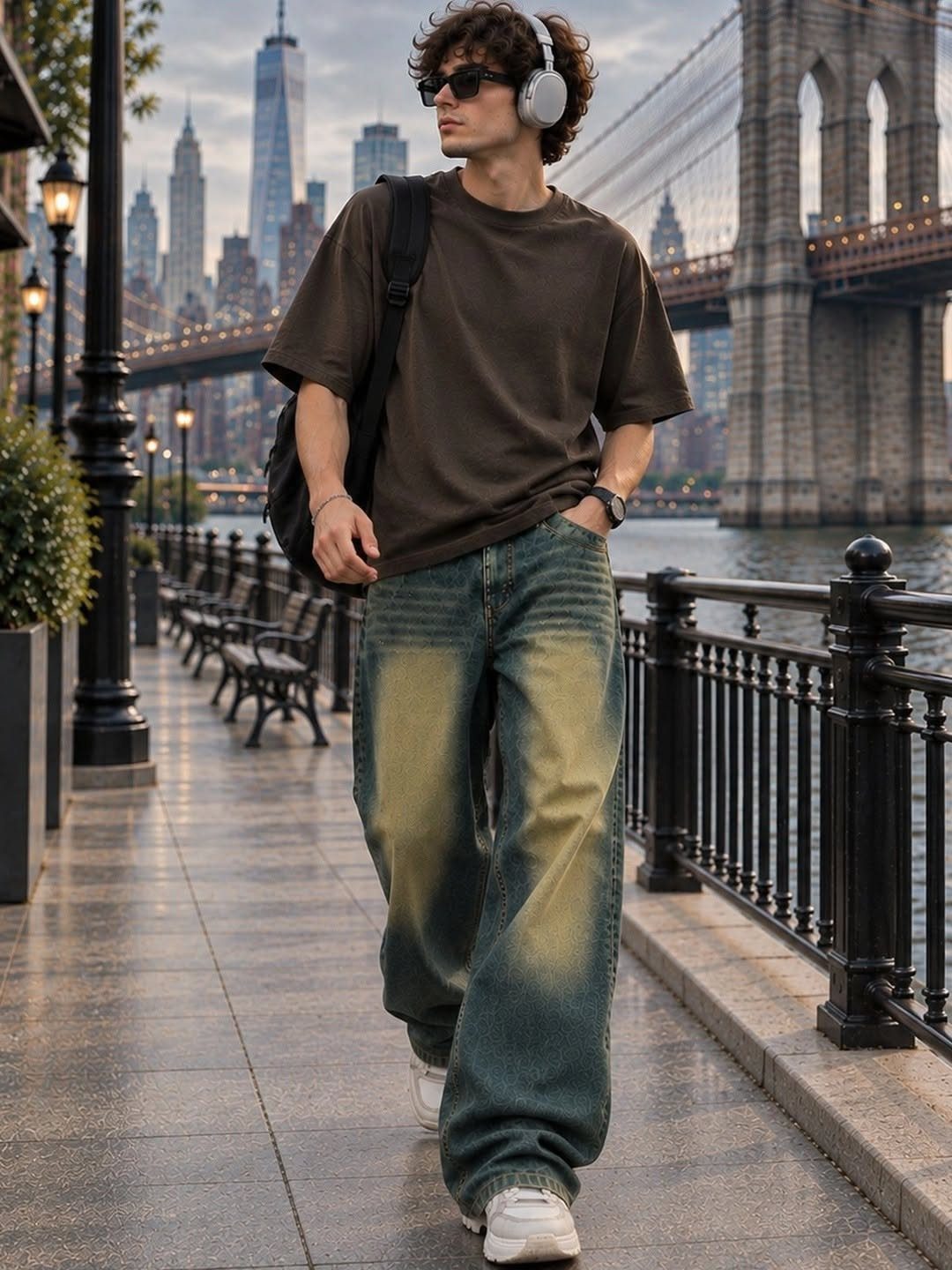
Baggy denim from the 1990s is the easiest idea here to wear today. Loose jeans and an oversized t-shirt need no ironing and no layers.
Balance is the only rule I’d follow: when both the top and the bottom are roomy, the outfit can look shapeless.
Try a loose pair with a tee that stops at the hip, and add sneakers so the hem doesn’t drag.
6. 1940s Civilian Clothing with Military Influences
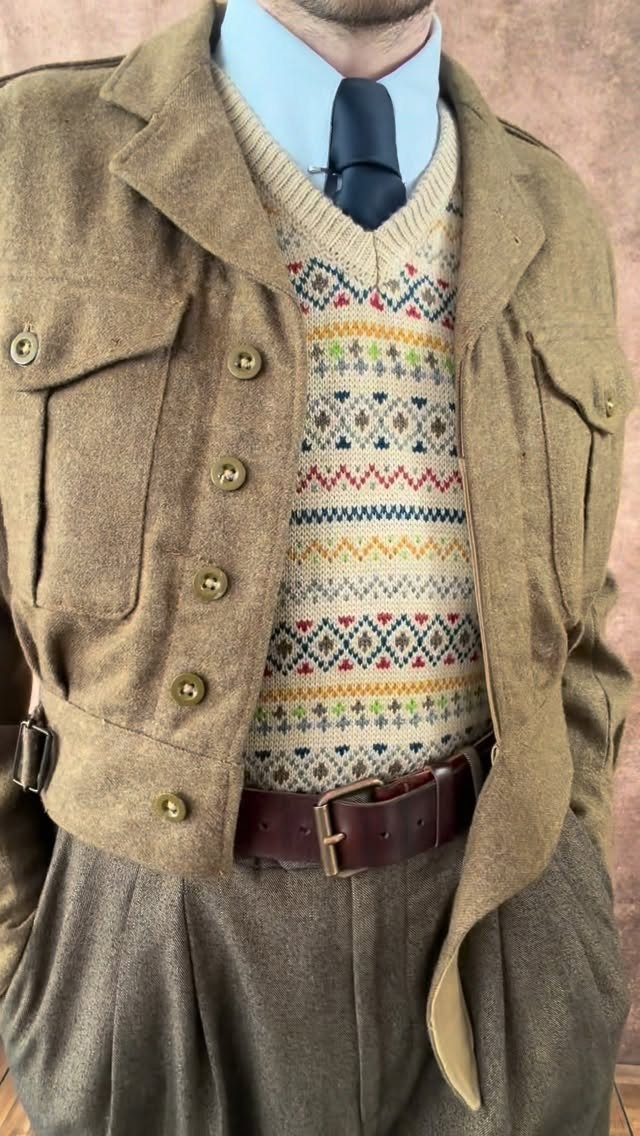
Wartime changes pushed clothing toward mass production, and that is why a cropped military-style jacket became ordinary civilian wear.
Worn over a Fair Isle sweater vest, a collared shirt, a tie, and pleated trousers with a leather belt, it looks practical rather than costumed.
I like this one for work. The jacket is the single borrowed piece, and everything under it is a standard office layer, so you can pick up the look one item at a time.
7. 1950s Boxy Sack Suits
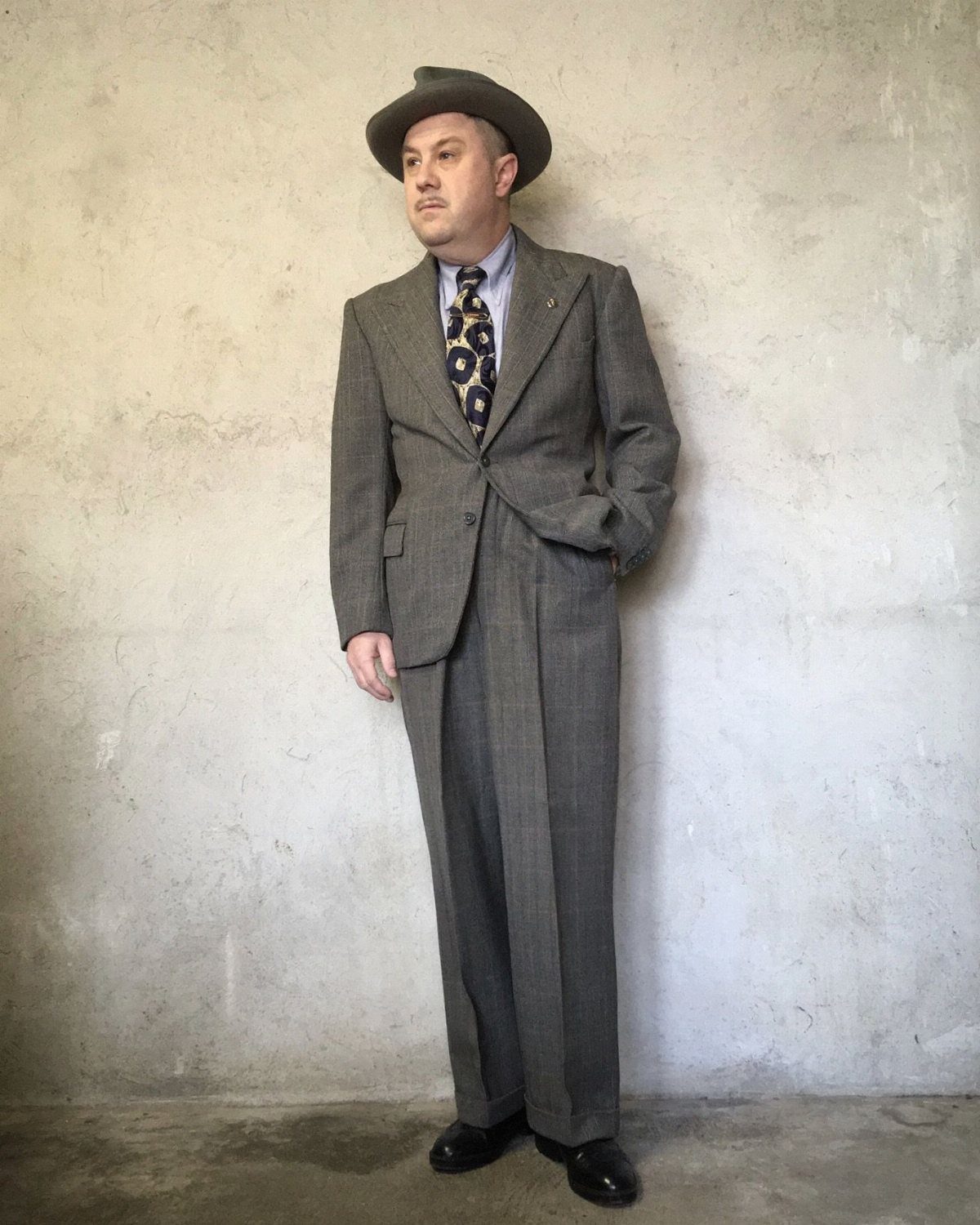
A sack suit hangs straight from the shoulders with no shaped waist, so the jacket falls loose over the torso. That ease is why it still works on men who don’t want a tight, athletic cut.
Grey with a subtle pattern is the version I’d choose, since pattern in the cloth adds interest without needing a loud shirt or tie.
A patterned tie can join it if the scale of the 2 patterns differs, and a fedora finishes the 1950s look for an event.
For a normal day, I’d skip the hat. The cost of the boxy cut is that it hides your shape, so a good shoulder fit matters more than anything else.
Cultural Influences on Fashion
Clothes follow events more than most men realize, and knowing the source of a piece helps you wear it with intent.
Trench coats, combat boots, epaulets, and khaki all came out of the World Wars and military uniforms, which is why they still read as practical.
Music pushed style next. Mod tailoring came into the mainstream through the Beatles, while Jimi Hendrix pushed psychedelic prints and fringe onto the street.
Later, MTV and hip hop turned fashion into something that drove pop culture instead of trailing it: oversized jerseys, gold chains, and Timberlands all came from that crossover.
If you want one takeaway, pick a single piece with a clear origin, such as a khaki jacket or a pair of boots, and let it carry the outfit.
Importance of Tailoring
If one thing ties the century together, I’d say it’s tailoring, and it begins with the Edwardian code of the 1900s: formal, restrained, and exact.
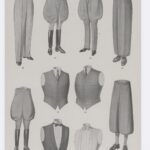
Suits came as 3 pieces: coat, waistcoat, and trousers. The fabrics were heavy wool, herringbone tweed, or worsted, in charcoal, navy, and deep forest green.
Hems rose compared with earlier decades, and many trousers finished with a cuff. That detail still works, and I like a cuff on a wool trouser because it adds weight and helps the hem hang.
The lesson I’d take is discipline.
A modest suit in a dark neutral, altered to fit, looks sharper than an expensive one left off the rack. Spend your money on the alterations first: shoulders, sleeve length, and trouser hem.
Evolution of Casual Wear
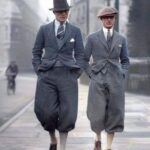
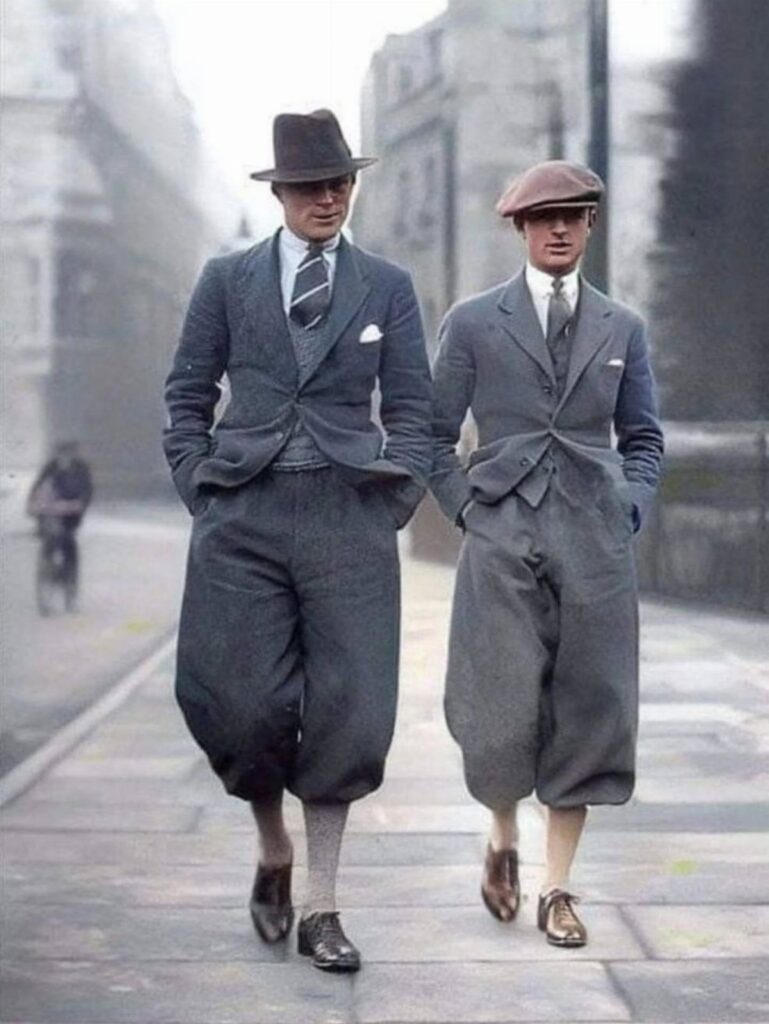
Casual dress started earlier than most men think. In the 1920s, men wore more sweaters on cold days, and sports clothes like knickerbockers and plus-fours showed up even on men who never played a game.
Casual shirts were worn open at the collar, in brighter or striped prints, and younger men chose softer attached collars or collarless shirts like the henley.
The henley is the piece that survives. It needs no tie, no stiff collar, and it sits well under a sweater.
By the 1990s, business casual had entered the vocabulary as offices relaxed.
The risk was that suits grew bigger and sloppier along with them. If your office is casual, keep the fit clean: a sweater or henley that skims the body will look far better than anything oversized.
Frequently Asked Questions
What should a guy wear to a 1920s party?
Go with a pinstripe suit with wide peak lapels, a silk pocket square, and two-tone brogues.
A bow tie or suspenders fits the period, and a fedora, boater, or newsboy cap on top sells it. Trousers ran wider and jackets shorter than in earlier years, so the whole look felt looser.
What does 1920s attire look like?
Men wore looser suits with wider trousers and shorter jackets, in more adventurous fabrics and colors than before. Neckties took off in this decade, and jazz culture shaped much of the mood.