The outfits below range from streetwear graphic tees and track jackets to a smart casual quarter-zip and a blazer over tailored shorts, and your week’s dress code decides which one fits: loud streetwear suits a free weekend, while the quarter-zip or the blazer suits the office.
Build around 21 pieces that mix freely and you have 30 days of outfits; the test for any piece is whether it works with at least 3 others already in the closet.
1. Streetwear Graphic Tees and Hoodies
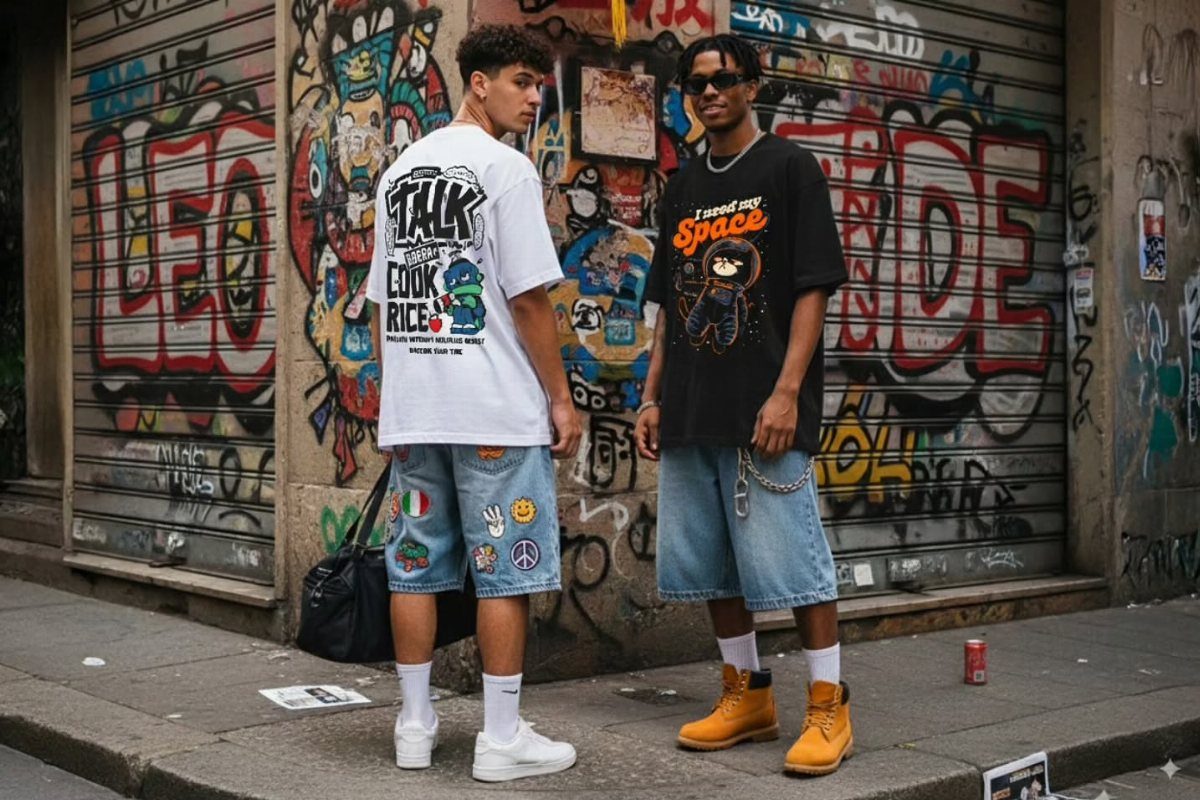
Oversized graphic tees with baggy denim shorts make the easiest streetwear outfit I know, because the tee does all the talking.
Pick one loud piece and keep everything else quiet: shorts in plain denim, clean sneakers, nothing else with a slogan.
The tee should hang loose past the waistband, and the shorts work best roomy rather than tight. Mixing a loose top with a slim bottom looks like a mistake; matching the volume looks deliberate.
For cooler days, a plain hoodie in the same slot works the same way.
2. Track Jackets and Sneakers
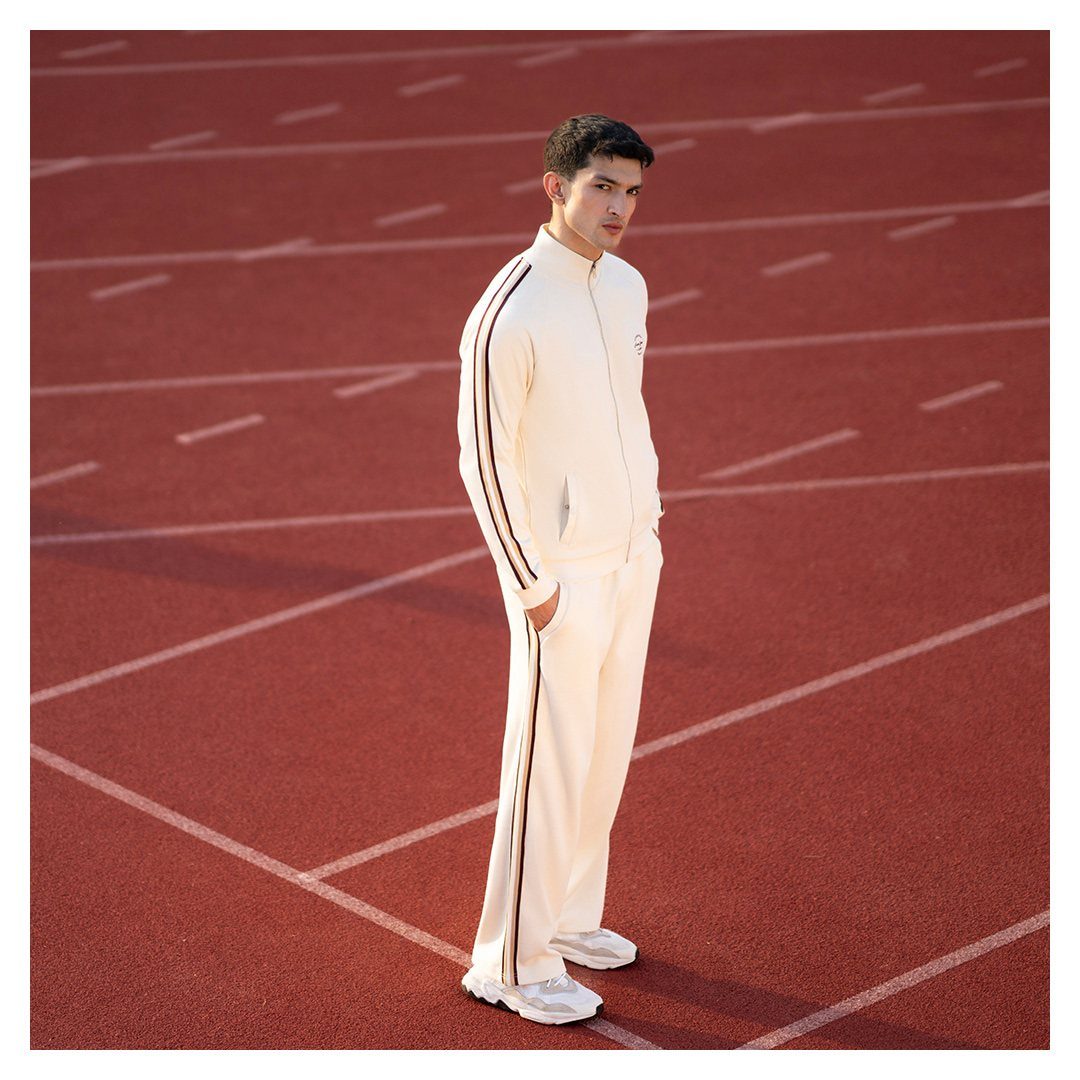
A cream track jacket with matching side-stripe pants and white sneakers is a complete outfit that takes no planning. The matching set is what makes it work, so buy it as a set, or the cream shades will drift apart.
White sneakers keep the palette light and clean. I’d keep the jacket zipped about two-thirds of the way up over a plain tee.
Wearing the pieces separately stretches the budget: the jacket over jeans, the pants under a plain sweatshirt.
3. Minimalist Style
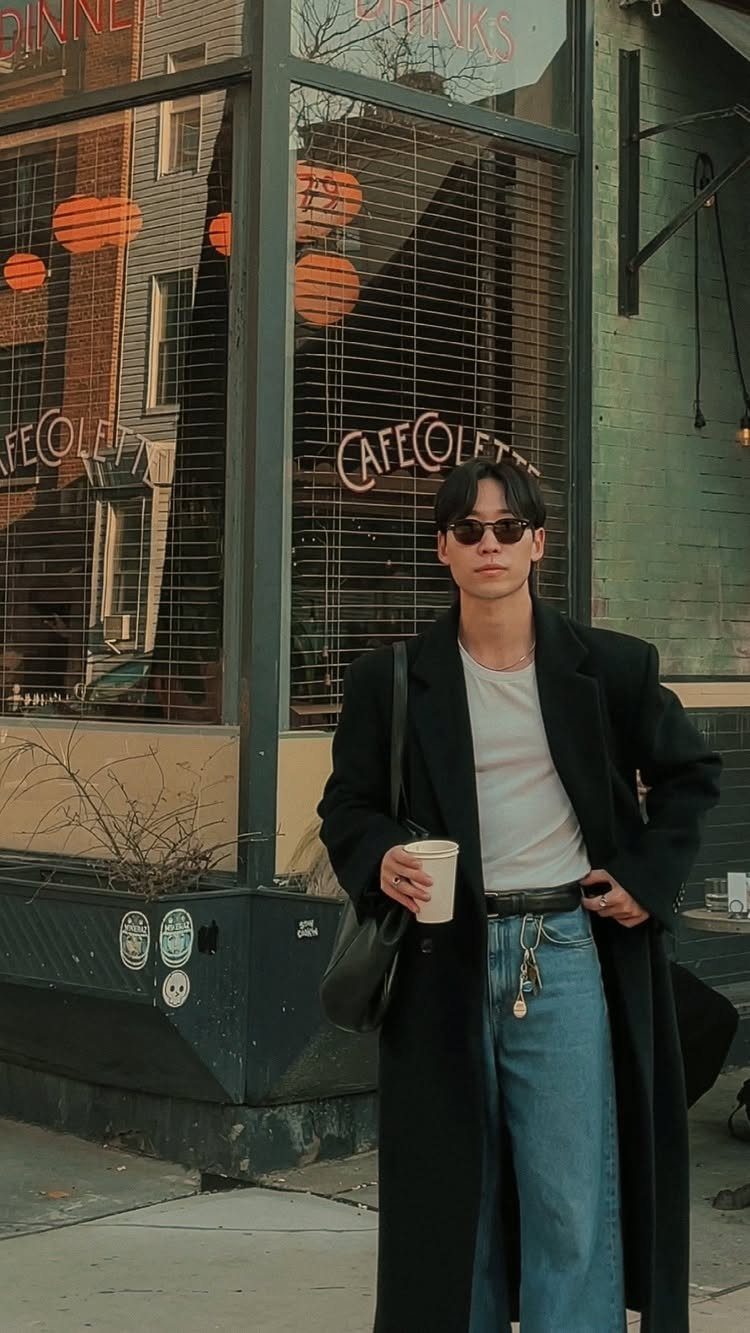
Black, white and blue are the whole palette here, and that restraint is the style. A long black overcoat over a white tee and blue jeans needs no other decisions.
Spend the effort on fit.
The coat should reach past the hip and close without pulling, and the tee should be spotless, since there is nothing else to hide behind. Jeans in a plain dark or mid wash keep the lines clean.
Sunglasses are a cheap finishing touch. Beyond that, add nothing.
4. Smart Casual Quarter-Zip
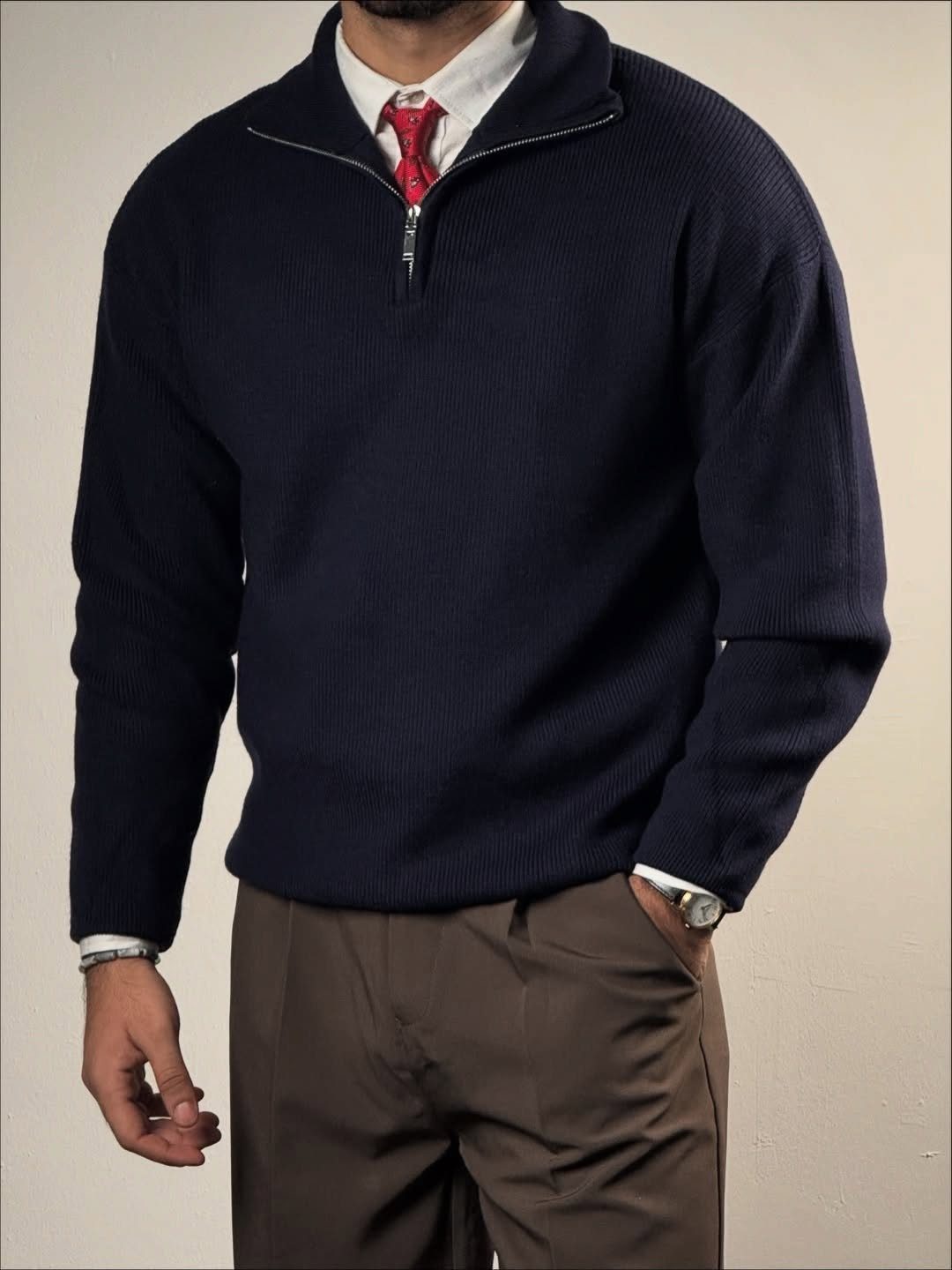
Shirt, tie and a navy quarter-zip sit somewhere between an office look and a weekend one, and I like it for exactly that reason.
Zip the pullover to just below the collar so the shirt collar and tie knot stay visible.
Brown khaki trousers keep it relaxed, and the red tie gives the navy a bright spot. Choose a slim knot and tuck the tie lightly into the pullover if it hangs too long.
It’s a simple swap for a blazer when the office runs casual.
5. Blazer and Tailored Shorts
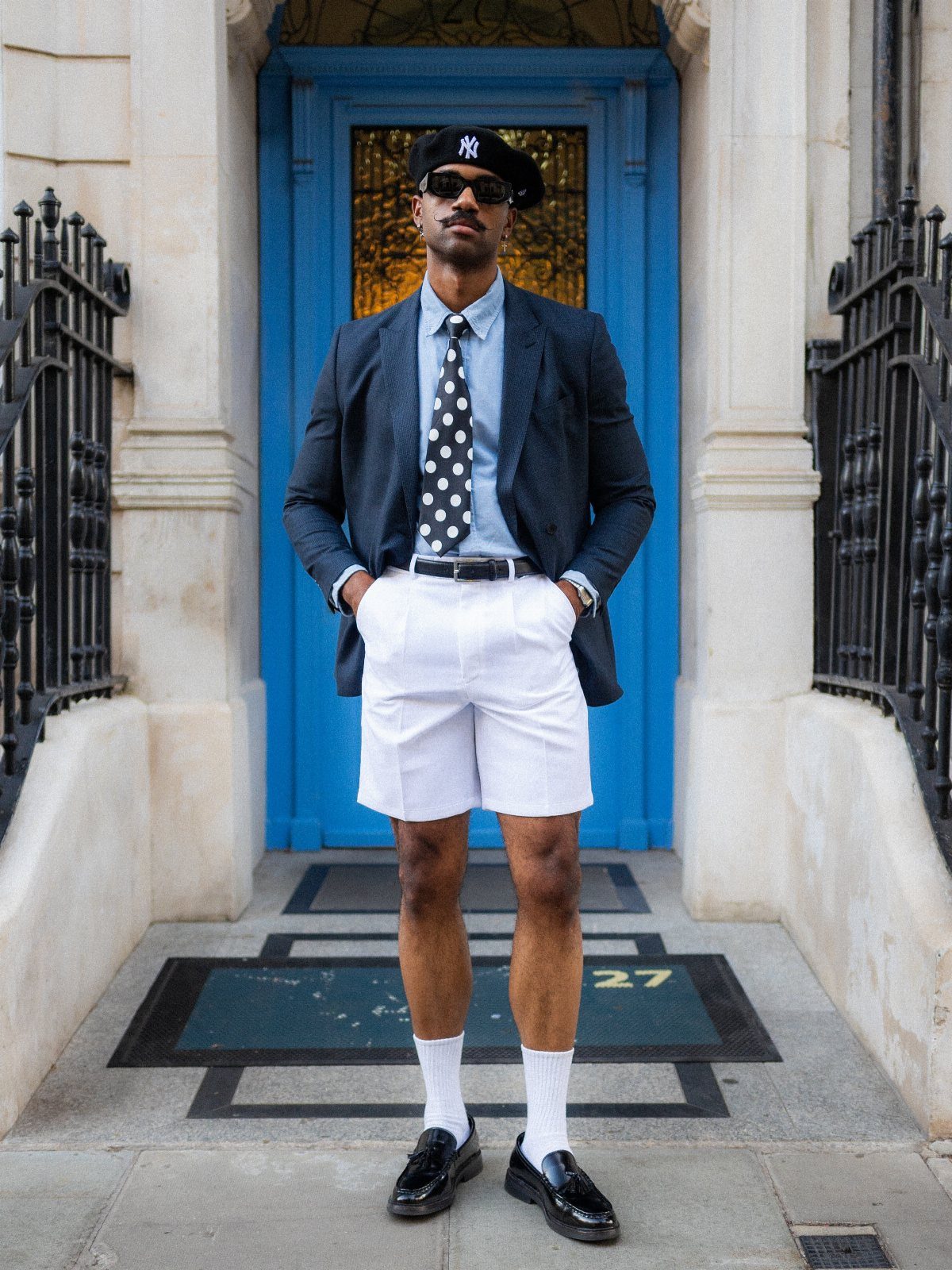
Tailored white shorts with a dark blazer is a bold outfit, and it only works when the shorts are pleated and well cut. Baggy cargo shorts will ruin it.
Everything else should stay sharp: a button-up shirt, a polka-dot tie, loafers and white socks that echo the shorts. The dark blazer anchors everything above the waist.
A baseball cap or beret makes it playful rather than formal. Choose one hat and skip the rest of the accessories.
6. Draped Sweater Casual Style
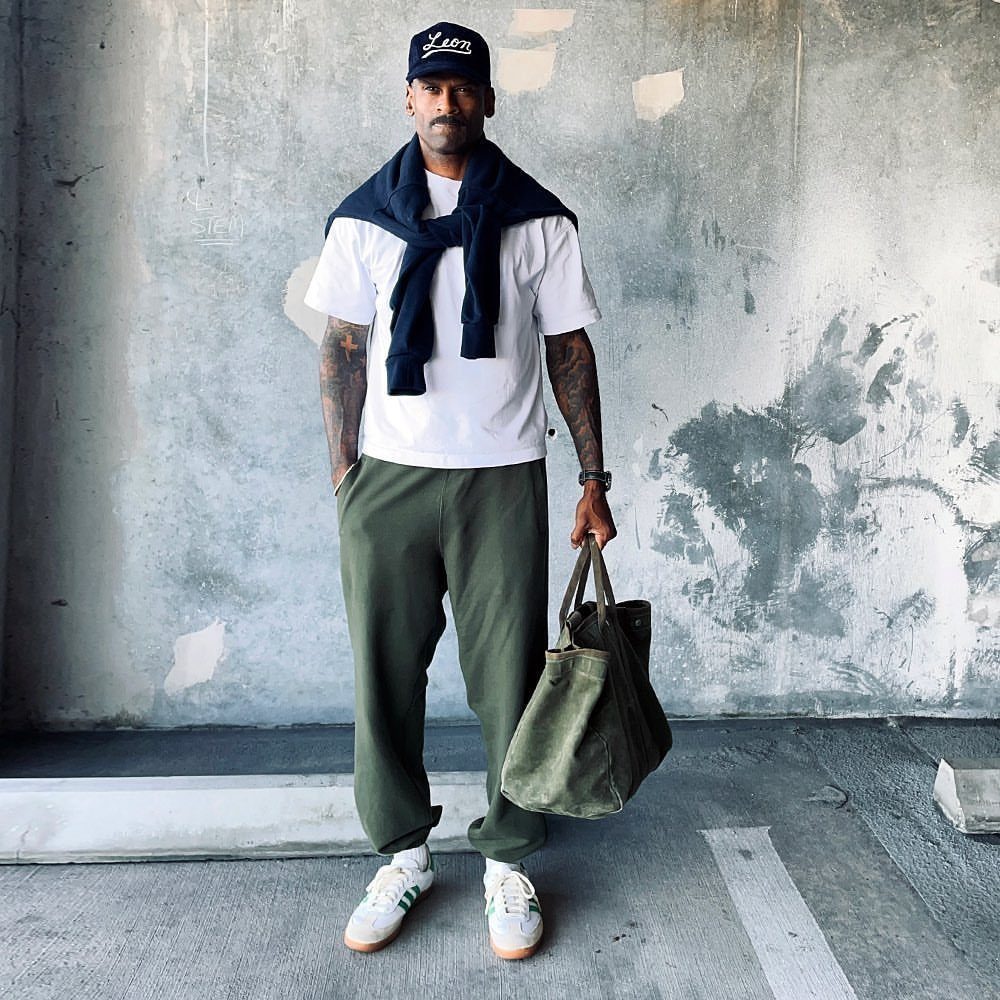
Draping a navy sweater over the shoulders adds a layer of color without adding a layer of heat. Tie the sleeves loosely across the chest, or just let them hang.
The base is simple: a white tee, olive trousers and sneakers. Navy against olive and white is an easy color mix, so nothing needs matching.
I’d add a cap and a roomy tote to carry the day. It suits mild weather, and the sweater is there if the evening cools.
7. Double Denim Ensemble
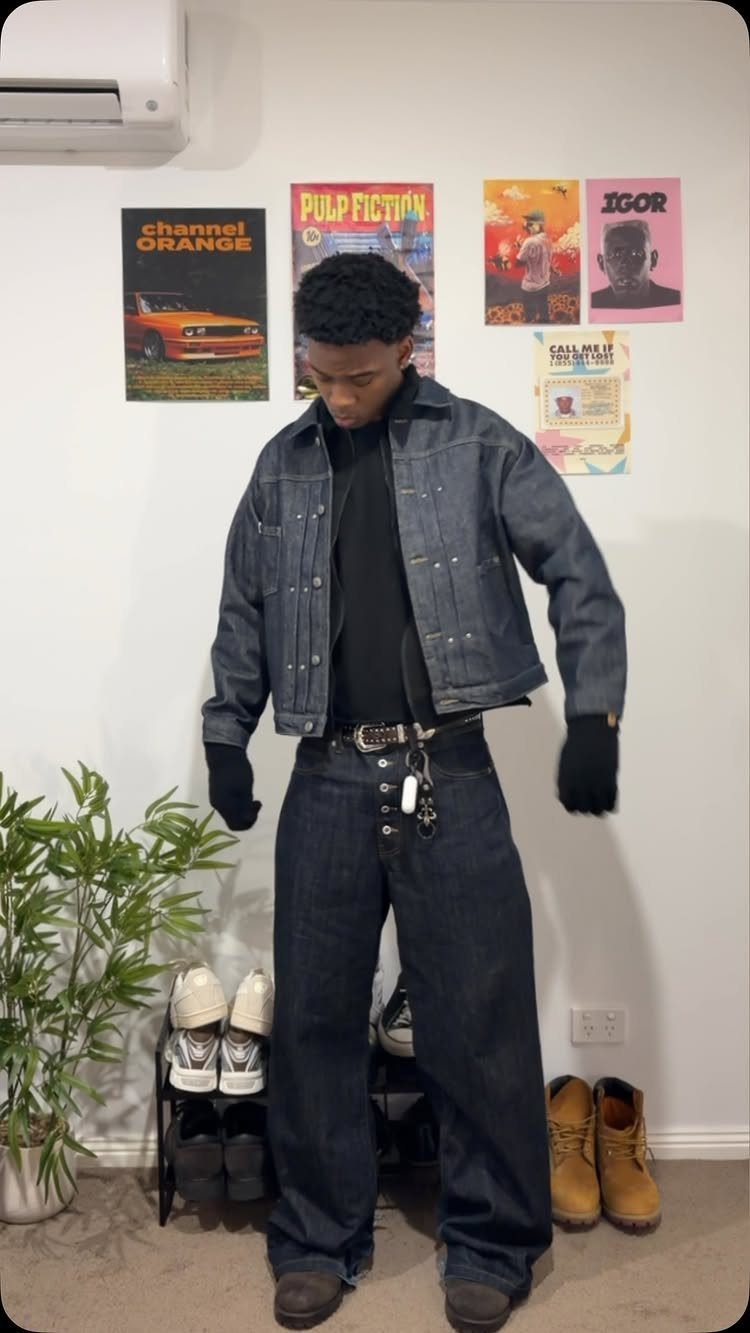
Matching dark denim on top and bottom works because the shade is the same, so keep the wash identical, or the pieces will look like 2 different outfits. A trucker jacket with wide-leg jeans reads as one deliberate piece.
A black shirt underneath breaks up the blue without adding a new color. Black boots and gloves stay in that same dark range.
Wide-leg jeans need a jacket that stops near the waist, or the proportions get heavy.
8. Nautical Knit and Shorts
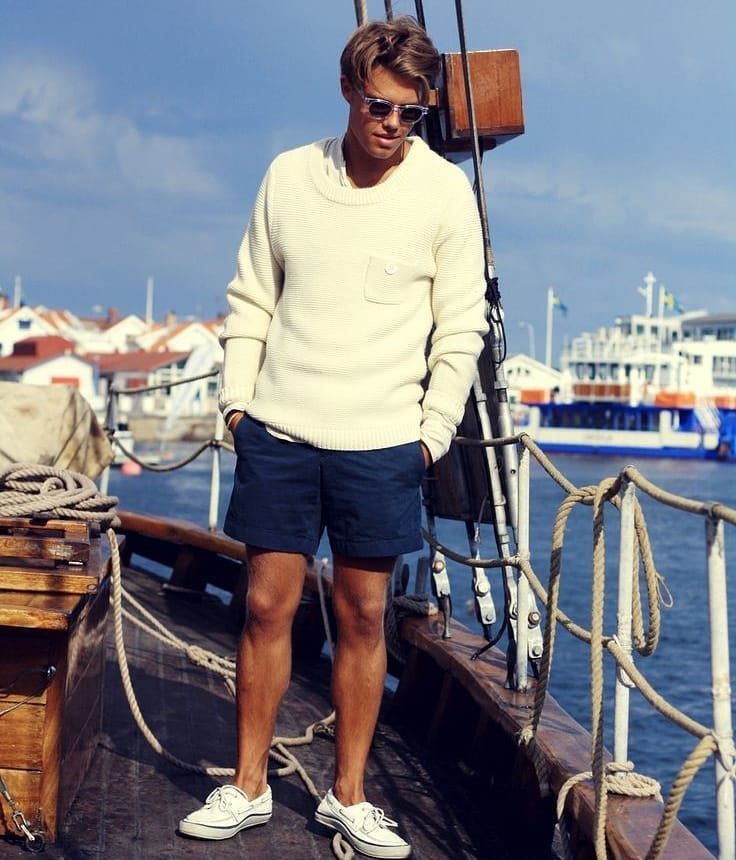
A textured white knit with tailored navy shorts is a summer outfit that needs only 2 colors. The ribbed weave gives the sweater some interest, so the shorts can stay plain and neat.
White sneakers or boat shoes carry the white up to the feet. Sunglasses are the only extra I’d add.
Choose shorts that are cut close and hemmed above the knee, since a baggy pair works against the knit.
9. The Go-To Jeans
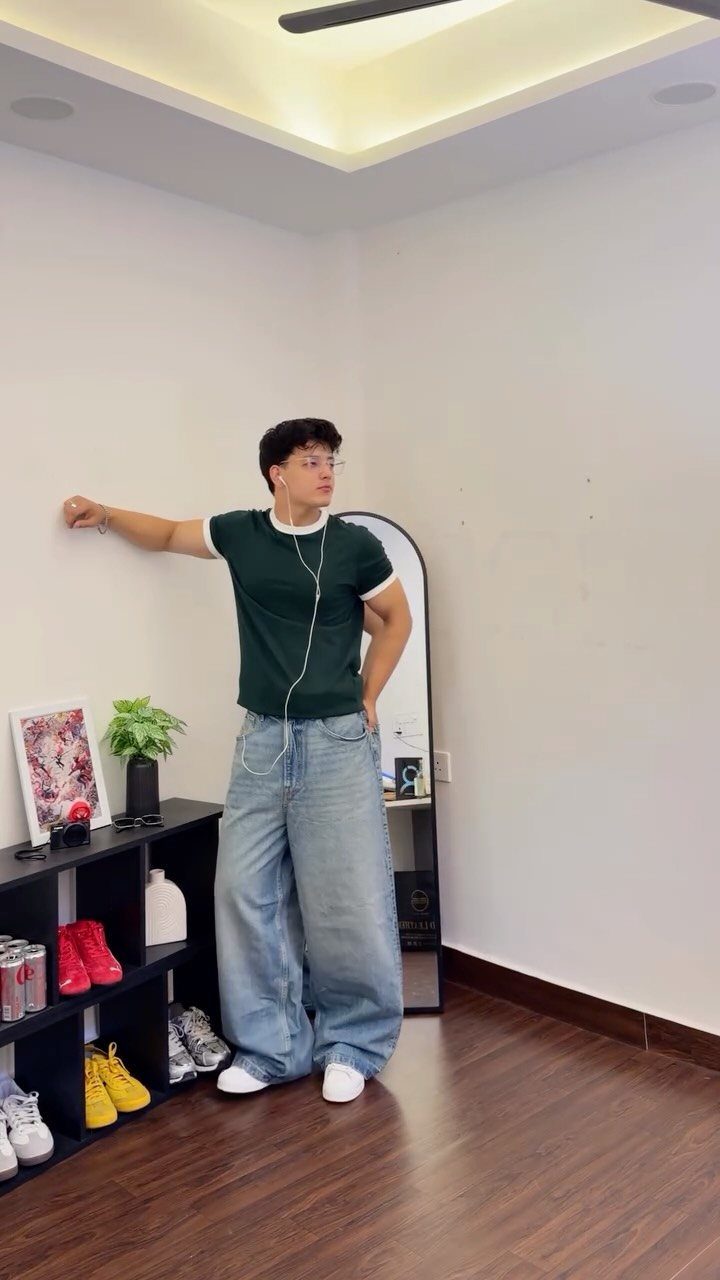
For an everyday bottom, a baggy pair of light-wash jeans is hard to beat; Gap’s Loose Jeans work well too if you want that pale color with a bit more room.
Pair them with a ringer tee in a dark color so the pale denim stands out.
A plain white sneaker finishes the look without competing with the denim. Let the jeans stack slightly at the ankle rather than hemming them short.
Wear the tee untucked, and the whole outfit takes under a minute to put on.
10. Classic Men’s Style
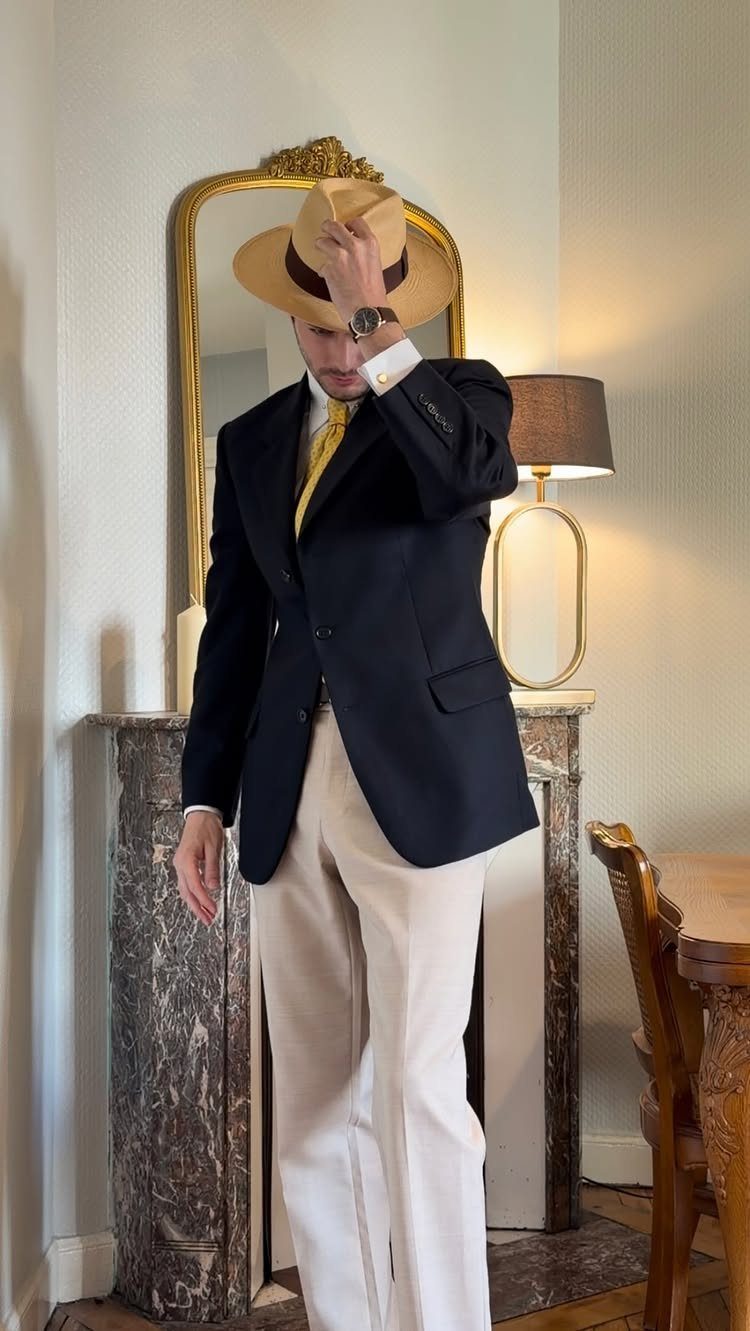
A navy blazer with cream trousers is about as dependable as menswear gets. A white shirt keeps the middle clean, and a yellow patterned tie adds the one bright note.
Fit does the real work here: the shoulders should sit flat and the trousers should fall straight to the shoe. Cream shows wear faster than gray, which is the main cost.
A straw fedora adds some personality, but I’d choose it only for warm days and skip it at the office.
If there’s another theme here, it’s that menswear essentials shouldn’t be unitaskers. They should be useful in a variety of situations, and when it comes to tailoring in particular, the navy blazer is a Swiss Army Knife.
— GQ
Building a Versatile Wardrobe
A wardrobe of about 21 interchangeable pieces can cover 30 days of outfits, which is why I trust the capsule approach over buying one-off statement items. Every piece should pair with at least 3 others, or it stays on the hanger.
Comfort comes first when you shop. Soft, breathable fabrics wear longer in a day than anything stiff, and you will reach for them more often.
Stick to a small color base so tops and bottoms swap freely. Add variety through texture and layers rather than new colors.
Choosing the Right Fit
Comfort and sharpness are not opposites, and a good fit is what joins them. Clothes that pinch, ride up or restrict your arms will look worse than looser ones, no matter the label.
Most brands now cut the same shirt or jacket in an athletic fit, plus tall and short lengths, so a broad chest or an unusual height rarely means settling for off-the-rack that doesn’t fit.
If you have broad shoulders or thick thighs, an athletic cut usually beats sizing up and living with a sloppy waist. If you are tall or short, try those lengths before you pay for alterations.
Then bring the pieces you wear most to a tailor. Hemming trousers and taking in a waist costs little next to the clothes, and it makes an average piece look made for you.
Seasonal Wardrobe Updates
Refresh your wardrobe by season, but in small steps. Replace or add a few pieces rather than the whole closet, and pick ones that also work with what you own.
Transitional pieces earn their price: a light overshirt, a chore coat, or a mid-weight knit works in the last warm weeks and carries straight into fall.
A lighter jacket or a mid-weight layer carries you through the weeks when mornings are cool and afternoons are warm.
Before each change of season, pull out what no longer fits or feels right, and note the gaps. Buy to fill those gaps only.
Frequently Asked Questions
What is smart-casual for men?
Smart-casual lands between the office and the weekend: put-together enough to look deliberate, loose enough that nobody asks if you have an interview.
A simple formula pairs one dressier piece, like a blazer, good trousers or dress shoes, with something relaxed, like a clean tee or a quality knit.
How do I find my personal style as a man?
Ask yourself 3 things: what you grab on an ordinary morning, what occasions really fill your calendar, and what makes you feel most like yourself.
Build from there with about 21 versatile pieces that all work together, and add to them slowly.
How should men’s clothes fit?
Clothes should never pinch, ride up or restrict your arms; a comfortable fit looks better than a tight one, whatever the label.
Broad shoulders or thick thighs usually call for an athletic cut rather than sizing up, and tall or short lengths are worth trying before you pay for alterations.