The 8 ideas below start with a navy suit and end with footwear, and in between the main thing that changes is how formal each look feels: a charcoal suit and a three-piece sit at the strict end, a burgundy velvet blazer or a white blazer over a black turtleneck at the relaxed one.
Fit runs through every look here, and I’d check it first, because a three-piece vest and a navy blazer with white trousers both show a sloppy cut right away.
1. Navy Suit
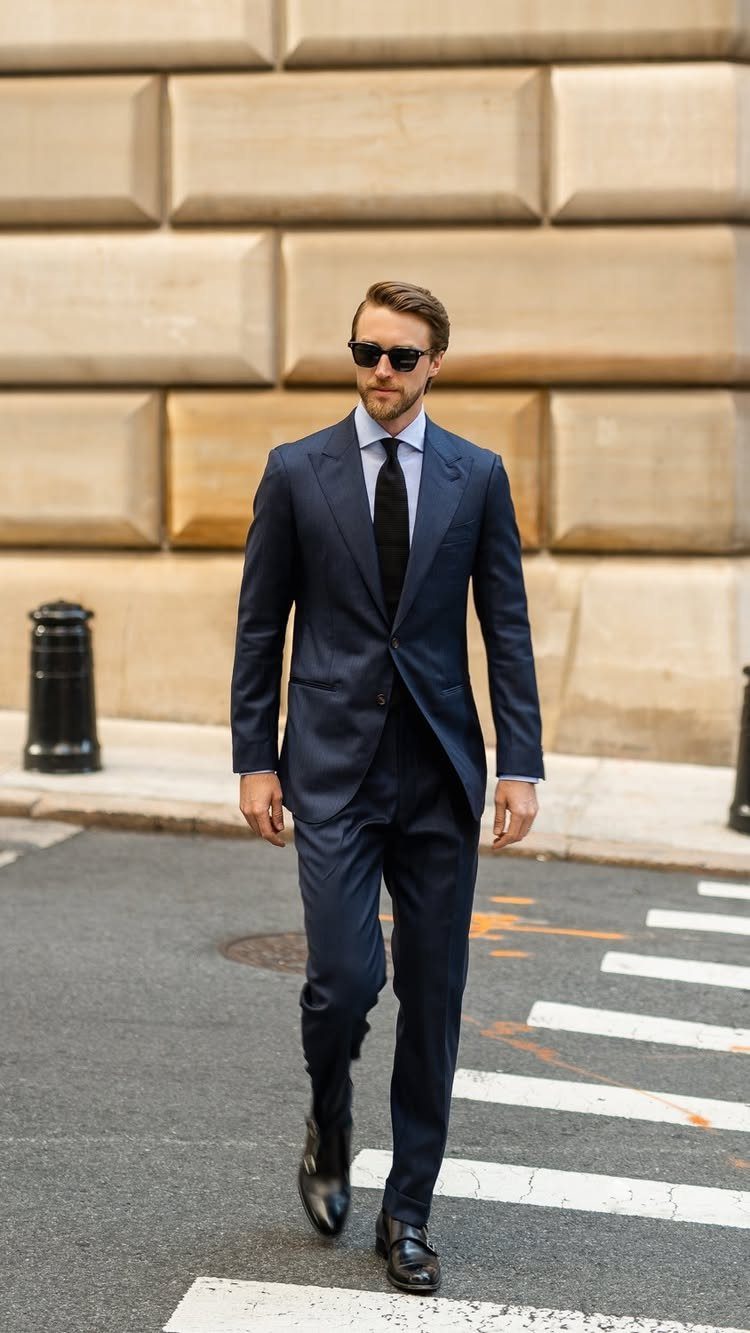
Navy is the suit I’d buy first. A light blue shirt and a dark tie keep it clean, and it works for a wedding, a dinner or an office event without a second thought.
Black shoes are fine here, but dark brown looks warmer in daylight. Skip a shiny tie and let the shirt do the quiet work.
2. Charcoal Suit
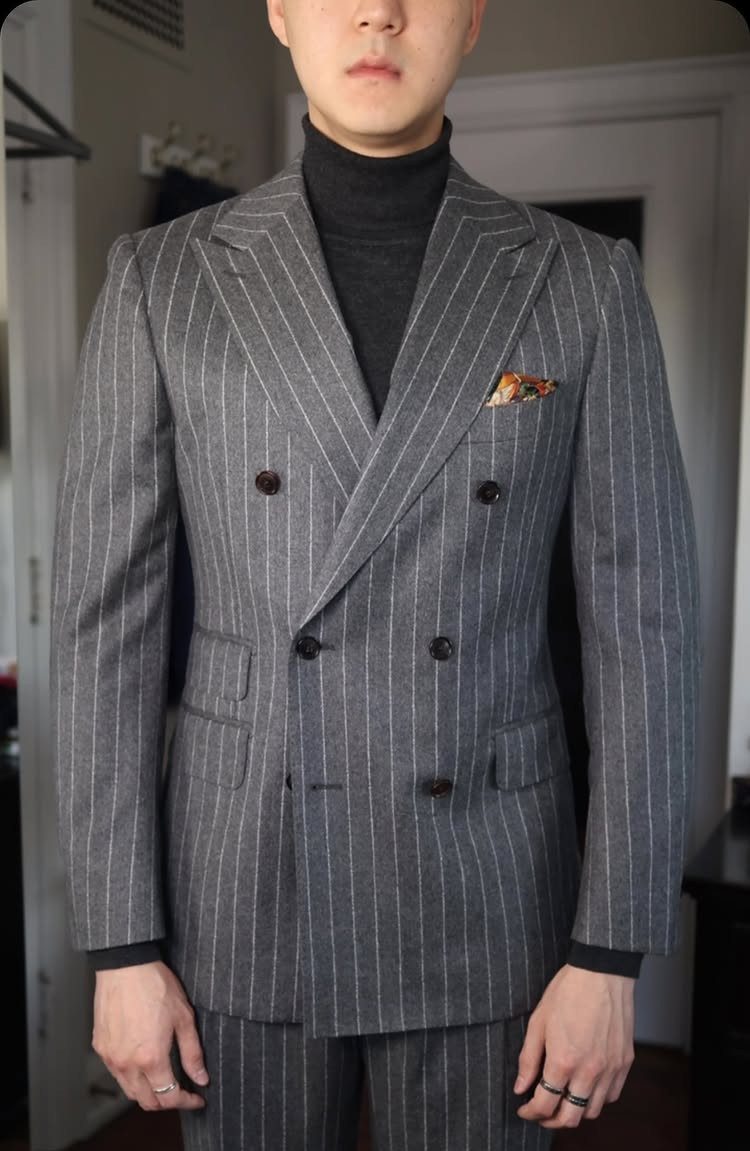
Charcoal reads more serious than navy, which is why it suits evening events and formal rooms. A pinstripe adds some authority, and a double-breasted cut makes it feel deliberate rather than default.
Swapping the dress shirt for a turtleneck keeps it modern.
A black turtleneck under a charcoal suit, finished with black cordovan loafers, is a tone-on-tone idea that’s easy to copy. A patterned pocket square gives the chest some life without adding a tie.
3. Earthy Colored Suit
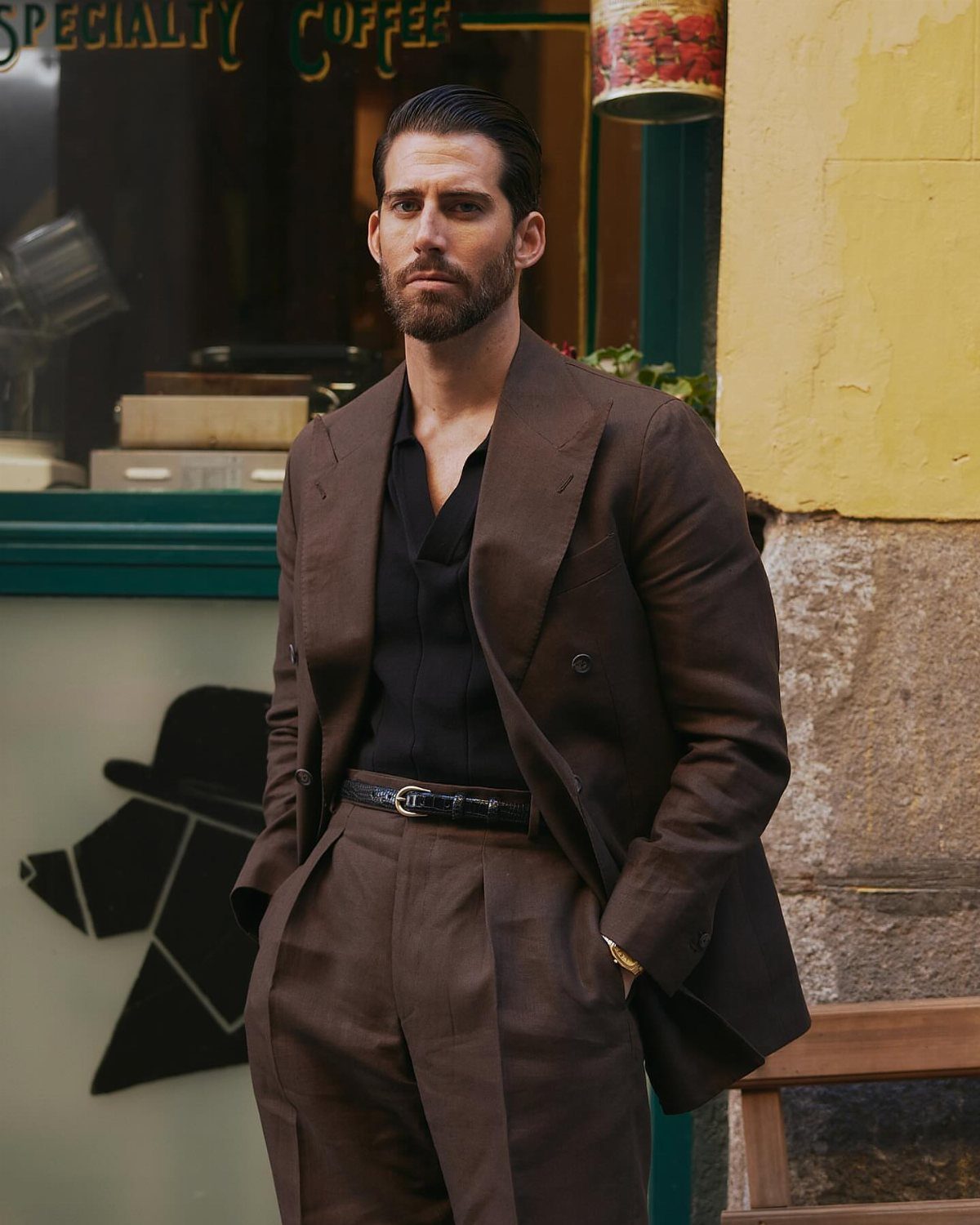
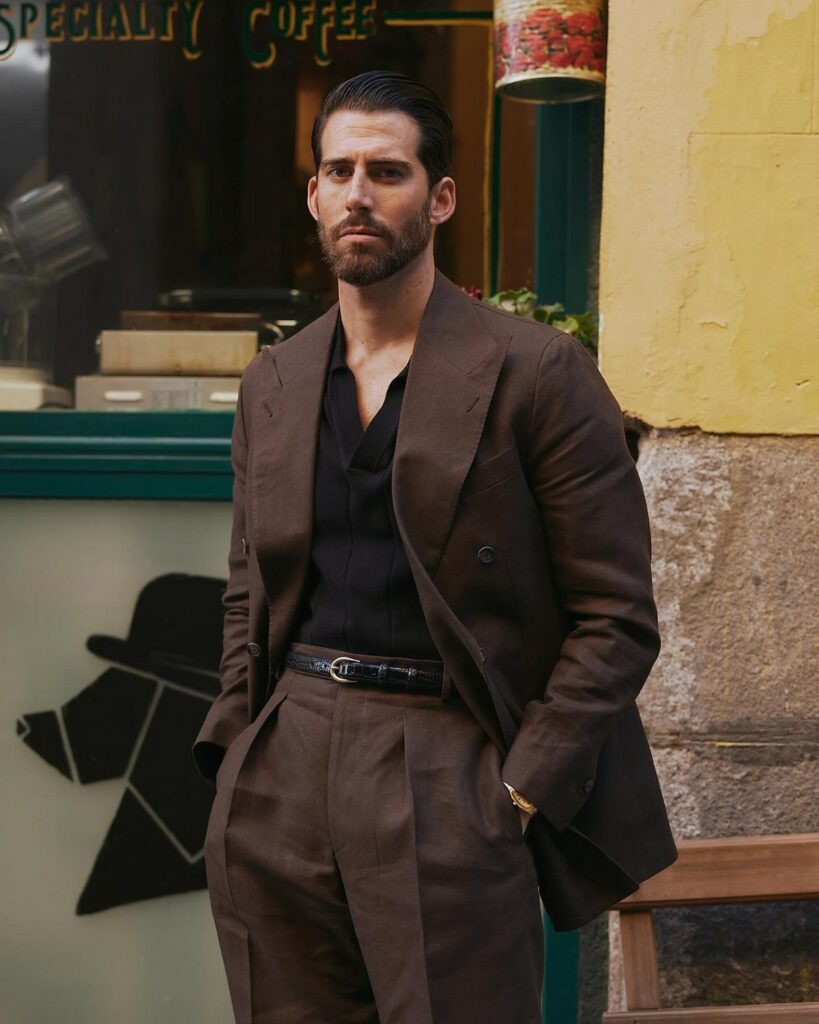
Dark brown pulls a suit away from the navy-and-gray default, and it does so without looking loud. Worn with a black shirt, it turns almost monochrome and reads sharp rather than rustic.
Linen suits the look in warm weather, though it wrinkles, so accept some creasing as part of the charm.
Olive or tobacco shades work the same way if brown feels too bold. I’d keep shoes dark and simple.
4. Unstructured Suit
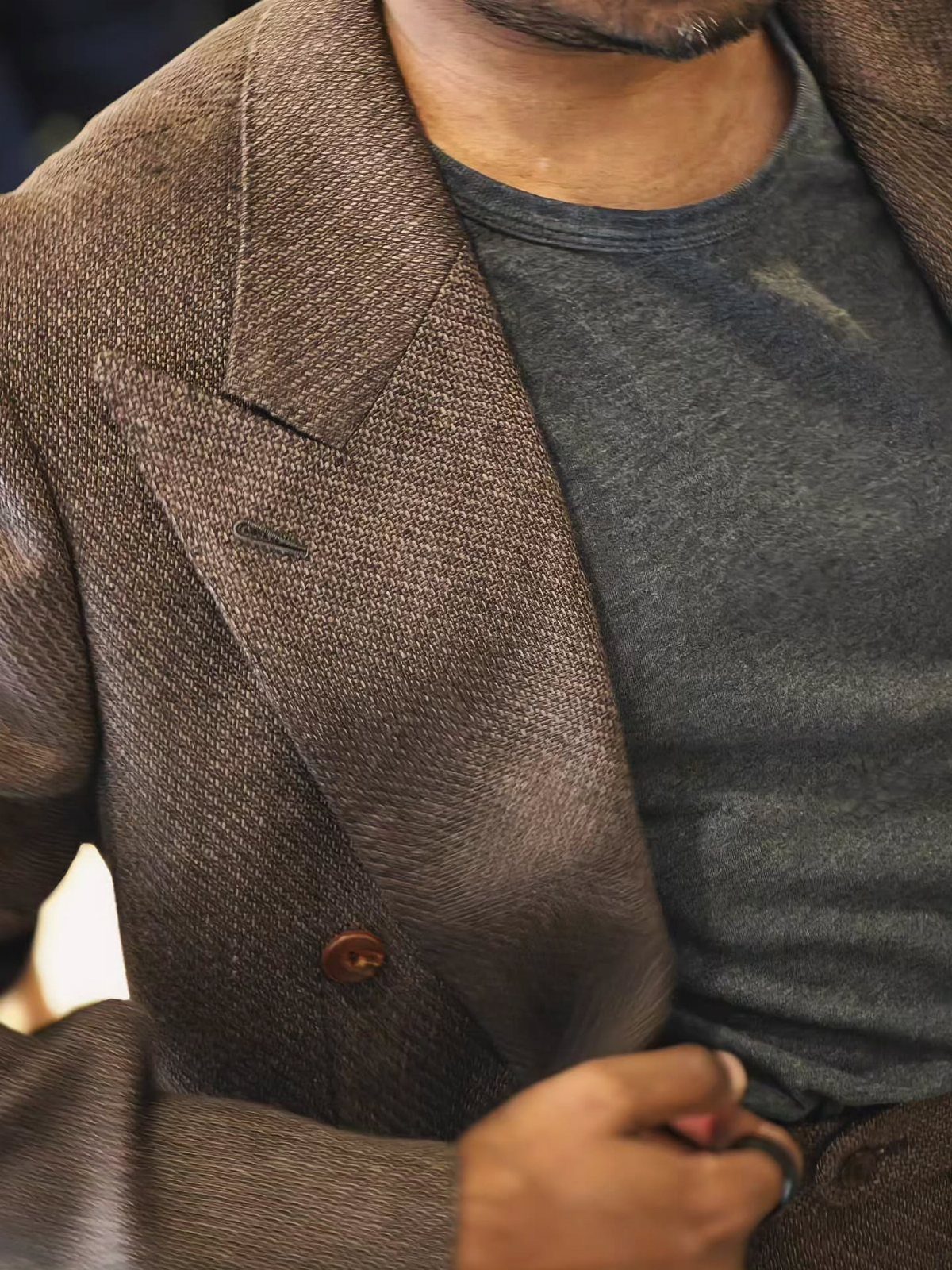
A suit with little padding or lining drapes softly, so it feels closer to a cardigan than armor.
Paired with a plain gray crewneck t-shirt, it suits a party or a casual wedding where a stiff jacket would feel like too much.
Texture does the dressing up here, so pick a woven or nubby cloth in a solid color.
A double-breasted front adds some formality back. If the dress code is strict, wear a shirt instead of the tee.
5. Three-Piece Suit
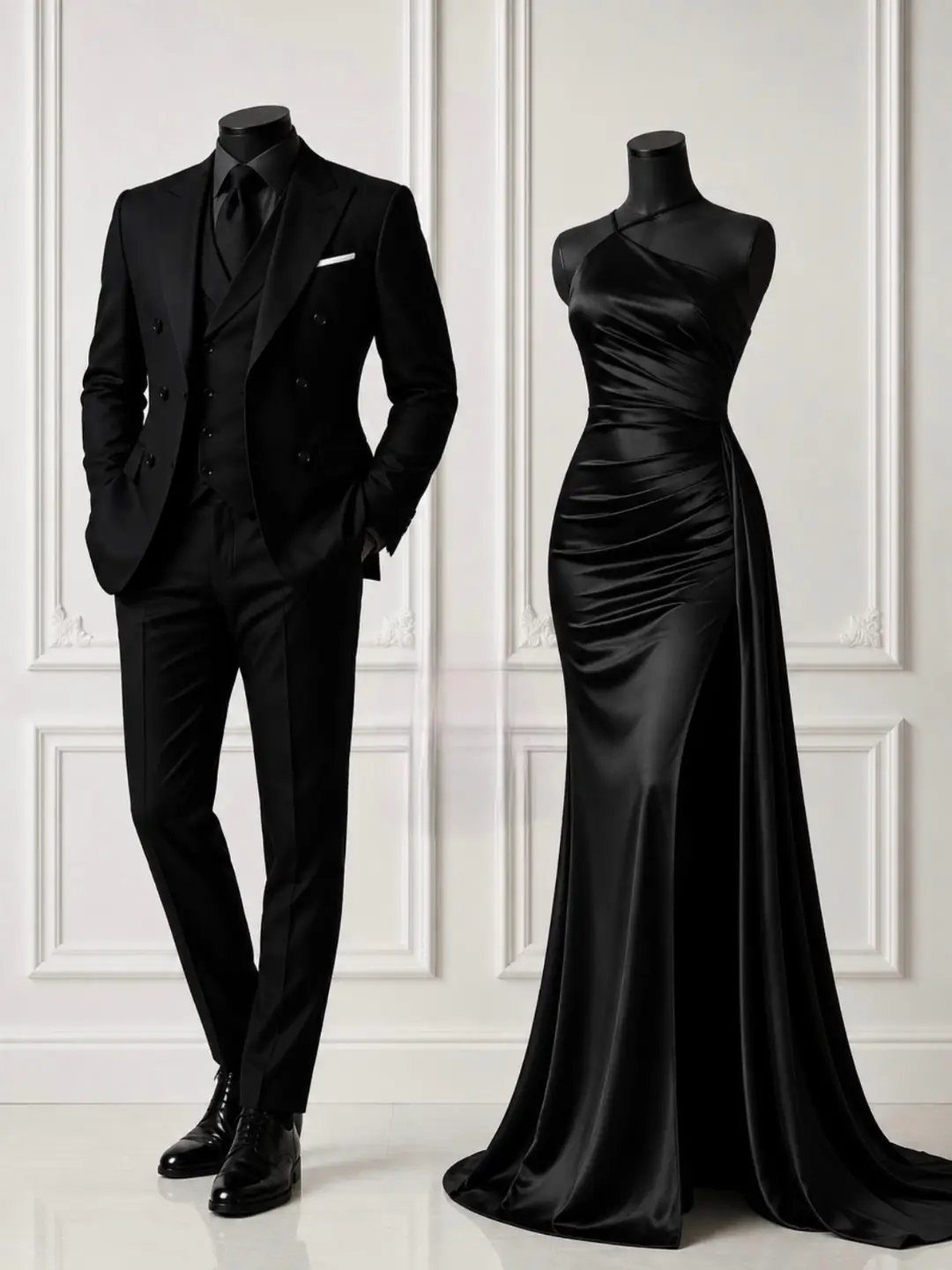
A black three-piece suit with tie and pocket square is the most formal thing on this list, and the vest is what earns that status.
It fills the gap between shirt and jacket, so you can lose the jacket at a reception and still look dressed.
Keep the vest fitted, with the bottom button left undone. Black suits best evening events; for daytime weddings, I’d lean toward a lighter shade.
In general, if you find yourself staring at an invitation that requests formal attire, it’s a safe bet that it’s a black or white tie event, where you’re expected to show out in your best and most polished dress.
6. Burgundy Velvet Blazer
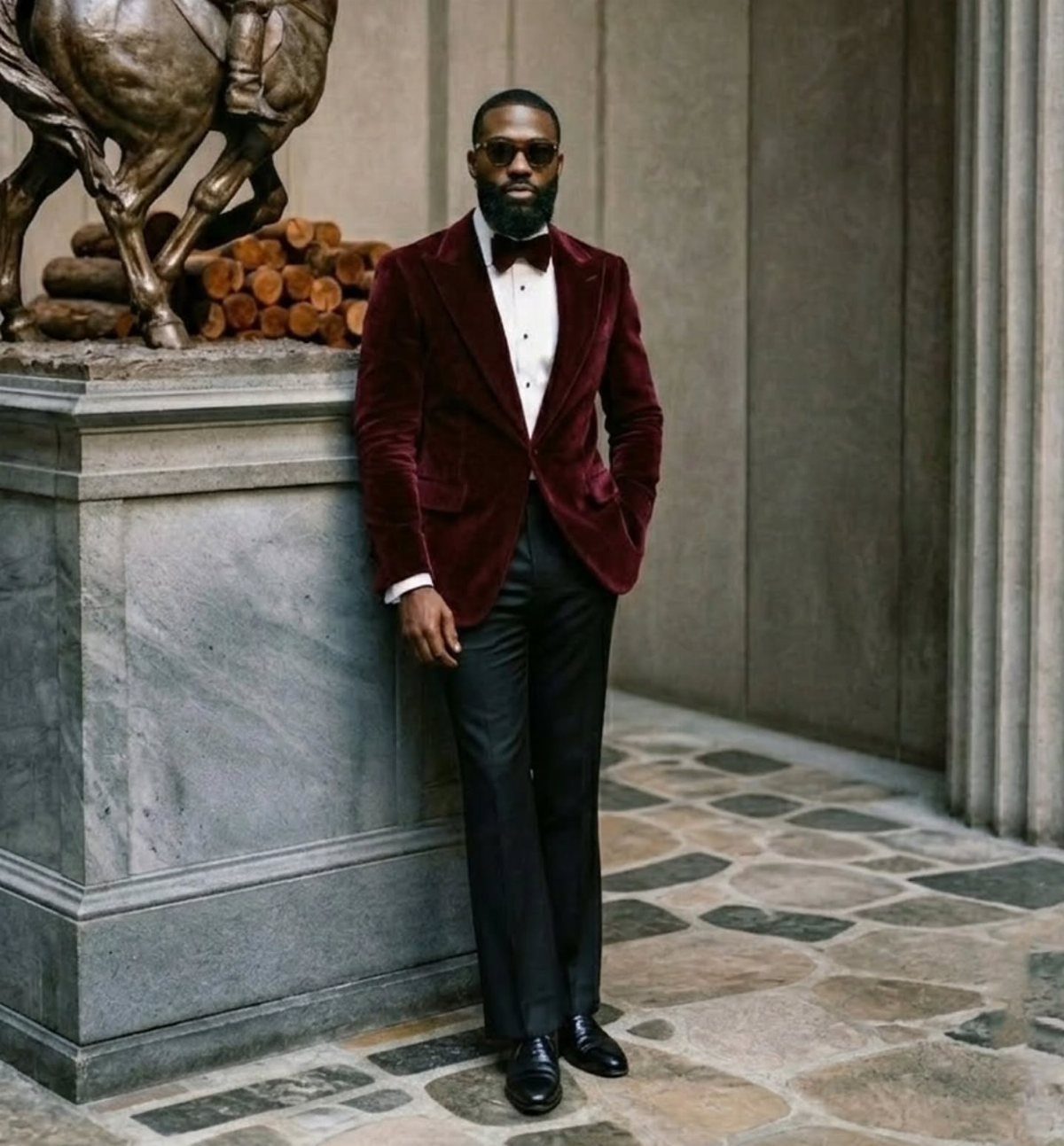
Velvet belongs after dark. A burgundy blazer takes a white shirt and black trousers and instantly looks like a holiday party or a cocktail hour.
The bow tie is optional but it fits the mood; a plain open collar is the easier move.
Keep everything else simple, since the jacket’s rich texture is the whole show. Black trousers are the safest partner, and charcoal works too.
7. White Blazer and Black Turtleneck
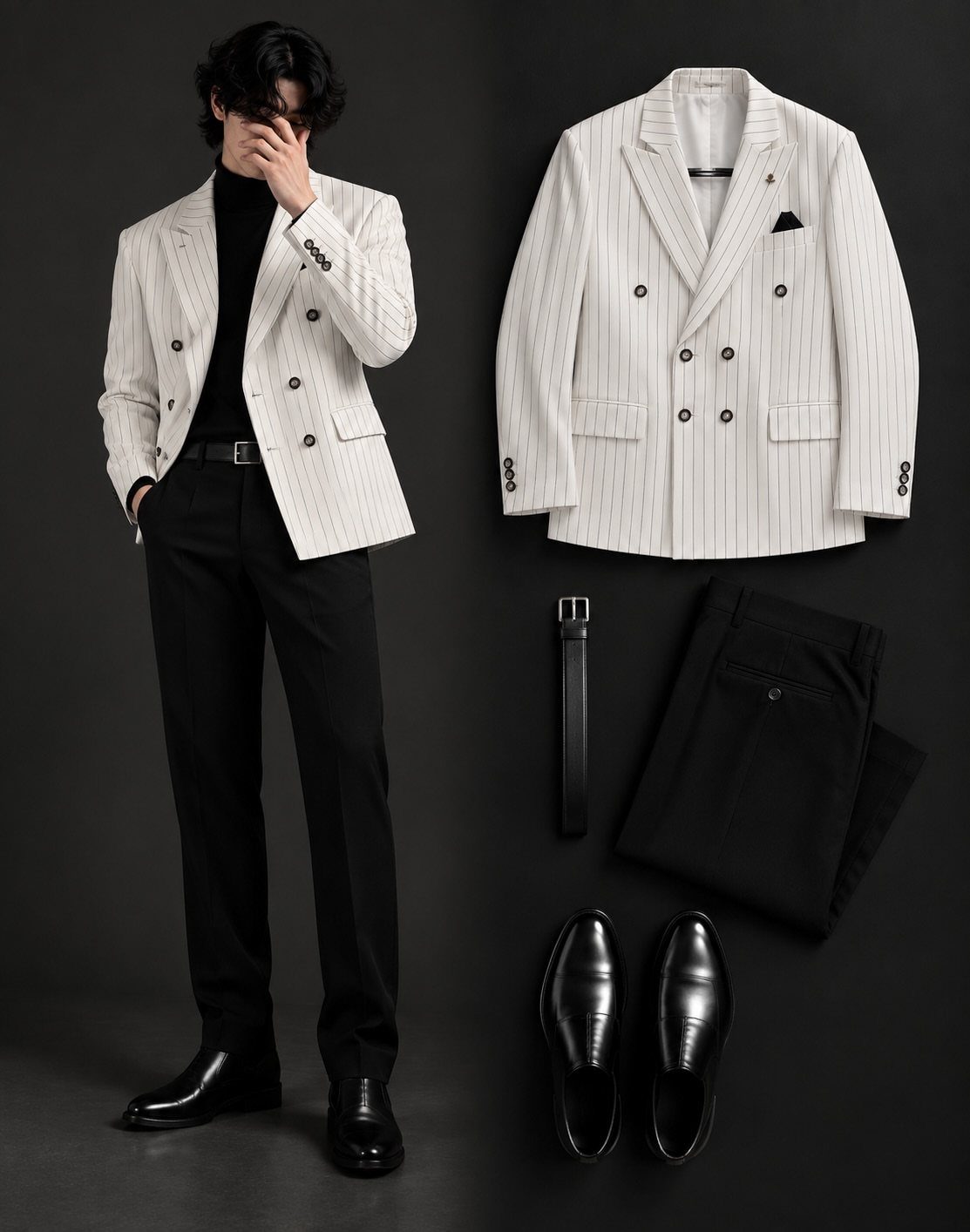
White over black is the sharpest contrast you can put on one body, and a fitted turtleneck keeps it from reading as a costume.
The pinstripe adds a line of detail so the blazer doesn’t look flat against all that black.
Match the trousers to the turtleneck so the dark column stays unbroken, and let the blazer be the only light piece.
Black dress shoes and a black belt finish it. White shows every mark, so I’d save this for an evening party or a dinner, not a long day outside.
8. Navy Blazer with White Trousers
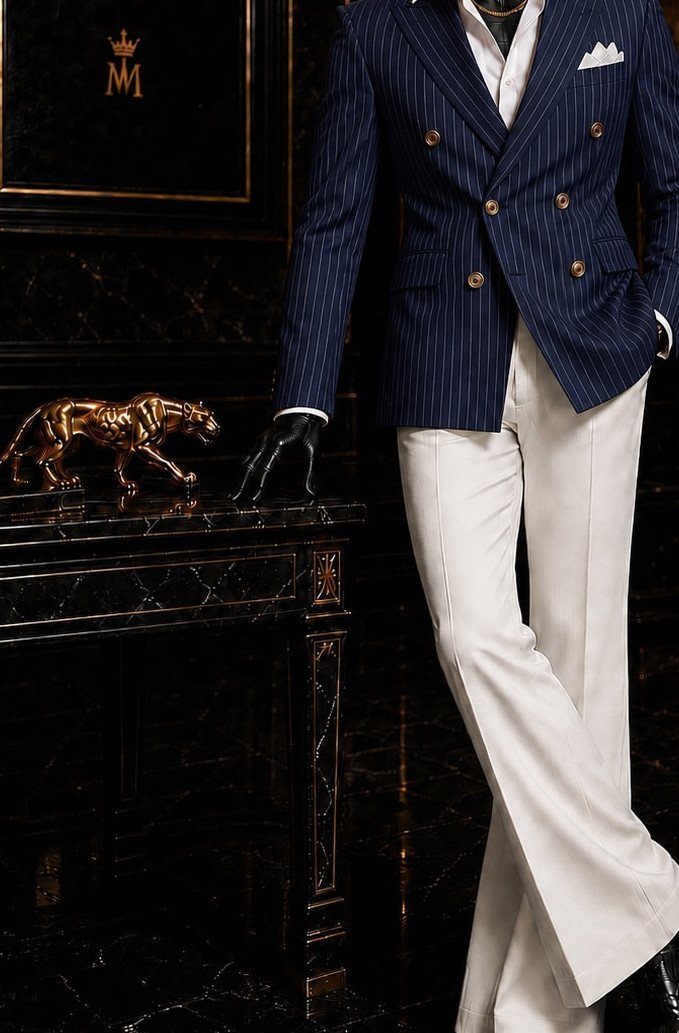
Navy on top and white below gives a double-breasted pinstripe blazer a lighter, summery feel. A white collared shirt tucked into white trousers makes the blazer the one dark piece, and the pinstripe adds structure.
White trousers show every flaw in fit, so tailoring matters more here than with almost any other pairing.
White trousers show every pull and wrinkle, so hem them cleanly and keep the rise comfortable. Brown loafers or dark dress shoes both work; I lean toward brown for daytime events.
Modern Formal Attire
The old formula of suit, shirt, tie, pocket square and smart shoes still works, but it is no longer the only way to dress up.
Tailoring has loosened, and designers began showing suits with no shirt or tie at all, starting with the spring-summer 2018 shows.
For most men, the useful part is permission. A relaxed cut with a knit or a plain tee under it can read as dressed up, as long as the fabric is good and the fit is clean.
Sneakers can join in too, if they’re plain and kept spotless. Save the full shirt and tie for the occasions that still call for them, like a traditional wedding.
Suit Versatility
A single suit has to do the most work, so I’d pick one with a soft, unpadded shoulder and no stiff canvas or heavy lining. You’ll end up wearing it even when nothing requires it, because it’s comfortable and easy.
That range is what makes it worth the money. Pair it with a shirt and a knit tie for the office, then swap in a plain T-shirt and clean sneakers for dinner.
I’d pick a color you can repeat without anyone noticing, and let the shirt, tie or tee change the mood. One jacket and trousers, three or four different evenings.
Footwear Choices
One pair that does everything beats three pairs that almost do. Derbies are a safe first pair, though I’d go for a chunkier sole and heavier leather so they hold up next to denim as well as wool trousers.
Monk straps and Chelsea boots are the other 2 shoes I’d consider. These are traditionally formal styles, and a chunky rubber sole makes them far easier to wear with casual clothes.
My preference is the sturdier derby for a first pair, since it asks the least of you. Add the soled monk strap or Chelsea once you know your wardrobe leans smart casual.
Frequently Asked Questions
What is formal dress for a man?
If an invitation says formal, plan on a black tuxedo with a proper tuxedo shirt; that wording almost always means a black tie event, and occasionally white tie.
Black tie also calls for a crisp white shirt and a cummerbund, while white tie goes further with a white bow tie and a tailcoat. There is very little room to improvise at this level.
What is the difference between formal and semi-formal wear?
Formal wear is typically a dark tuxedo with a bow tie, while semi-formal gives you more freedom. You can skip the tie and choose dressy or relaxed shoes, but keep the jacket and the dress shirt.