The 10 outfits run from a charcoal suit with a pressed white shirt to black shorts with loafers, and the deciding factor is the fit of your own frame and the places you actually go.
A boxy jacket with wide legs flatters one build, slim trousers with a close-cut tee flatter another, so start from what you already wear and swap one piece at a time.
1. Fitted Suits and Crisp Shirts
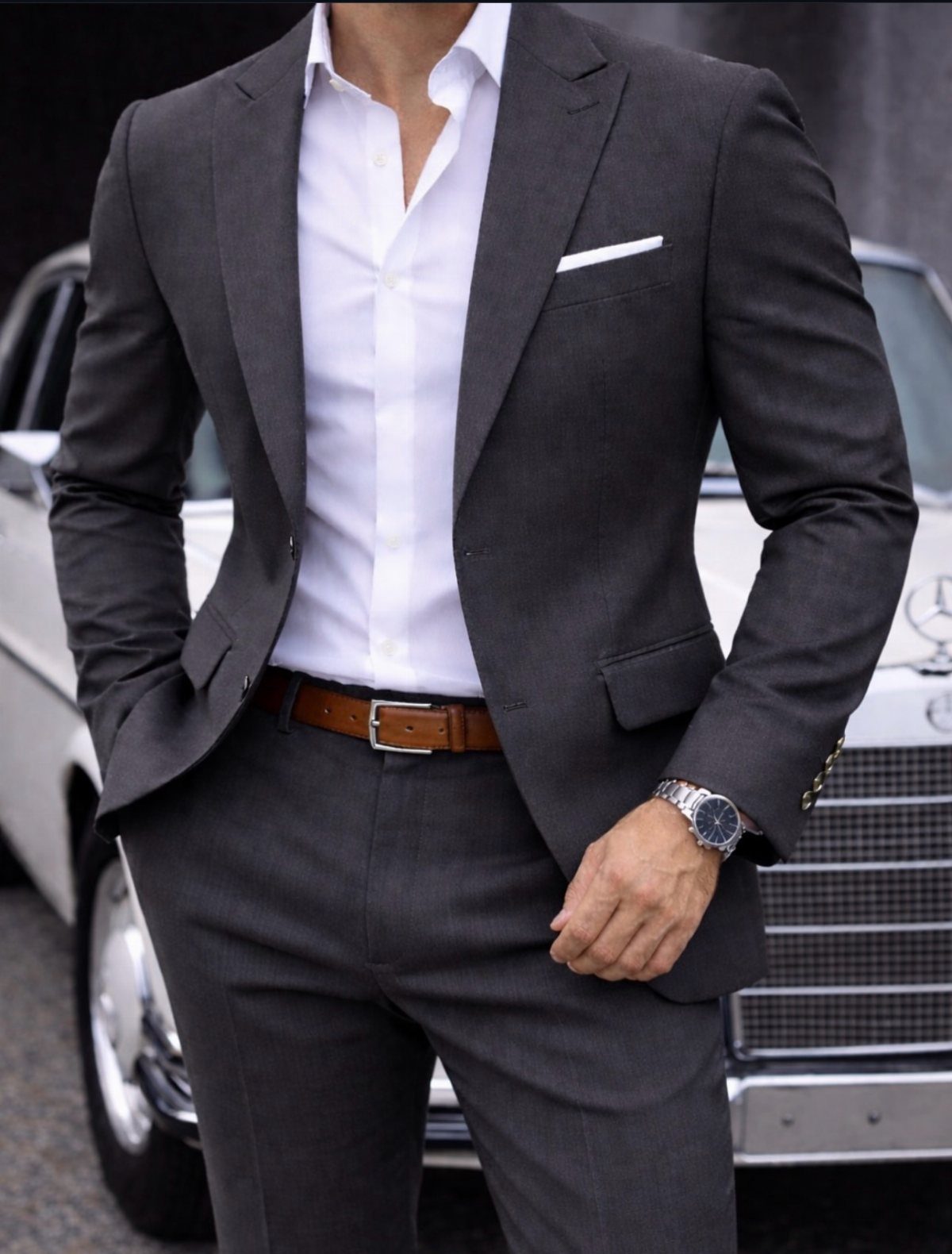
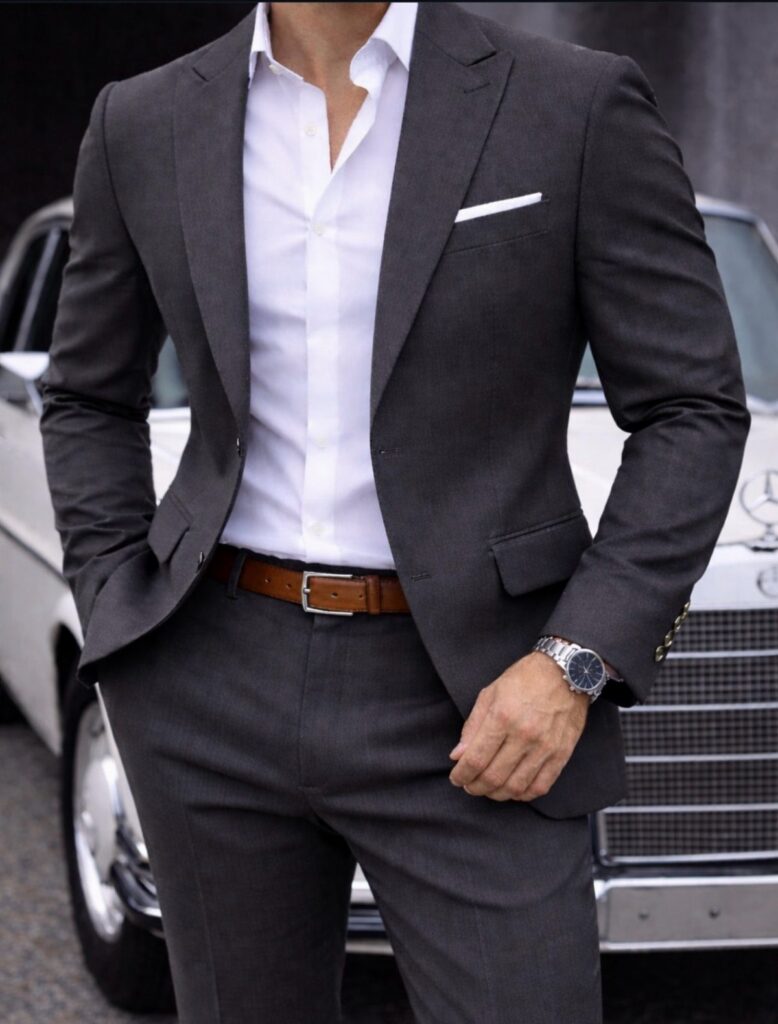
Charcoal and white is about the easiest pairing a man can own, and the fit does all the work. Shoulders should end where yours do, and the jacket should close without pulling across the chest.
I like the collar left open with the suit, as it looks relaxed without losing the sharpness.
A brown belt and a plain watch finish it. Keep the shirt pressed, because a wrinkled white shirt undercuts a good suit faster than a cheap one.
2. Utility Style
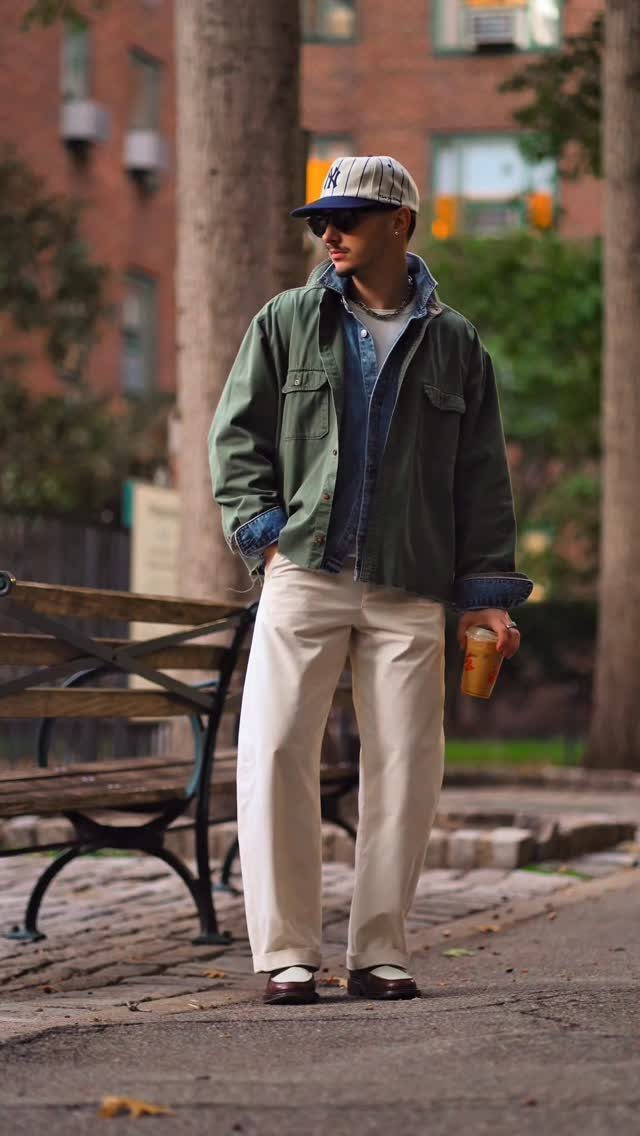
Olive is the color that makes this work.
Start with the jacket, since it carries the look. Keep the rest simple: a cap, sunglasses, nothing with extra pockets or straps.
Wide legs and a boxy jacket add up to a lot of volume, so make sure at least one piece, usually the shirt, sits close to your frame.
3. Preppy Style
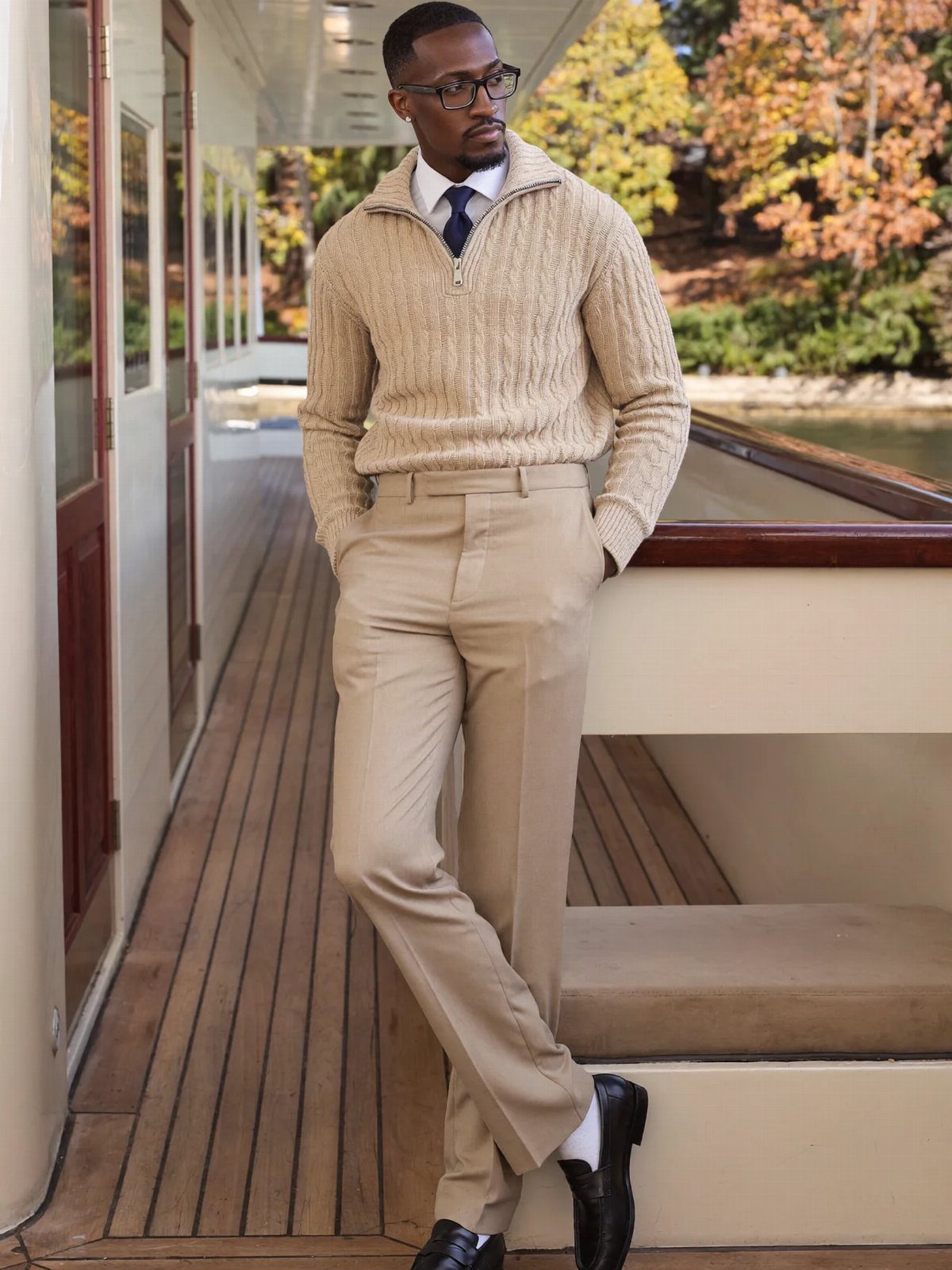
A tie under a cable-knit sweater is the detail that makes this preppy rather than just cozy. Beige knit, tan chinos and loafers stay in one warm color family, so the tie can be the only thing that stands out.
Pick a knit sweater with a V-neck or crew neck that shows the knot and collar.
Skip anything bulky at the neck. Glasses suit the look, but they’re optional.
I’d choose loafers over sneakers here; sneakers soften the polish you’re after.
4. Grey Wool Coat and Turtleneck
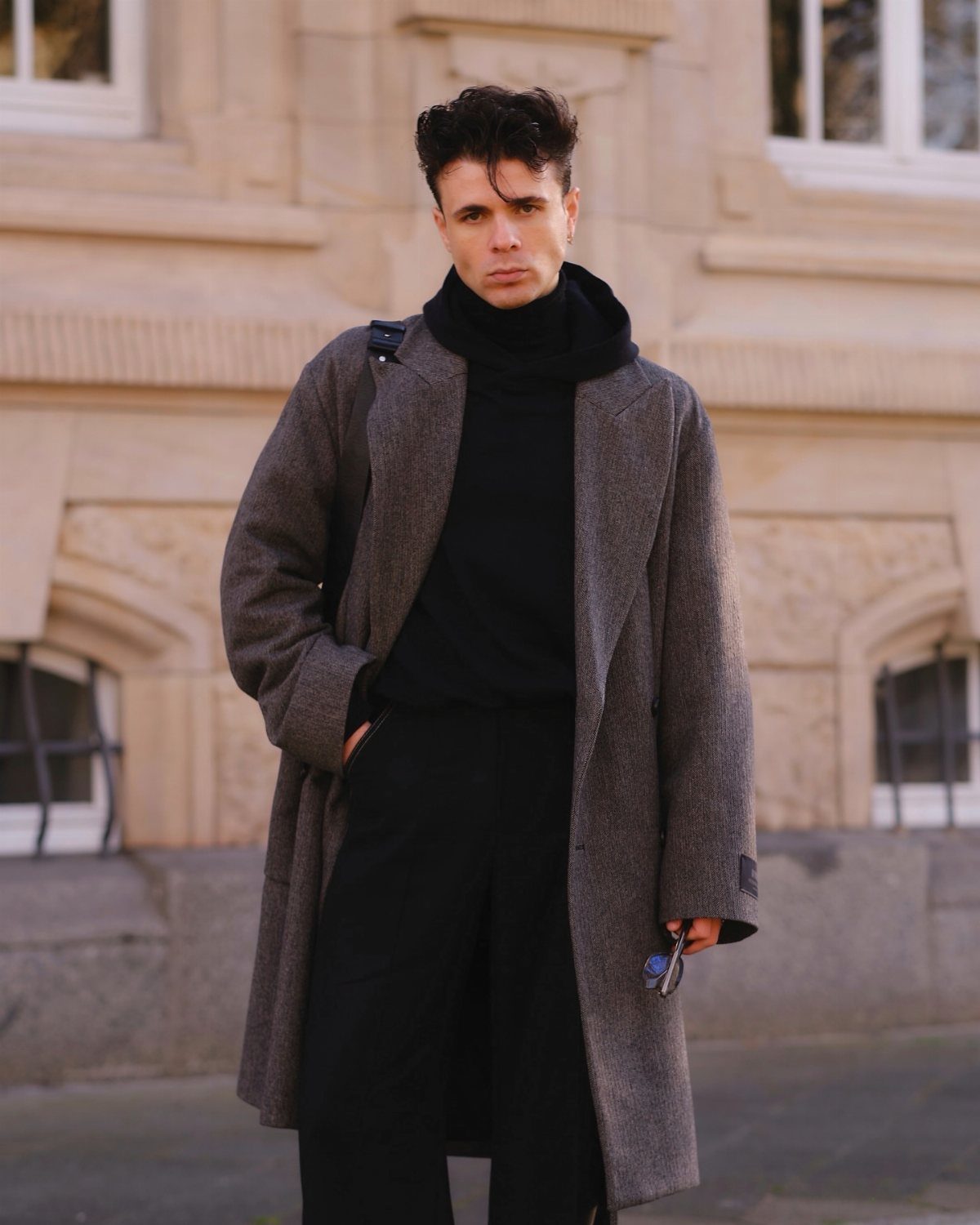
Black underneath and grey on top gives a long wool coat its best setting. The turtleneck and trousers form one dark column, so the coat’s color and drape read clearly.
Look for a coat that reaches below the knee and has shoulders roomy enough to wear over a knit.
An oversized cut looks deliberate here, but only if the trousers stay slim or straight. Sunglasses in hand are a nice small touch.
Spend the money on the coat, and let a plain merino turtleneck in charcoal or black do its quiet job underneath.
5. Striped Button-Down and White Trousers
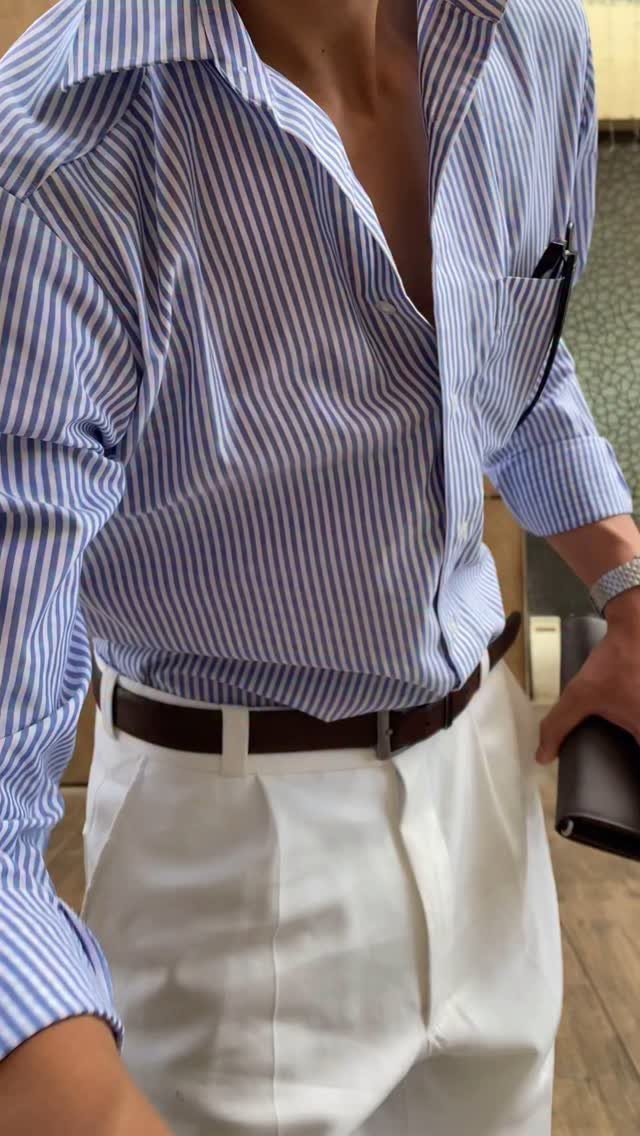
White trousers look bolder than they are. Blue and white vertical stripes up top keep things crisp, and the brown belt gives the outfit one warm accent.
Tuck the shirt in, since the belt is part of the look.
Pleated trousers give room through the hip and thigh, which suits men who find flat fronts tight. Wear the shirt unbuttoned a couple of buttons for a looser feel, or fully buttoned for a sharper one.
The trade-off is plain: white shows everything, so choose a thicker fabric that doesn’t show through.
6. Black Leather Jacket and Jeans
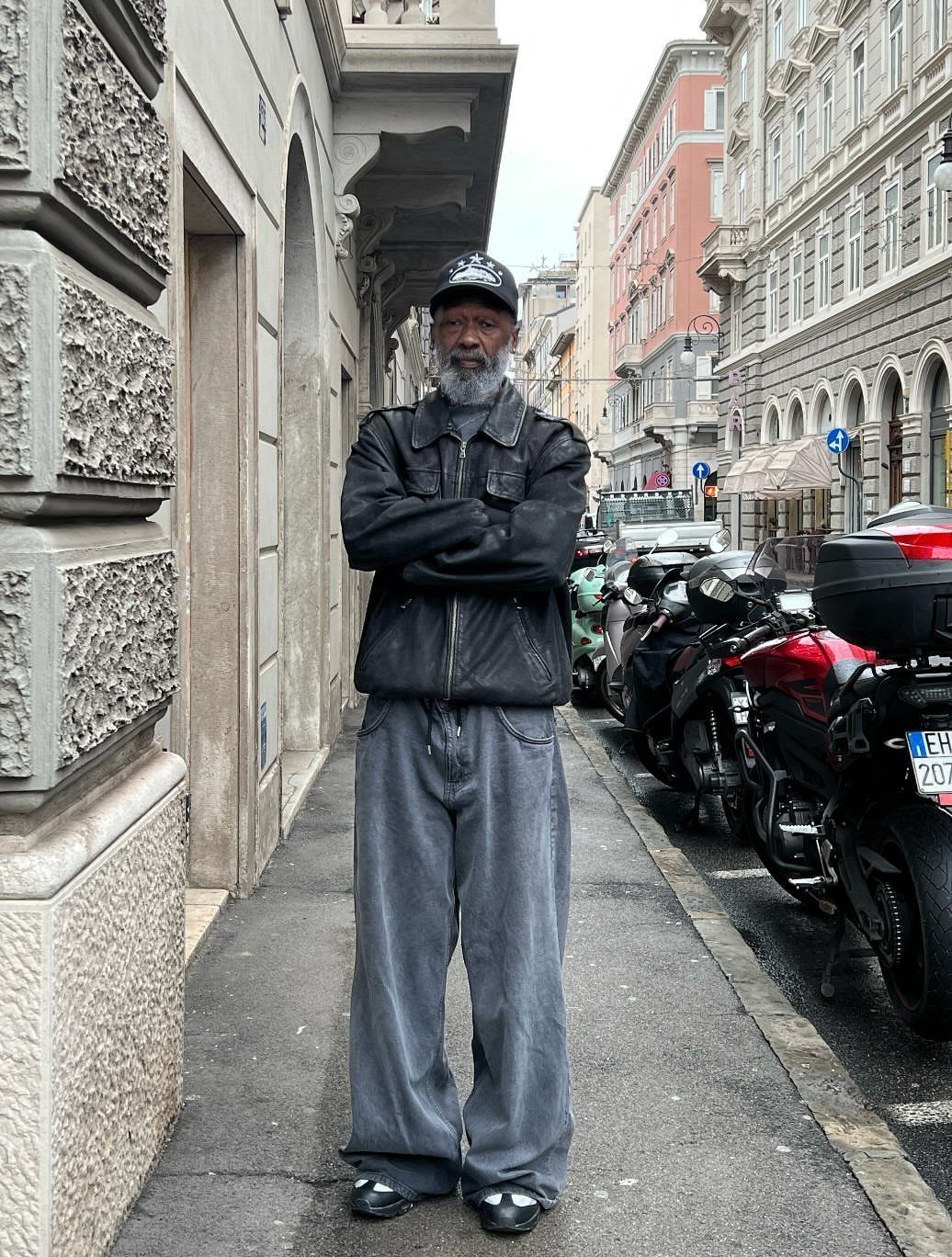
A black leather jacket works on a man of any age, and this version proves it. Baggy grey jeans, sneakers and a black cap turn a biker staple into something you could wear to run errands.
The pairing relies on contrast: a fitted, structured jacket against loose denim.
If both are baggy, the outfit loses its shape. Keep the jacket close at the shoulders and let the jeans fall straight over the sneakers.
Grey jeans are my pick over blue, because they sit quietly beside black leather.
7. Patterned Statement Jacket
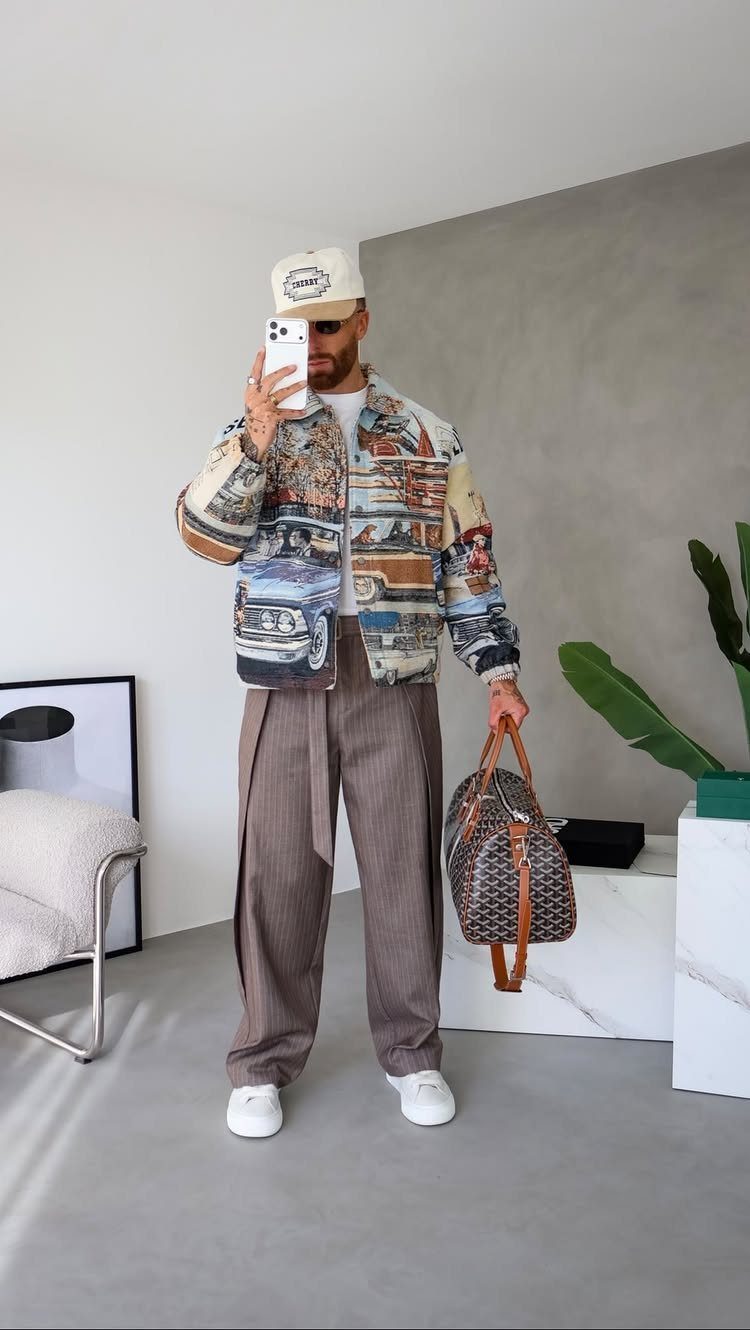
A loud jacket works best when everything under it stays quiet. A tee in solid white and wide-leg trousers in muted brown give a busy print room to be the one thing people notice.
White sneakers keep the bottom half clean, and a cap adds a casual finish. Let the jacket’s colors guide the rest: pull one shade from the print for the trousers, and leave the others alone.
Try it on a plain day first, before you wear it to an event.
8. Textured Sweater and Chinos
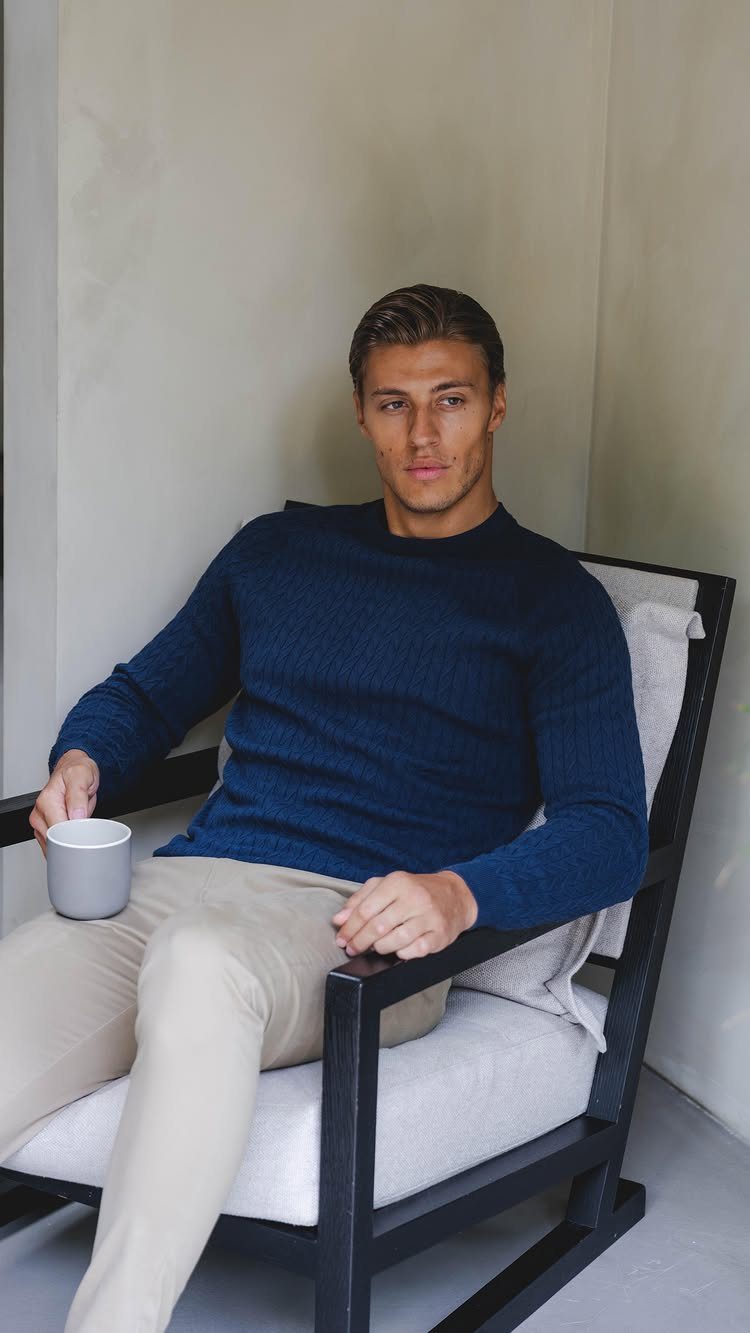
Navy knit and light beige trousers make a pairing that looks considered without any effort. The sweater’s texture supplies the interest, so the trousers can stay smooth and tailored.
I’d pick a sweater with visible texture over a flat knit, since it reads richer up close. Choose trousers that sit slim through the leg, because a chunky top needs a clean line below it.
Beige shows dirt, so mind the hems.
9. Monochrome T-Shirt and Trousers
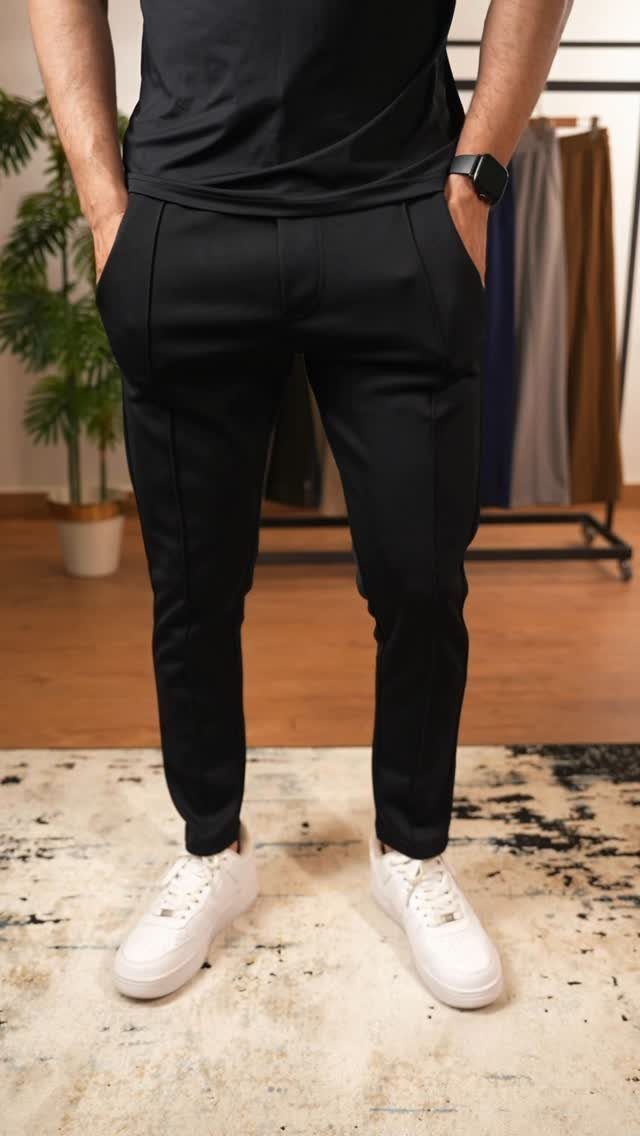
Black on black asks for just 2 decisions: the t-shirt and the trousers. Pick a clean crewneck that fits close at the shoulders, and slim trousers that hold their line from hip to ankle.
White sneakers break up the dark column and keep it from feeling heavy. I prefer a plain pair with no loud logos.
Cheap black fabric fades and looks gray after a few washes, so a thicker cotton tee is worth the extra money.
10. Smart Casual Shorts and Loafers
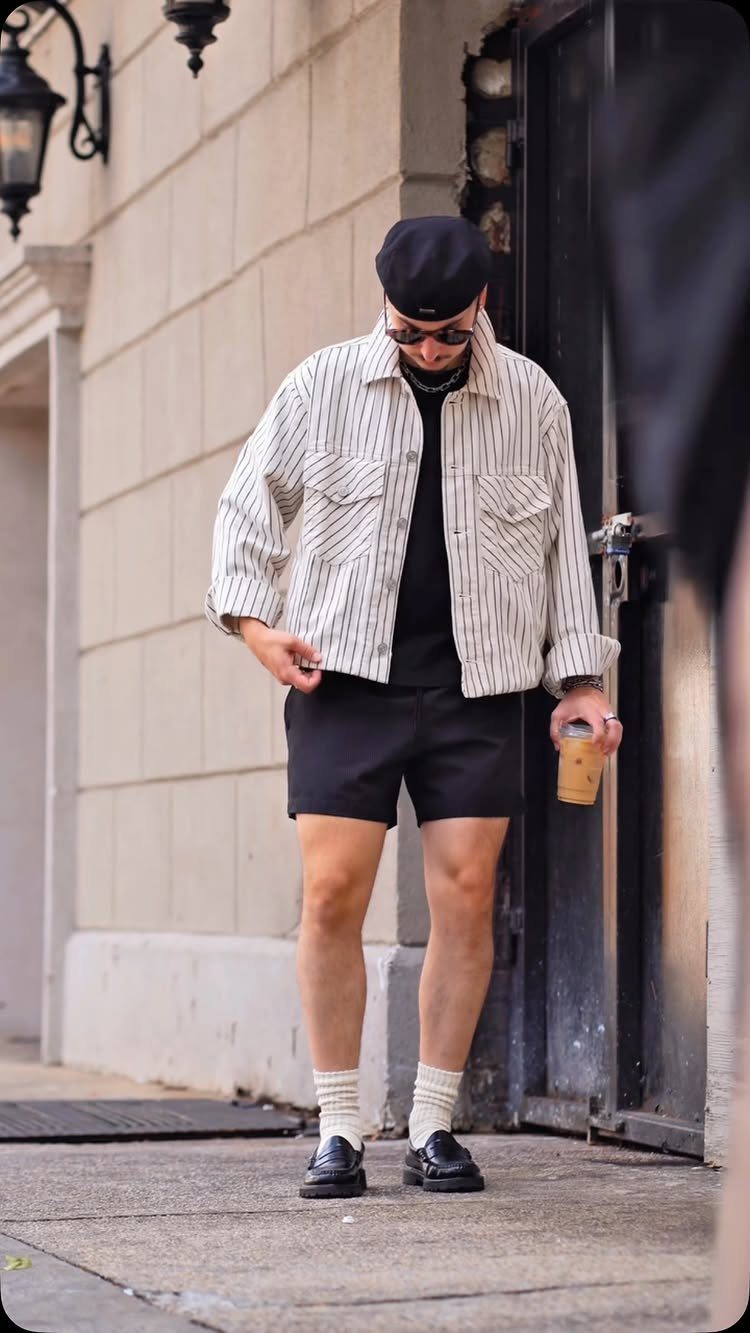
Shorts can pass as smart casual if everything around them is tidy. Tailored black shorts, a button-down worn open or layered, and loafers do that job well.
White socks add a crisp break between the shorts and the shoes, and I like them here more than going sockless. Keep the shorts hemmed near the knee, not far above it.
Sunglasses and a flat cap finish the look. Choose a shirt with some structure so it reads dressed up rather than beachy.
Building Your Personal Style
Men’s style used to run on rules. Now it runs on choices, and the choices only work if they fit the life you actually lead.
Begin with the 3 or 4 pieces you already reach for because they fit well and feel good, and only then add one new item at a time so you can see what actually works with them.
A wardrobe built that way grows without leaving you with clothes you never wear.
Comfort counts as much as looks. If an outfit feels forced or itchy, it shows in how you stand, and no label fixes that.
A closet of dependable basics can handle 1 or 2 current trends, as long as those picks sound like you and suit the places you actually go.
Classic business attire and contemporary streetwear can sit in the same closet, as long as each piece earns its place in your week.
Treat any outfit idea as a starting point. Change the color, the fit or the shoes until it looks like you, not like a copy.
Fashion Trends
Trends make more sense once you know where they came from.
The modern suit settled into its shape between the late 1800s and the early 1900s, and the 2 World Wars pushed it further toward hard-wearing cloth and cuts that let a man move.
From the 1920s through the 1940s, a close-fitting suit signaled that a man was doing well, helped along by film stars whose screen glamour spilled into ordinary wardrobes.
The 1990s and 2000s then pulled men toward casual clothes: relaxed fits, minimalism, and designer streetwear that challenged old dress codes.
In the 2010s and 2020s, streetwear and luxury labels met in the middle, and a hoodie next to tailoring stopped looking odd. Sustainability and gender-neutral styling also moved into the mainstream.
That history is useful when you shop. Structured outerwear and oversized coats borrow from tailoring’s authority and from streetwear’s looseness at once, so they sit comfortably in either kind of wardrobe.
Buy the trend that fits that mix, and skip the one that fights everything you already own.