The 9 looks run from a cream-and-black knit polo with no jacket at all to a black velvet tuxedo jacket with a bow tie, and the dress code of the event decides which one is yours.
A dinner or patio afternoon calls for the polo, a wedding or gala for the tuxedo, and an interview or work event for the grey micro-pattern suit.
Between those 2 ends sit the unbuttoned dress shirt with a suit and the monochromatic dark suit, which suit date nights and city evenings well: the open collar relaxes the look while the jacket keeps the outline sharp.
1. Statement Polo Shirts
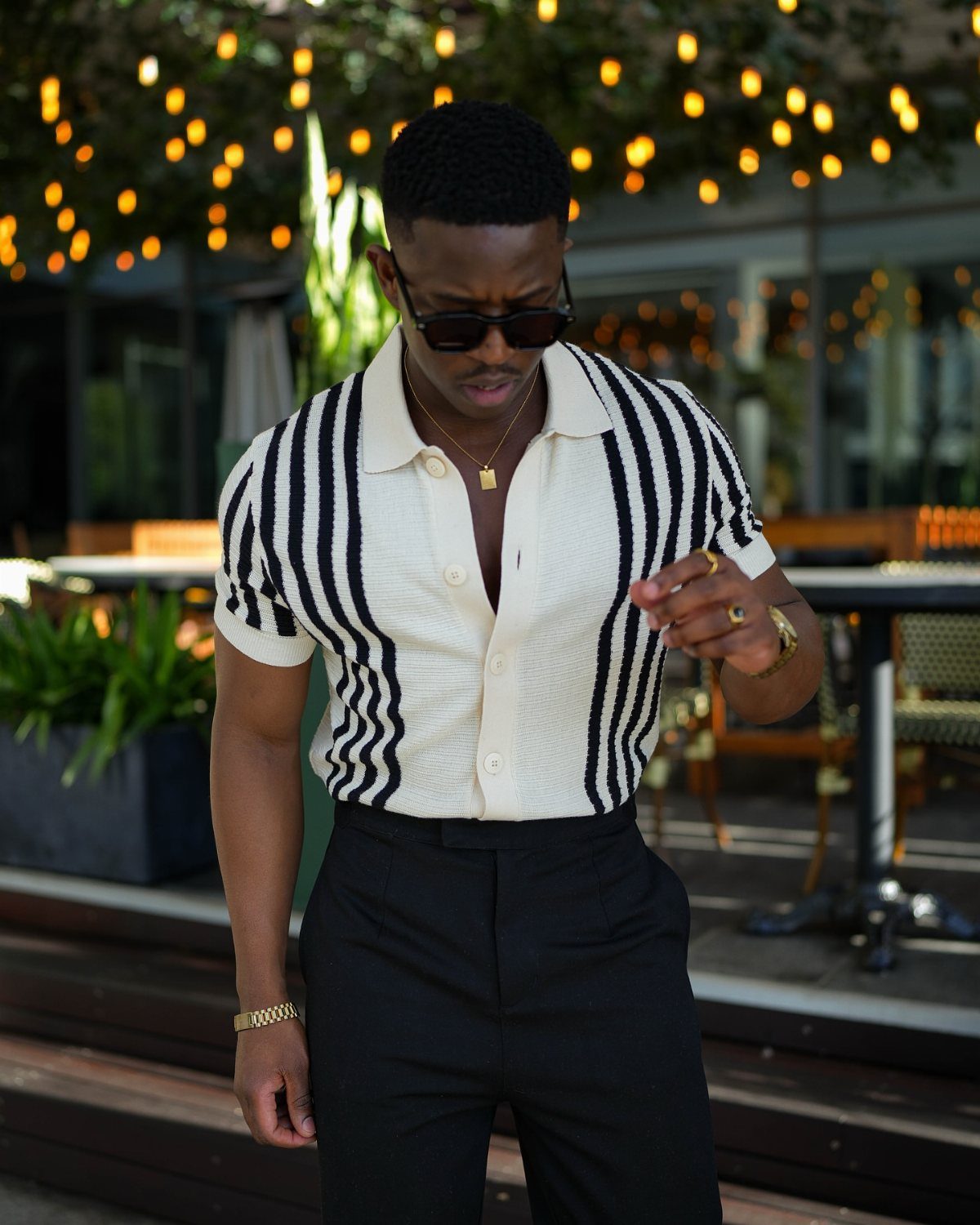
Vertical stripes lengthen the torso and slim the frame, so a bold polo reads sharp instead of loud.
A cream-and-black knit polo with a dramatic collar gives you a shirt that reads as dressed up without a jacket, and black trousers keep the rest quiet.
Plain is the rule for the rest: one chain, sunglasses, and nothing patterned below the waist. It suits a dinner or a patio afternoon when a suit feels like too much and a basic tee feels like too little.
2. Traditional Tuxedos
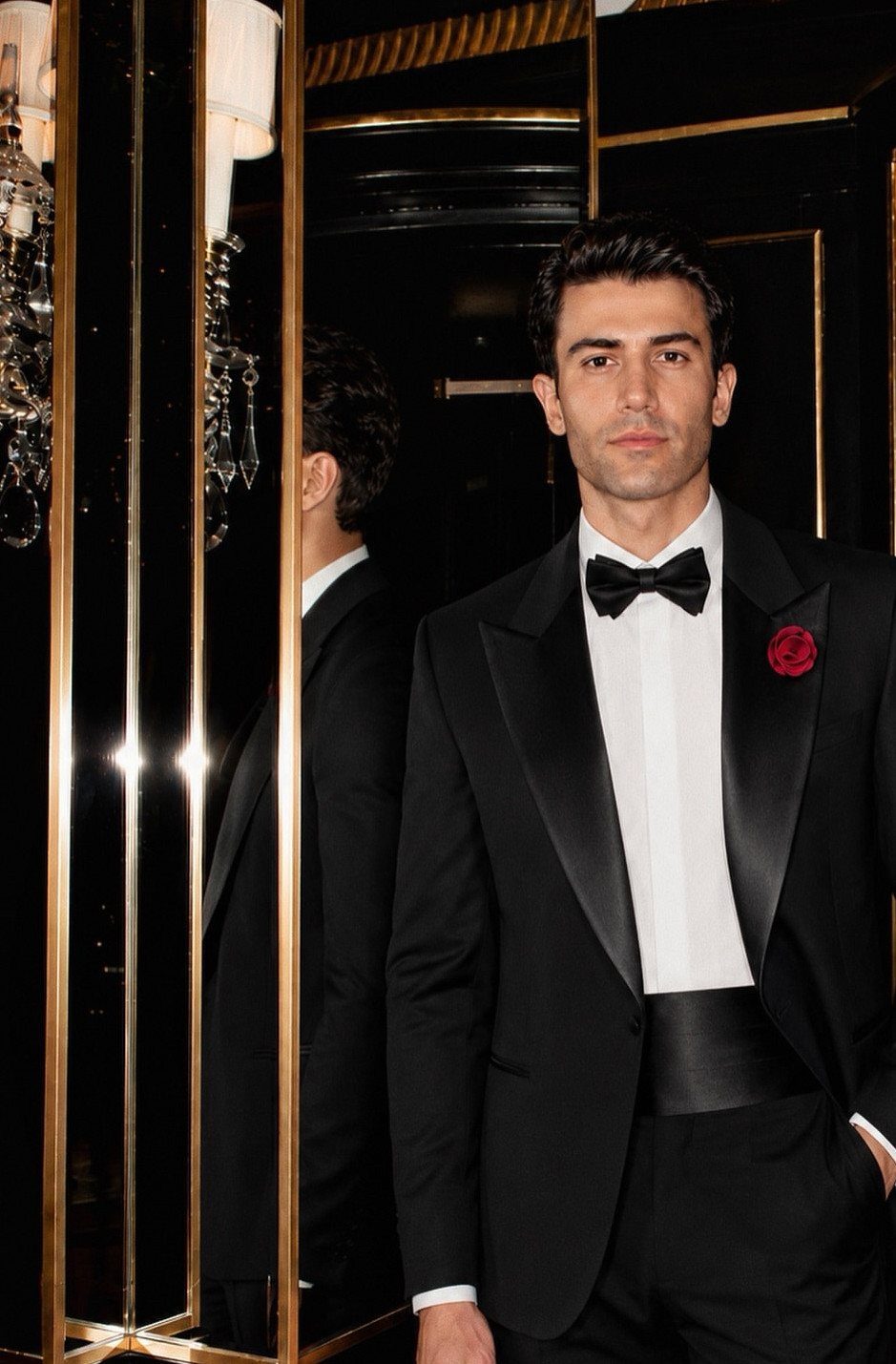
Satin lapels are what separate a tuxedo from a black suit, and the traditional version leans on them fully: a black bow tie, a cummerbund, and a single red flower on the lapel.
I’d choose this over any trend piece for a wedding or gala, because the look has settled and nobody will question it.
A classic tuxedo leaves little room for personality, so the boutonniere is where I’d put yours. Keep the shoes plain and polished.
3. Bowties
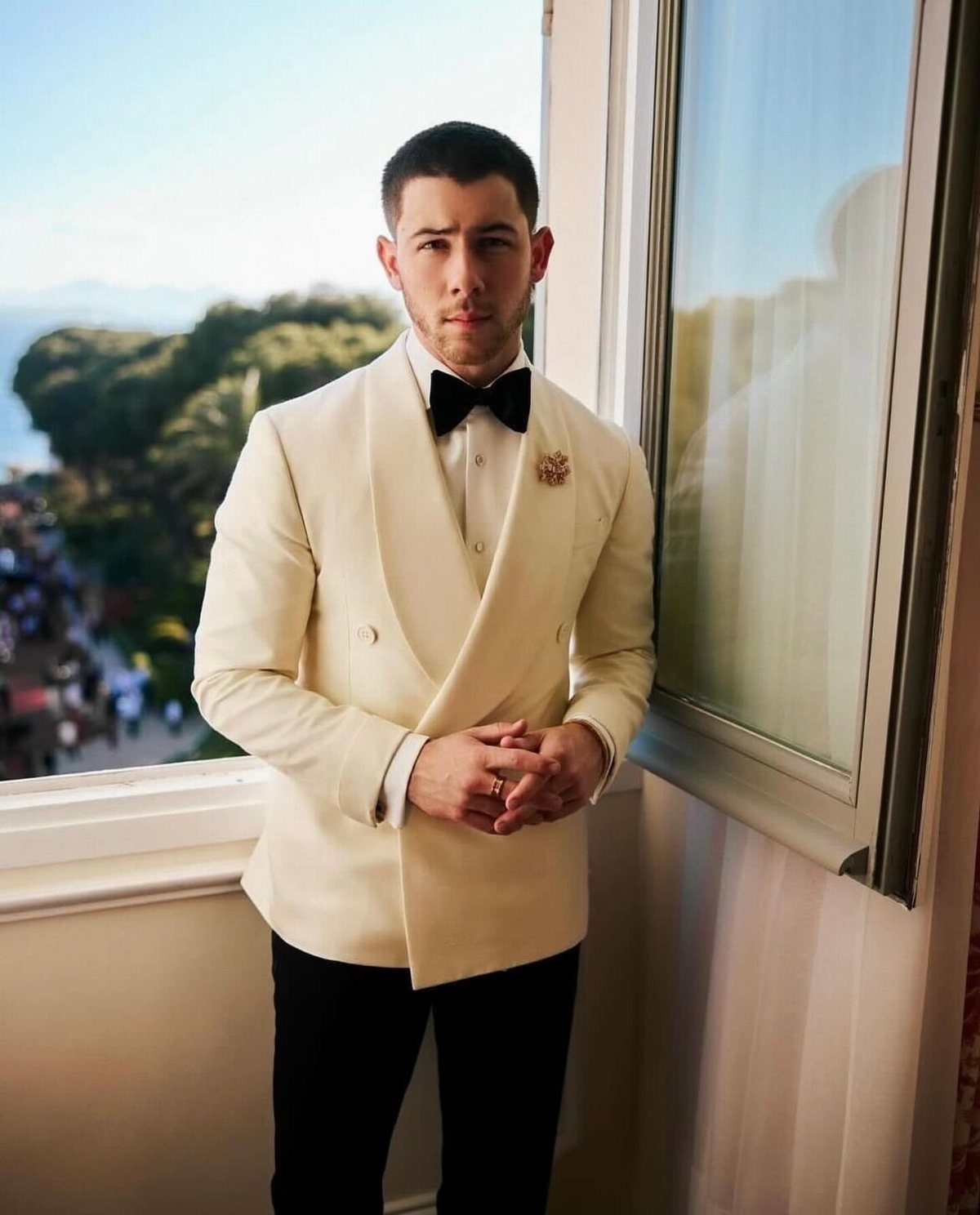
A bow tie turns a plain white dress shirt into formalwear, and it needs no help from the jacket.
A black bow tie is the safest choice if you’re buying one tie to wear with several jackets.
4. Black Velvet Tuxedo
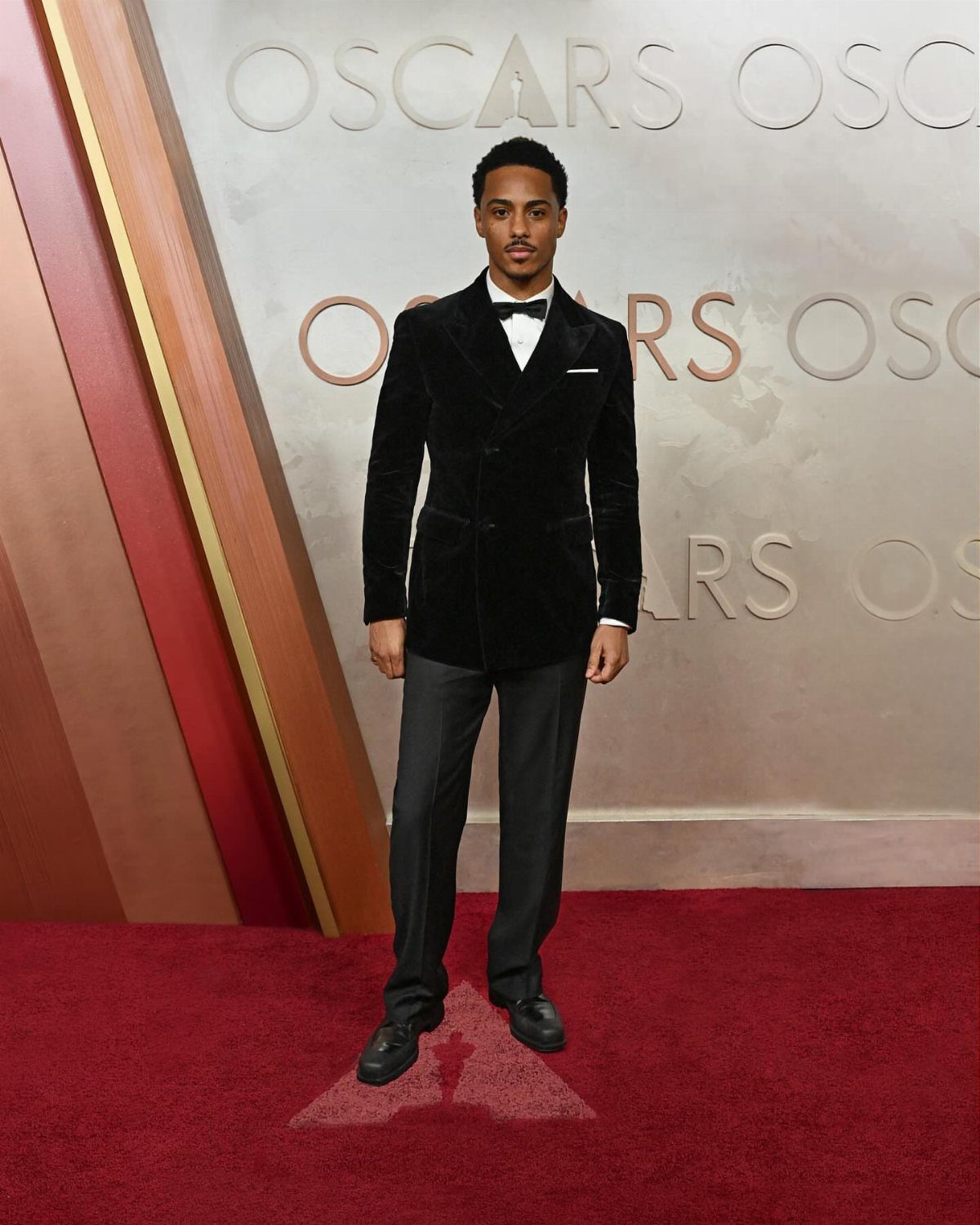
Velvet catches light where wool absorbs it, which is why a black velvet tuxedo jacket suits an evening event so well. The double-breasted cut adds weight to the look, and a bow tie with dark trousers keeps it tidy.
I’d pick black over a loud jewel tone for a first velvet jacket, since it still reads as a tuxedo. Skip it in a hot room; velvet looks rich but it doesn’t breathe like wool.
5. Monochromatic Dark Suit
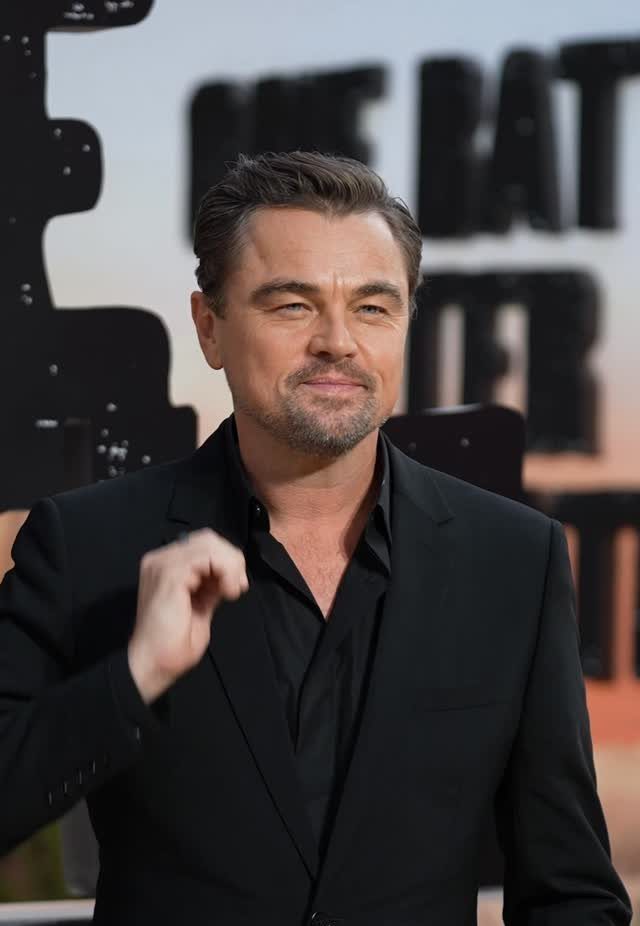
Black on black, with the shirt open at the collar and no tie, looks deliberate at night with almost no effort.
Because the suit and shirt match, the eye reads one long line, and that makes a man look taller and sleeker.
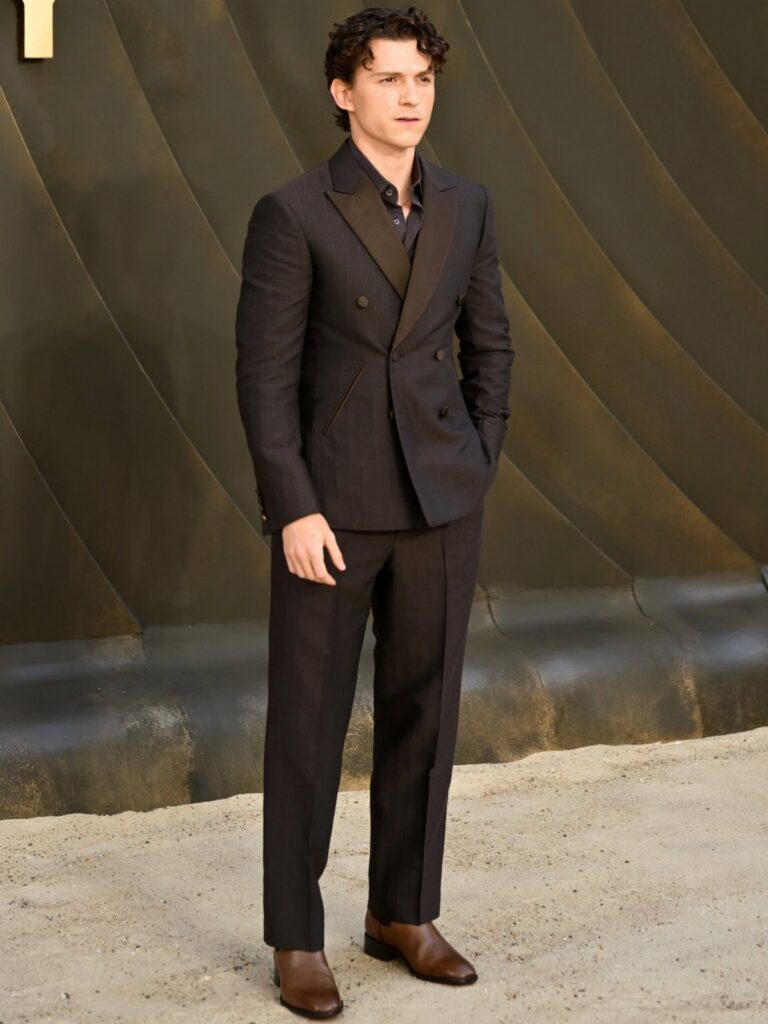
Dark brown works the same way if black feels severe. I’d keep accessories minimal, since there’s no contrast to compete with, and make sure the fit is clean.
6. Unbuttoned Dress Shirt with Suit
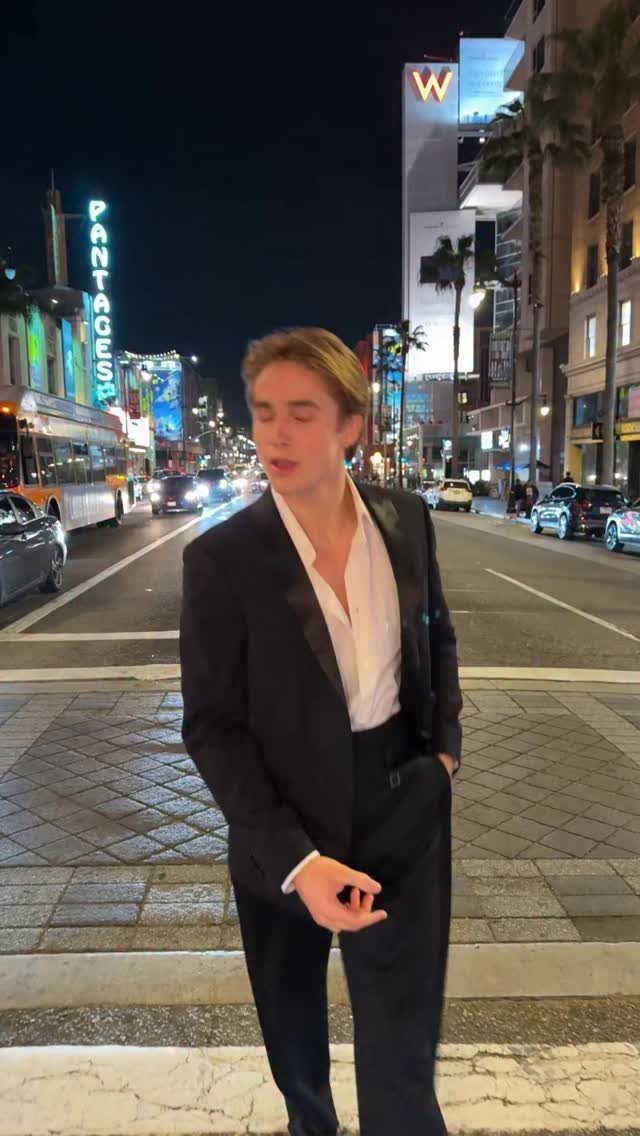
A crisp white shirt open at the collar under a black suit is the quickest way to take a suit off the clock. Skipping the tie removes the stiffness but keeps the sharp outline of the jacket.
Press the shirt well, because with no tie the collar is what everyone sees.
I’d undo no more than a couple of buttons; past that, it stops looking relaxed and starts looking careless. This one suits dates and city nights.
7. Blue Three-piece Suit
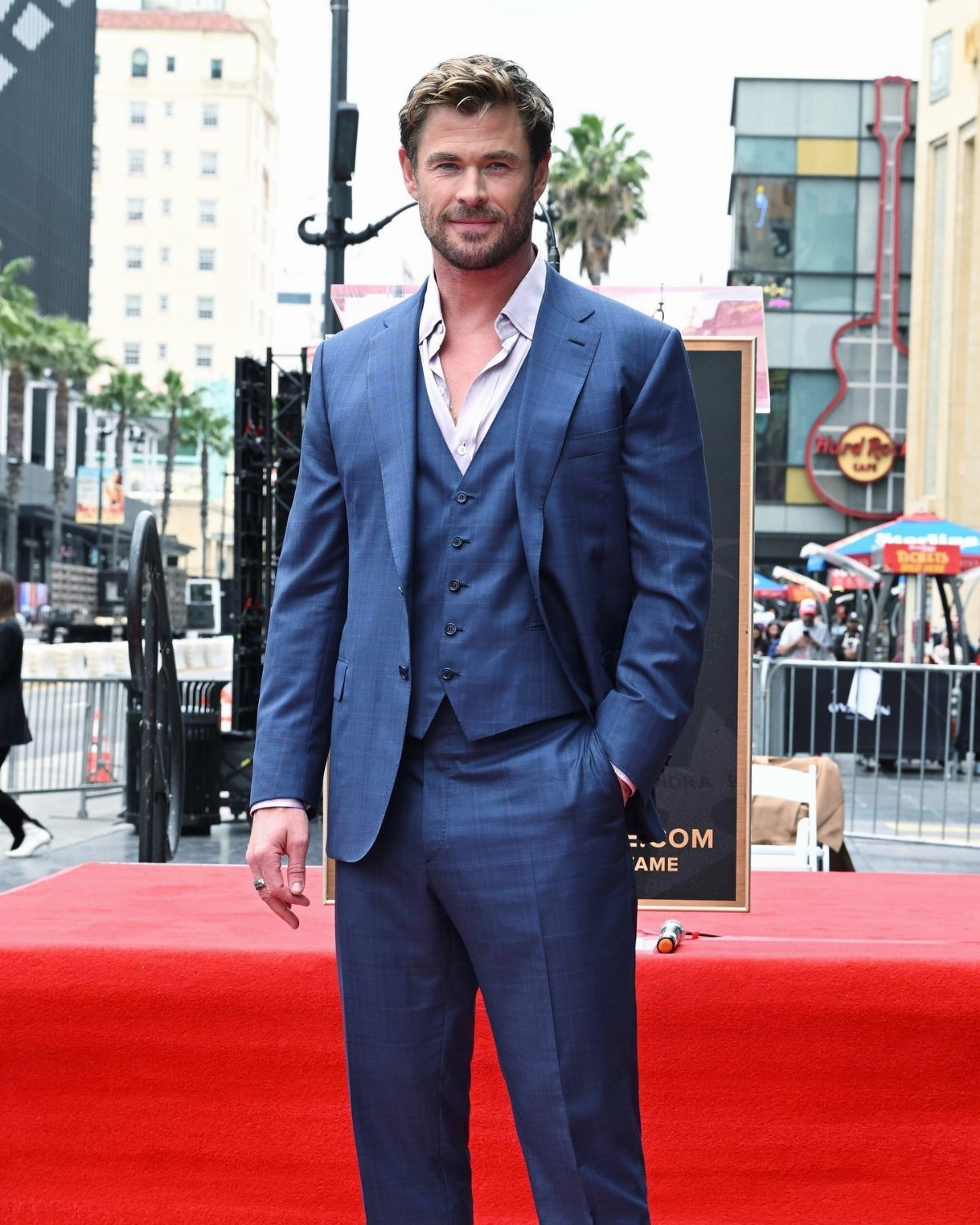
A three-piece suit gives a man a built-in layer, and in blue it looks polished without the severity of black.
The vest fills the gap where a shirt and tie would usually sit, so an open collar still reads as dressed.
I’d pick a light collared shirt for contrast, and the tailoring should sit close to the body, since a vest that bunches ruins the whole line.
Blue works for daytime events and evening ones alike, and the open collar keeps it from feeling like a boardroom.
8. Grey Patterned Suit with Tie
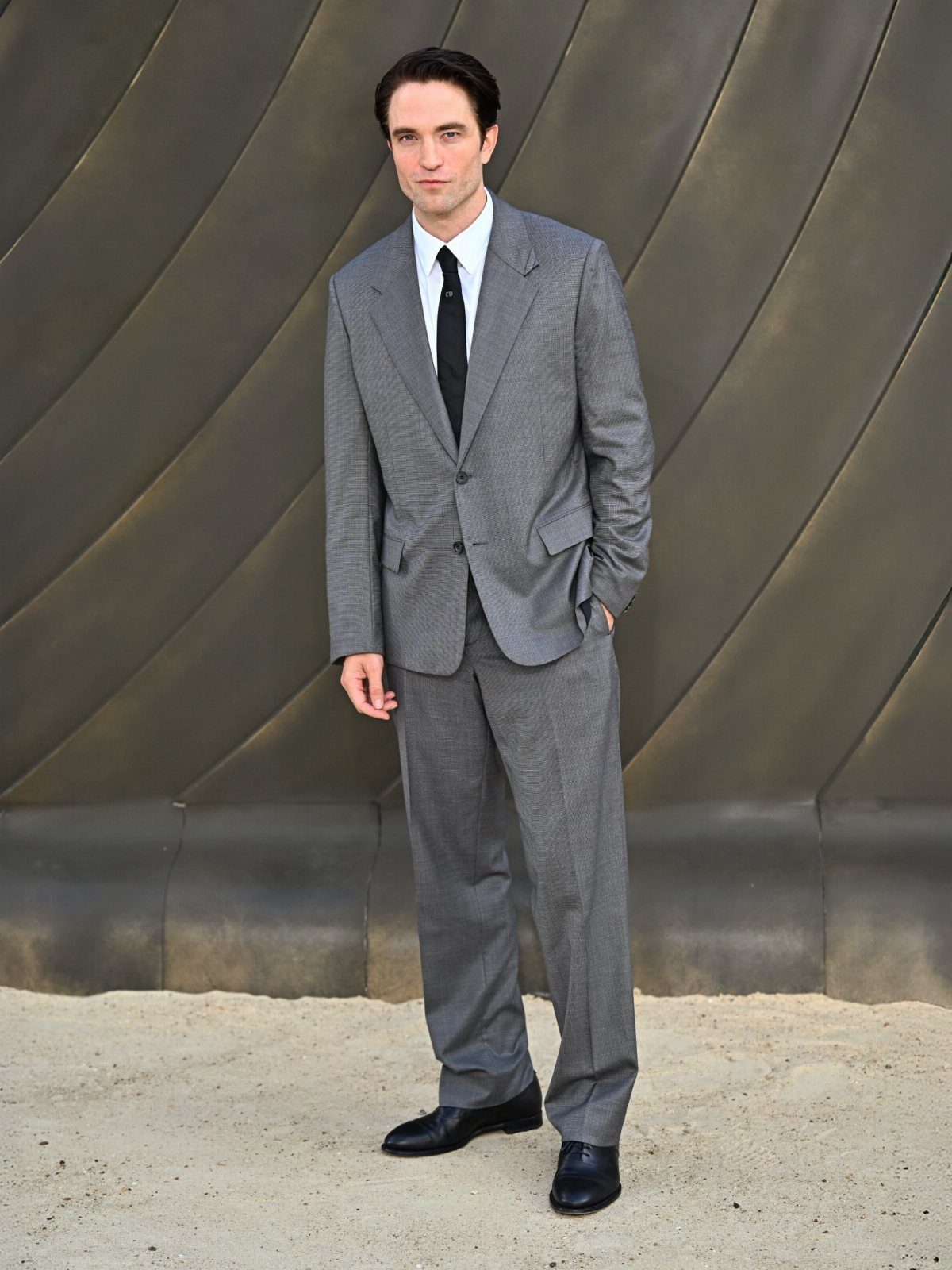
A micro-pattern reads as solid grey from a few feet away, then shows its texture up close. That makes it an easy step up from a plain suit.
Pair it with a white shirt and a black tie, and black dress shoes to finish. With the pattern already doing the work, I’d leave the shirt, tie and shoes plain.
This is the one I’d choose for an interview, a work event or a formal dinner, where you want to look sharp and nobody remarks on it.
9. Double-breasted Green Suit
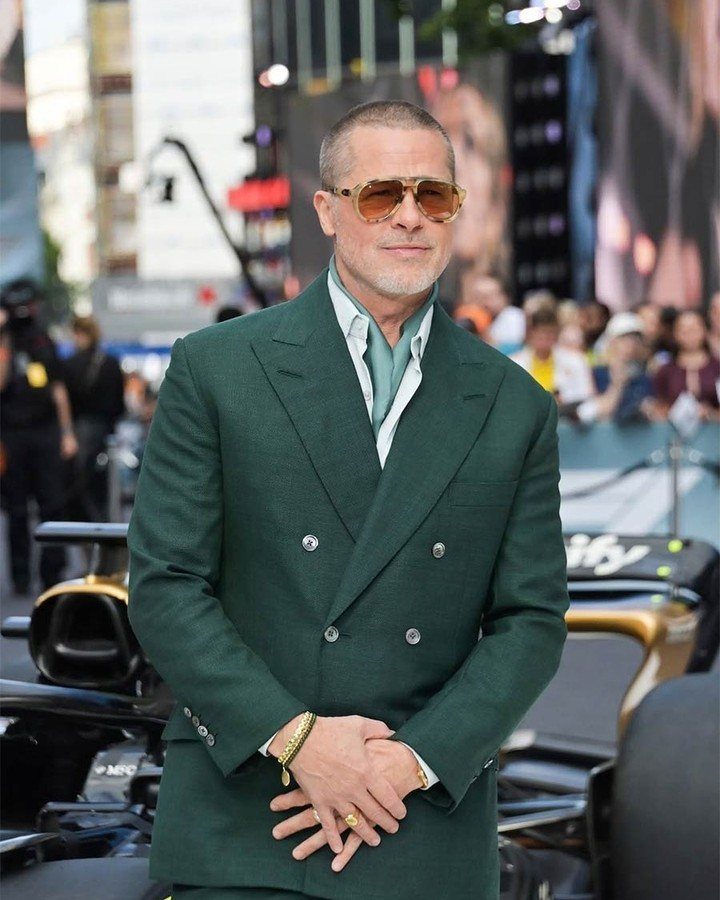
Dark green is the quiet way to wear color in a suit, and a double-breasted cut gives it presence. Tinted sunglasses and a layered collar underneath make it feel casual enough for daytime.
I’d choose a shade dark enough to pass for black in dim light, so it stays easy to wear.
Keep the jacket buttoned and the fit trim through the shoulders, because the overlapping front adds bulk on a loose cut. Plain shirts and shoes let the green carry the look.
Advice for Modernizing Vintage Styles
Old Hollywood suit jackets were boxier and more structured than anything that looks right today, so the cut is the first thing to update. Buy the jacket in a modern, closer fit and let the vintage show up somewhere else.
Trousers are the exception. Fuller legs, a higher rise and pleats from the 1930s and 40s are back in stores, and worn with plain modern pieces they look current rather than like dress-up.
Shirts are the easiest place to start. Summer in the early 1950s meant a printed camp collar shirt, canvas sneakers and tailored shorts; I’d bet your closet already has a close version of at least two of those.
If you want the real thing, vintage pieces tend to last because they were well made.
They do need care, so launder them gently and don’t toss them in with everything else. Vestiaire Collective is one place to find pre-loved designer items.
The drape-cut suit became the blueprint for the Golden Age of Hollywood. Developed on Savile Row and perfected in Los Angeles, the silhouette added volume to the upper torso and emphasized motion.
— GQ