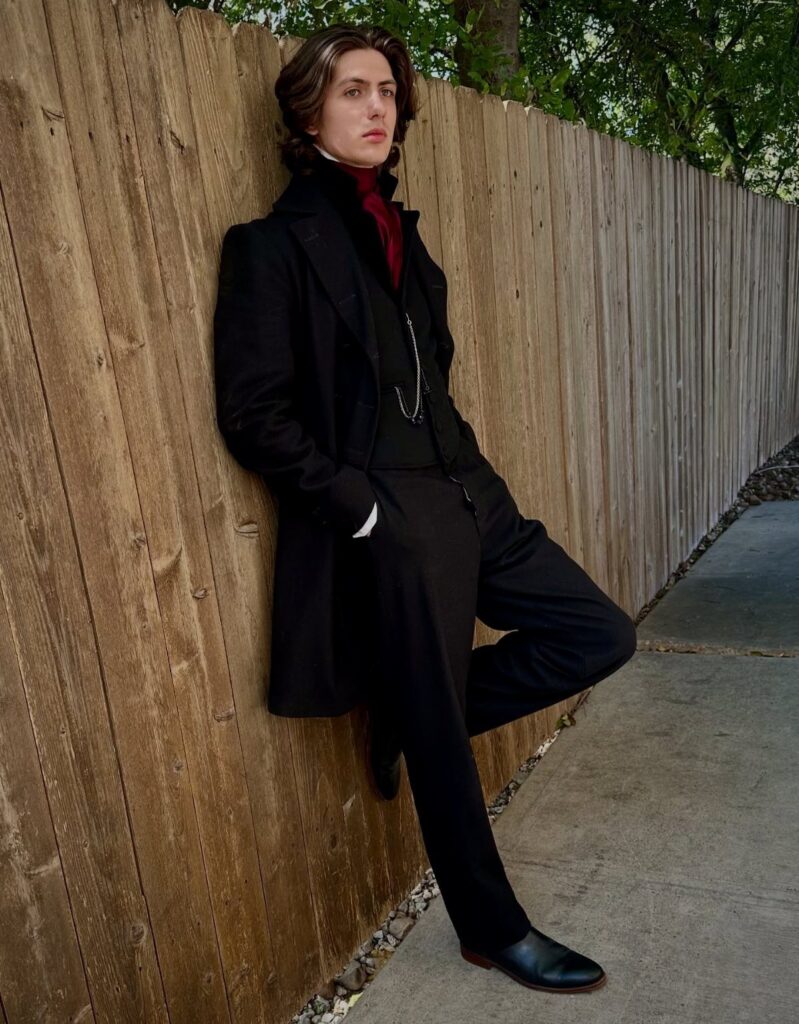
The list starts small, with a single waistcoat, and builds to a full evening look of tailcoat, gloves and Inverness cape. Which one fits depends on the man you are dressing as and the hour he is dressing for.
Victoria’s reign ran from 1837 to 1901, so no single look counts as "the" Victorian man; a daytime frock coat and an evening tailcoat belong to different occasions, and a working man’s outfit should not share pieces with a formal one.
1. Waistcoats
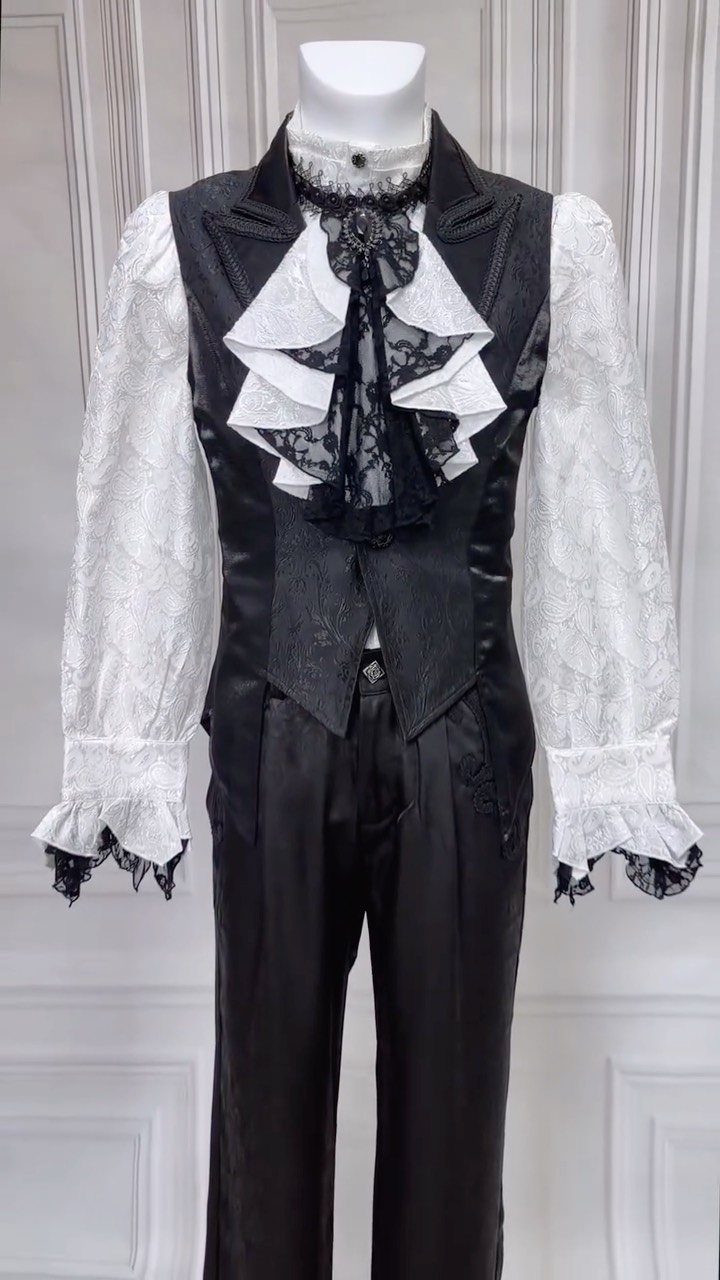
A black satin waistcoat does more work than its size suggests. It sits between shirt and coat, so it is the one piece where a Victorian man could show some flash while the coat stayed sober.
Satin against a lace-fronted shirt gives a dressier, more theatrical look, so save it for evenings and costume rather than a normal day.
For a costume or event, I would pick a waistcoat in a contrasting fabric to the coat and keep the trousers plain, so the vest becomes the focal point.
Wear it fitted and buttoned high, with the shirt cuffs showing below the coat sleeve.
2. Victorian Men’s Suits
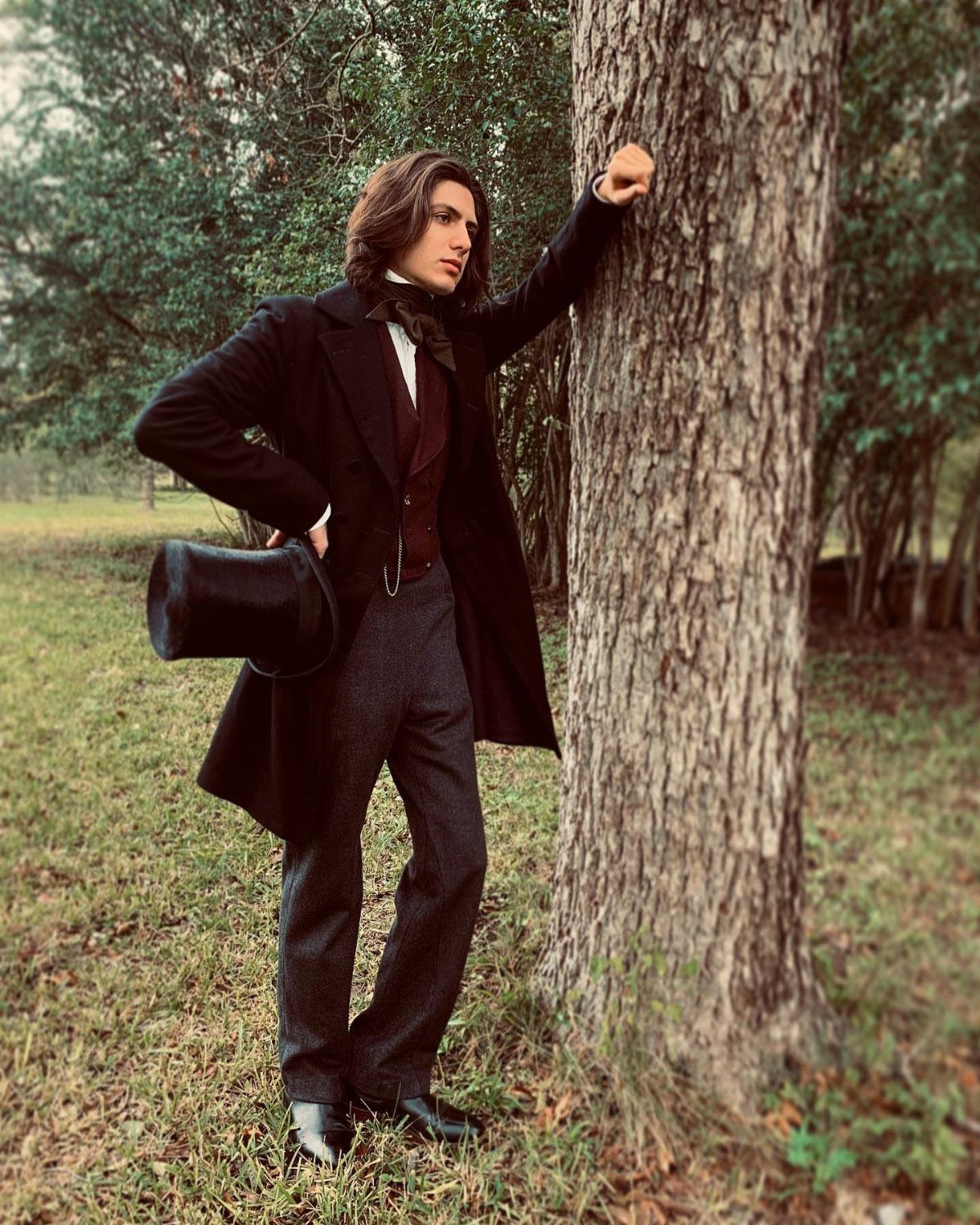
Coat, waistcoat and trousers: that trio is the Victorian suit, and it is the simplest way into the period. Anyone dressing for an event or studying the look should start here before adding anything else.
Matching the 3 pieces is optional.
A black coat with a burgundy waistcoat and grey trousers is the split I like best, because the dark coat frames the colored vest. A white shirt and a dark cravat finish it cleanly.
A top hat in hand, or on the head, completes the silhouette without extra effort.
3. Frock Coat
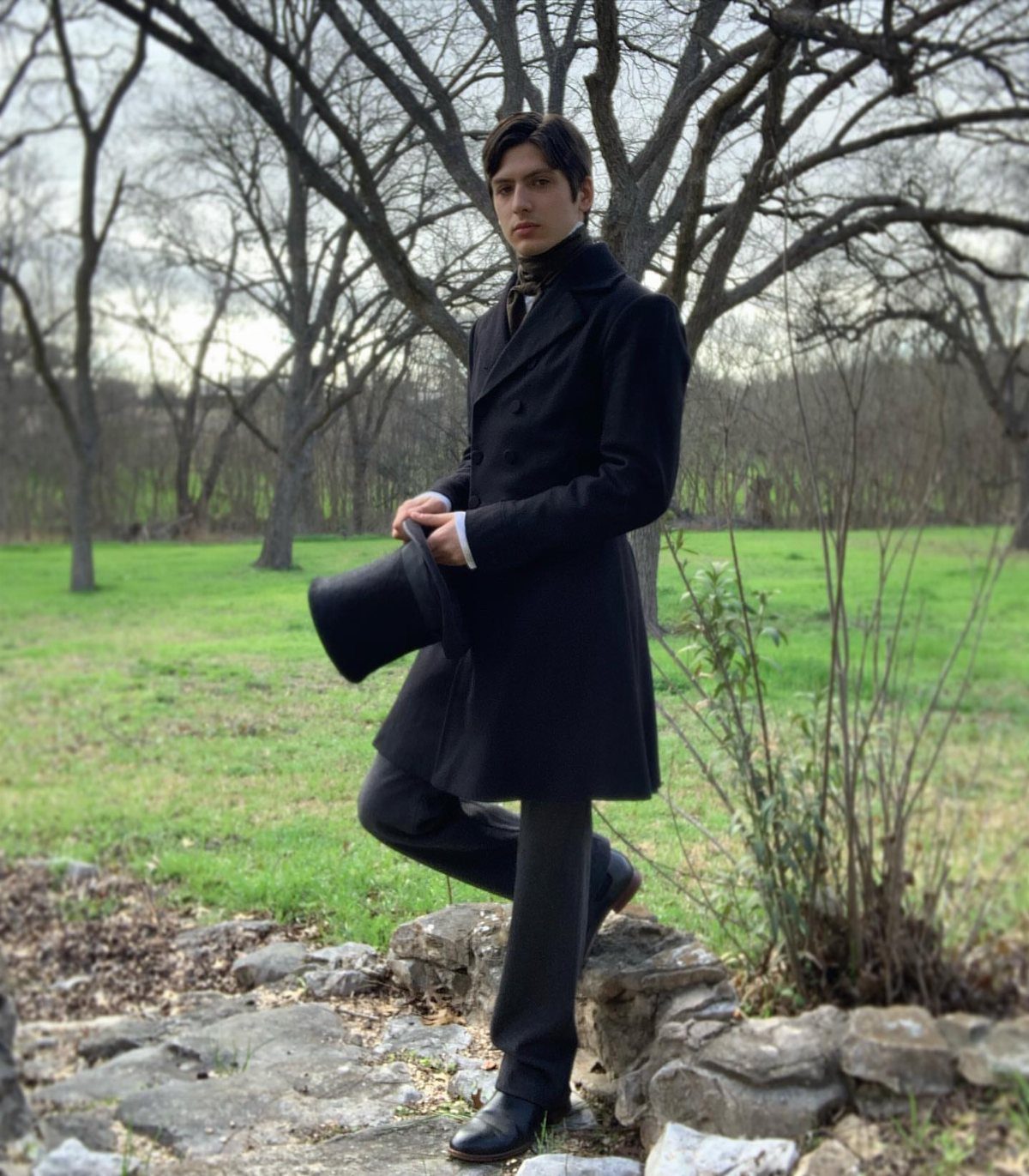
Long skirts reaching about the knee mark the frock coat, and it was the dominant coat for day dress.
Buttoned up in black over dark trousers, it gives the tall, narrow outline most people picture when they think of Victorian men.
For a daytime costume, this is the coat I would buy or rent first.
Pair a frock coat with a top hat and keep everything else dark and quiet. The coat carries the look, so extra decoration only competes with it.
4. Morning Coat
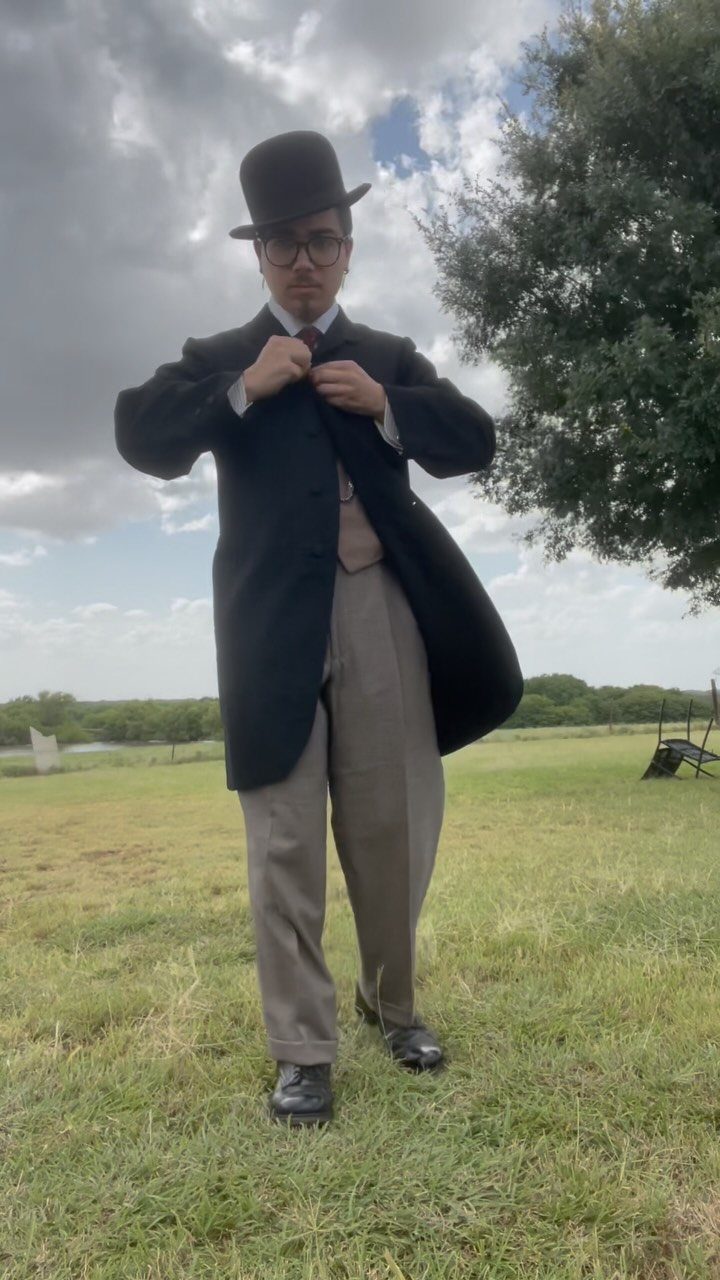
Cut away at the front and curving toward the back, the morning coat has a distinct line that separates it from the straighter frock coat. It was daywear, and it looks lighter on the body.
A late Victorian look, 1890s by its maker’s own description, suits this coat well.
A black coat with a tan waistcoat and tan trousers softens the formality nicely, and it reads as daytime rather than evening. I would copy that contrast if the full black suit feels heavy to you.
Glasses and a bowler hat work here too; a top hat is the more formal option.
5. Tailcoat
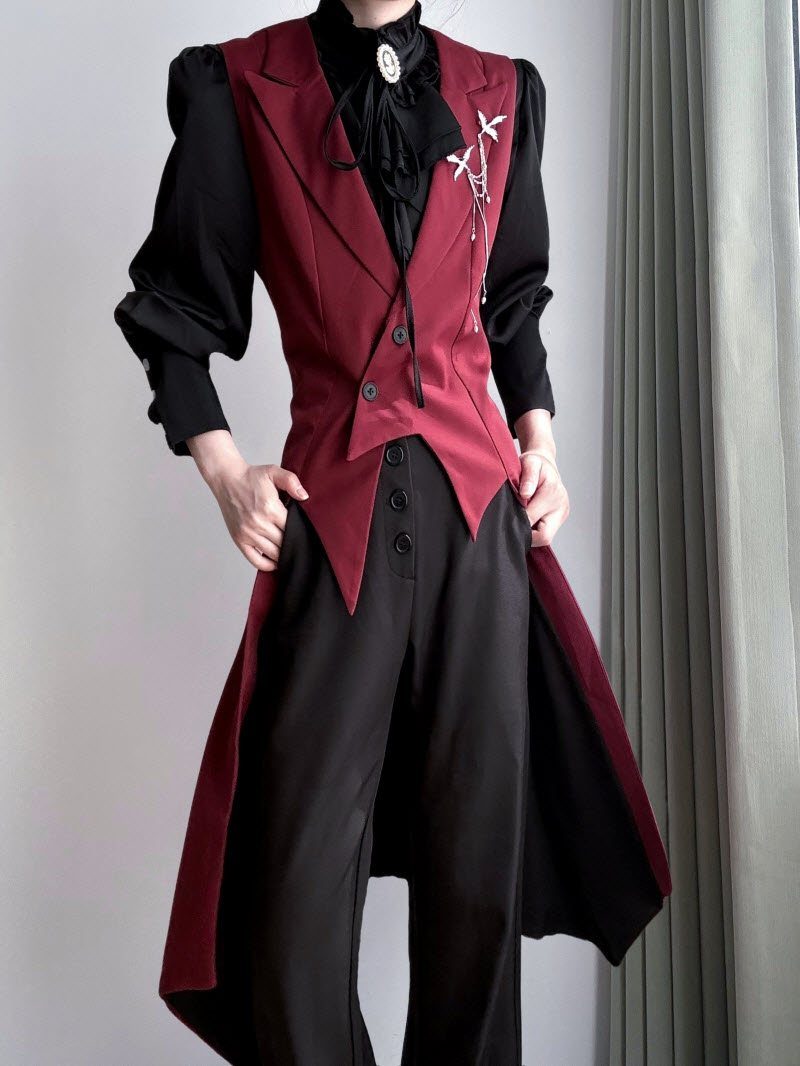
By the Victorian era the tailcoat belonged mostly to evening. Its tails hang long behind while the front is cut short, so the back view matters as much as the front.
Dark red lining or a matching waistcoat adds richness against black without changing the shape of the coat.
I would pair it with a black shirt that has a ruffled neck for a dramatic effect, or a white shirt for something closer to formal evening dress.
Wear it in a dim room or at night events; in daylight, the frock or morning coat is the better call.
6. Trousers
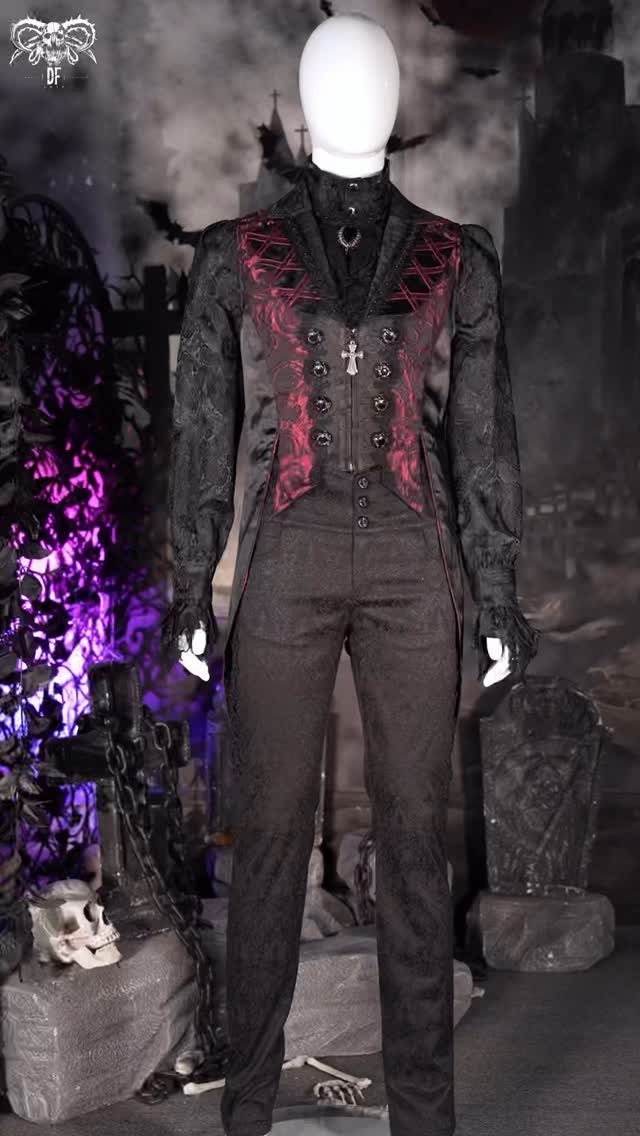
Narrow and high-waisted: that is the Victorian trouser, and the cut changes how everything above it sits. The high waist lengthens the leg and lets a waistcoat end cleanly at the waistband.
For a costume, I would choose trousers that fit close through the leg and rise to the natural waist, in black or a dark tone to match the waistcoat, as the mannequin shows. Modern low-rise pants break the line immediately.
Plain beats patterned here. Let the jacket or waistcoat carry any pattern.
7. Accessories
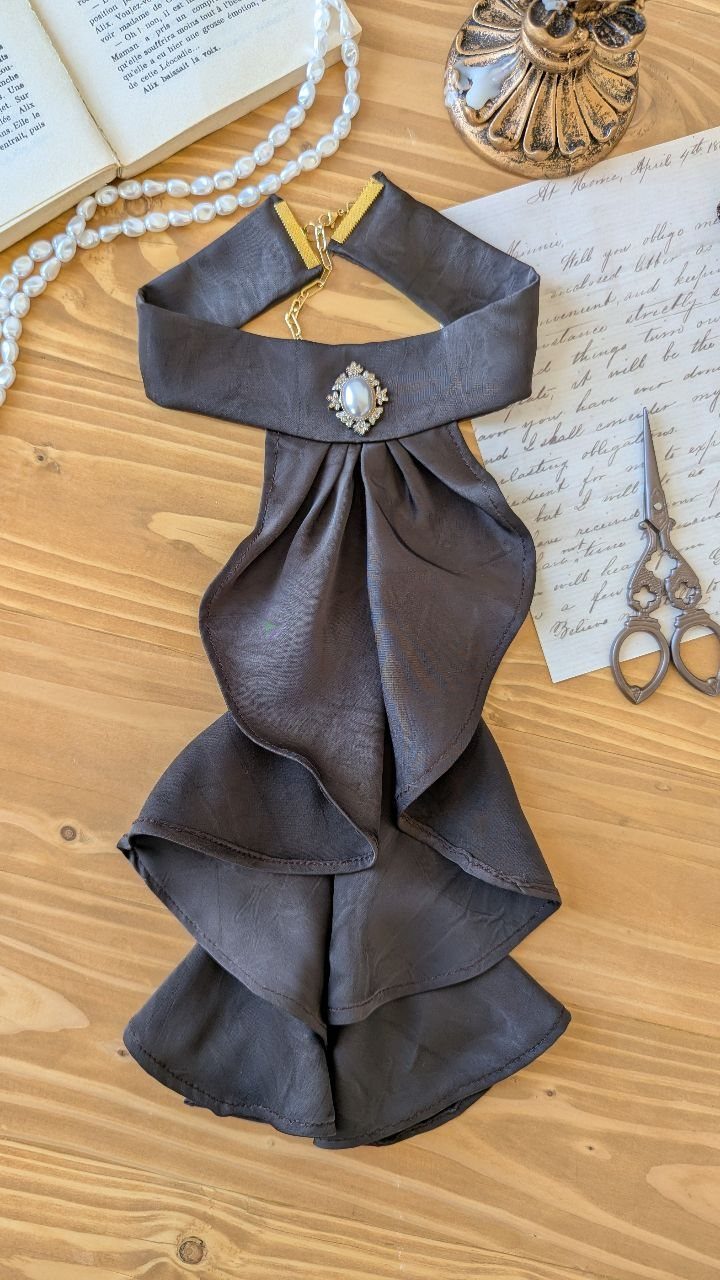
The ruffle gives the cloth body, and the pearl gives the eye one place to land.
For a costume, I would choose one neck accessory and stop there.
A dark grey or brown cravat with a single pearl pin reads as period without crowding the coat. Pearls stay quiet, which suits a dark outfit better than anything shiny.
Keep the pin centered at the knot, where the ruffles gather.
8. Gloves
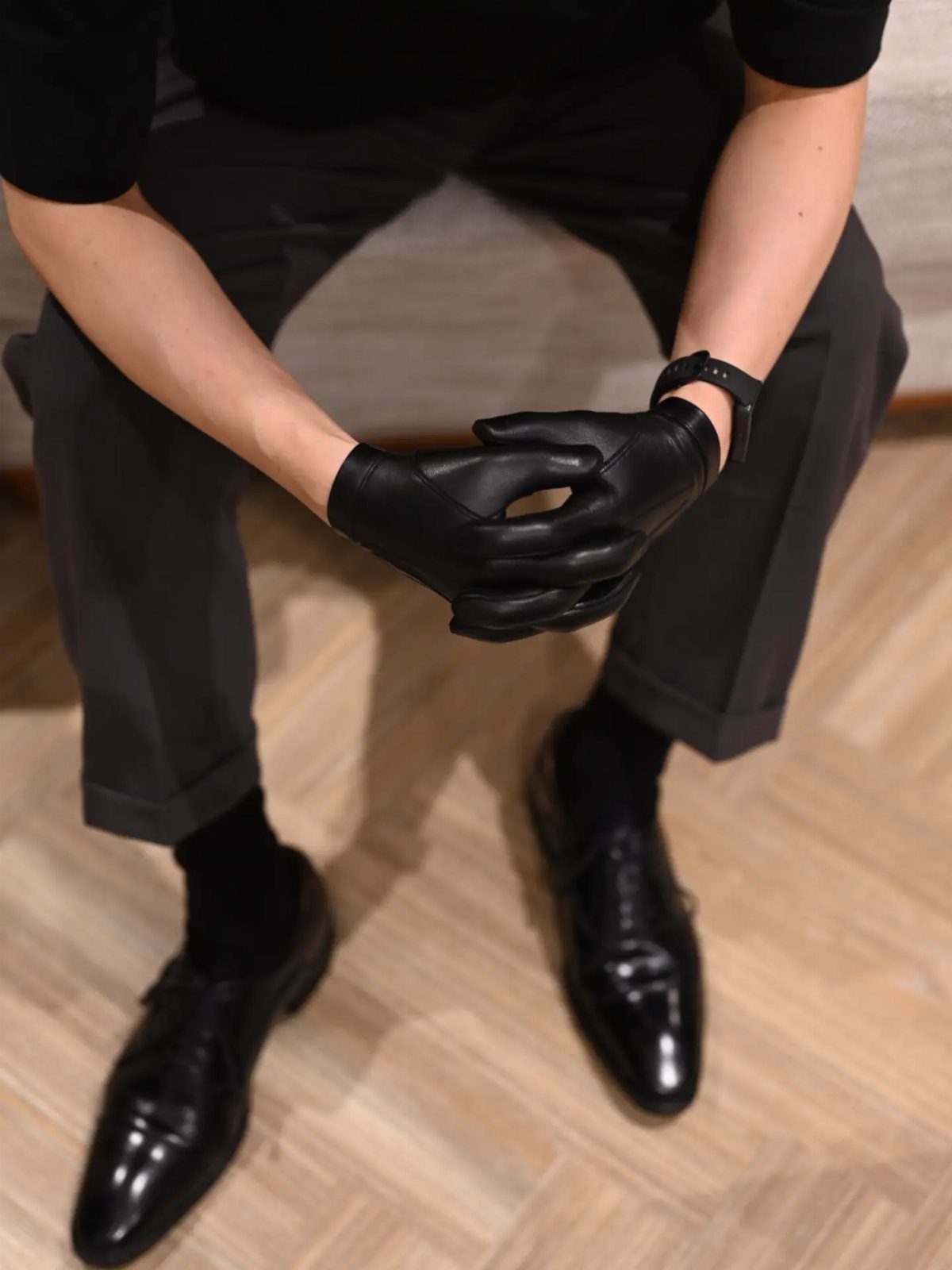
Black leather gloves finish a dark Victorian outfit from the hands down, and they match black trousers and patent shoes without any effort.
Etiquette once held them close to mandatory. Over time, evening gloves moved from required to recommended, so wearing a pair is the accurate choice for an evening look.
I would keep them black and plain for a dark costume, and I would skip decoration. Gloves that fit snugly look better than loose ones, because slack leather at the fingertips ruins the line of the hand.
9. Neckwear
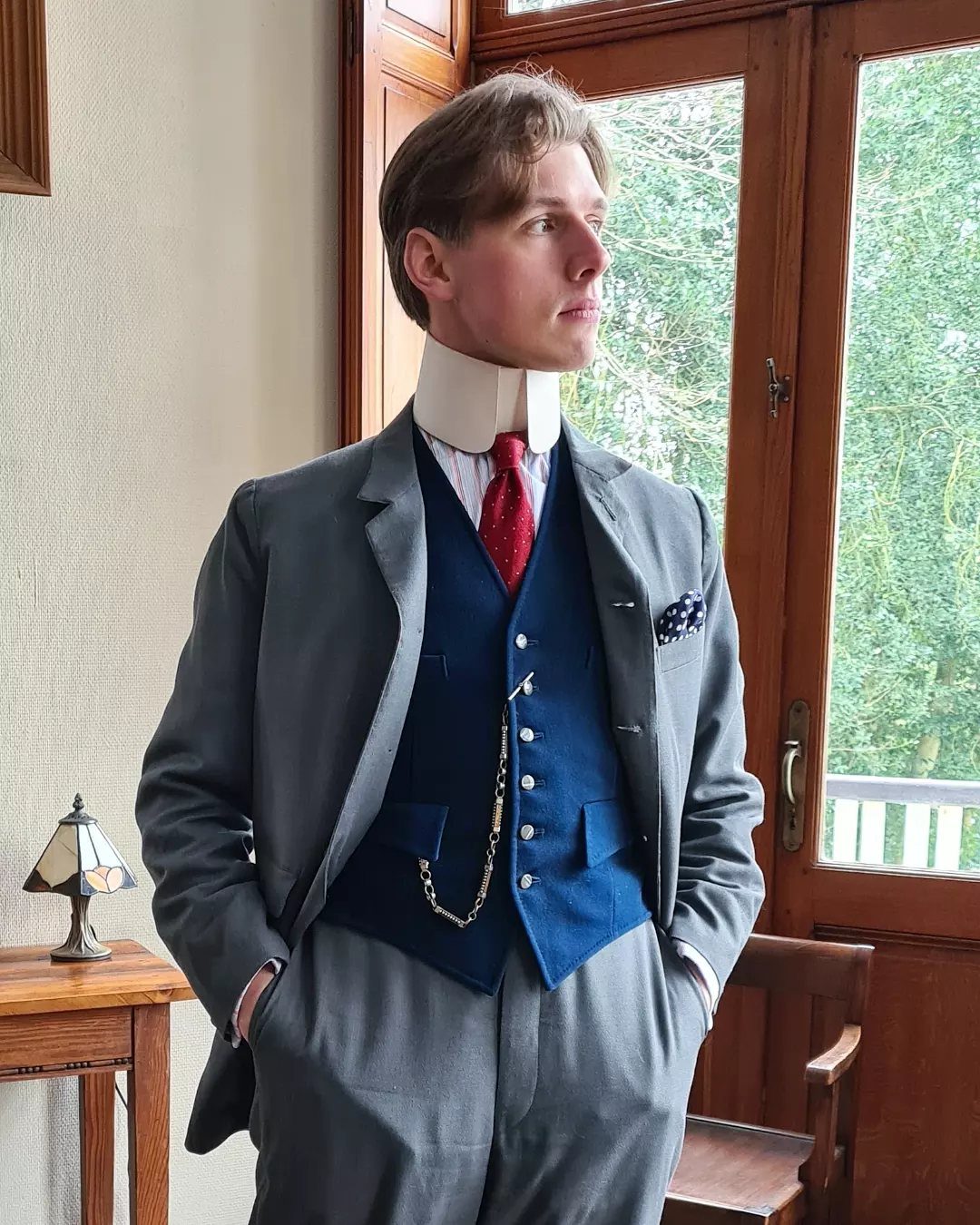
A high white collar does more for a Victorian neckline than any tie, because it sets the chin and posture before anyone notices the knot.
For an event, I like this combination because the single red accent stands out against cool grey and blue. Cravats are the softer, more ornate choice, while a plain necktie is cleaner and easier to wear on a normal day.
Keep the collar crisp and the tie knot small, and let the waistcoat show below it.
10. Victorian Footwear
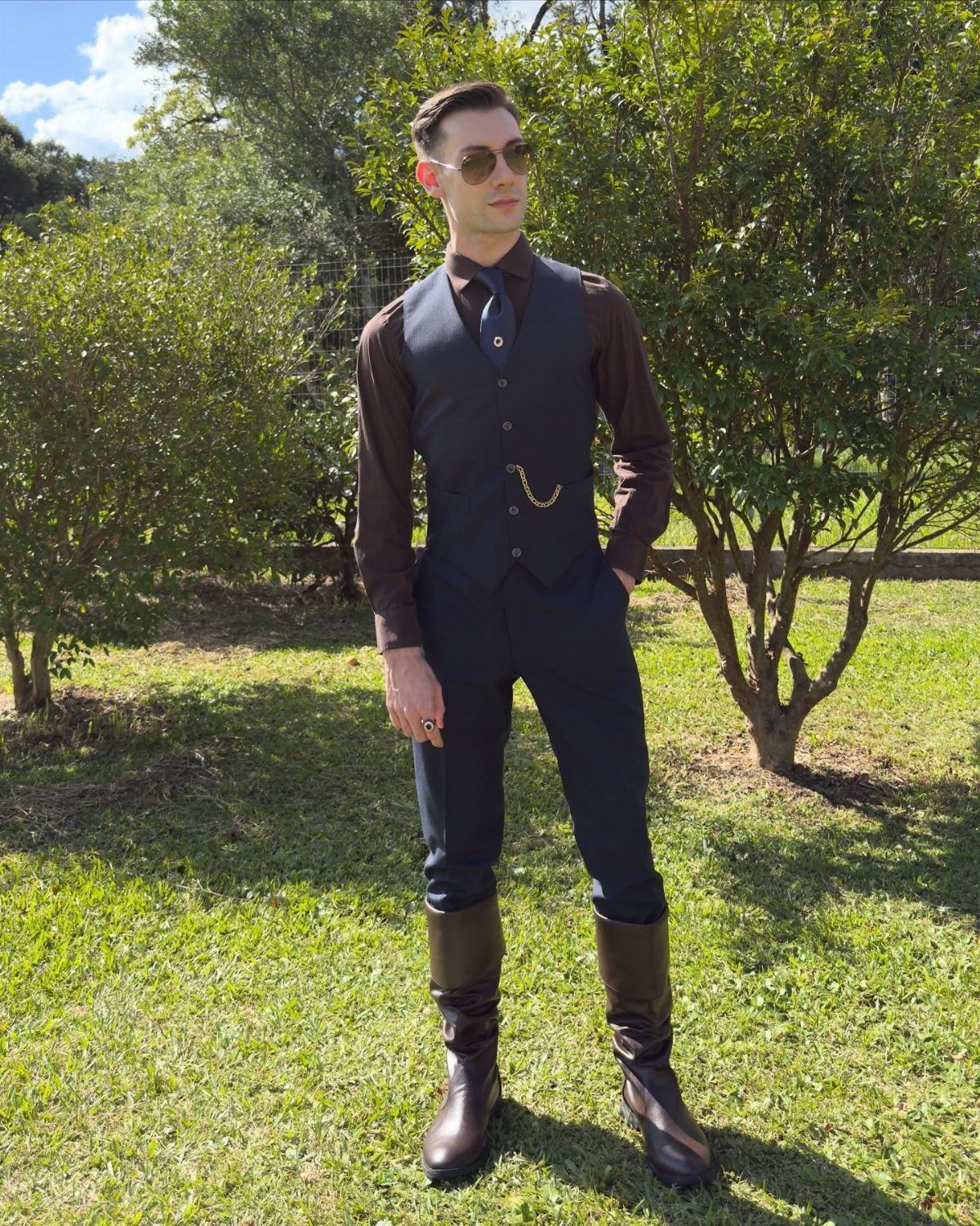
Tall brown leather boots ground a Victorian outfit and fit it better than modern sneakers or chunky soles.
Footwear of the era, boots and shoes alike, was often pointed and narrow, so a slim toe is the detail to look for.
I would wear boots with dark trousers, as here, so the trouser line runs into the shaft without a gap. Brown suits a daytime look; black patent shoes, as in the gloves entry, belong to evening.
Narrow shoes can pinch, so try them on before the event and walk a few laps first.
11. Inverness Cape
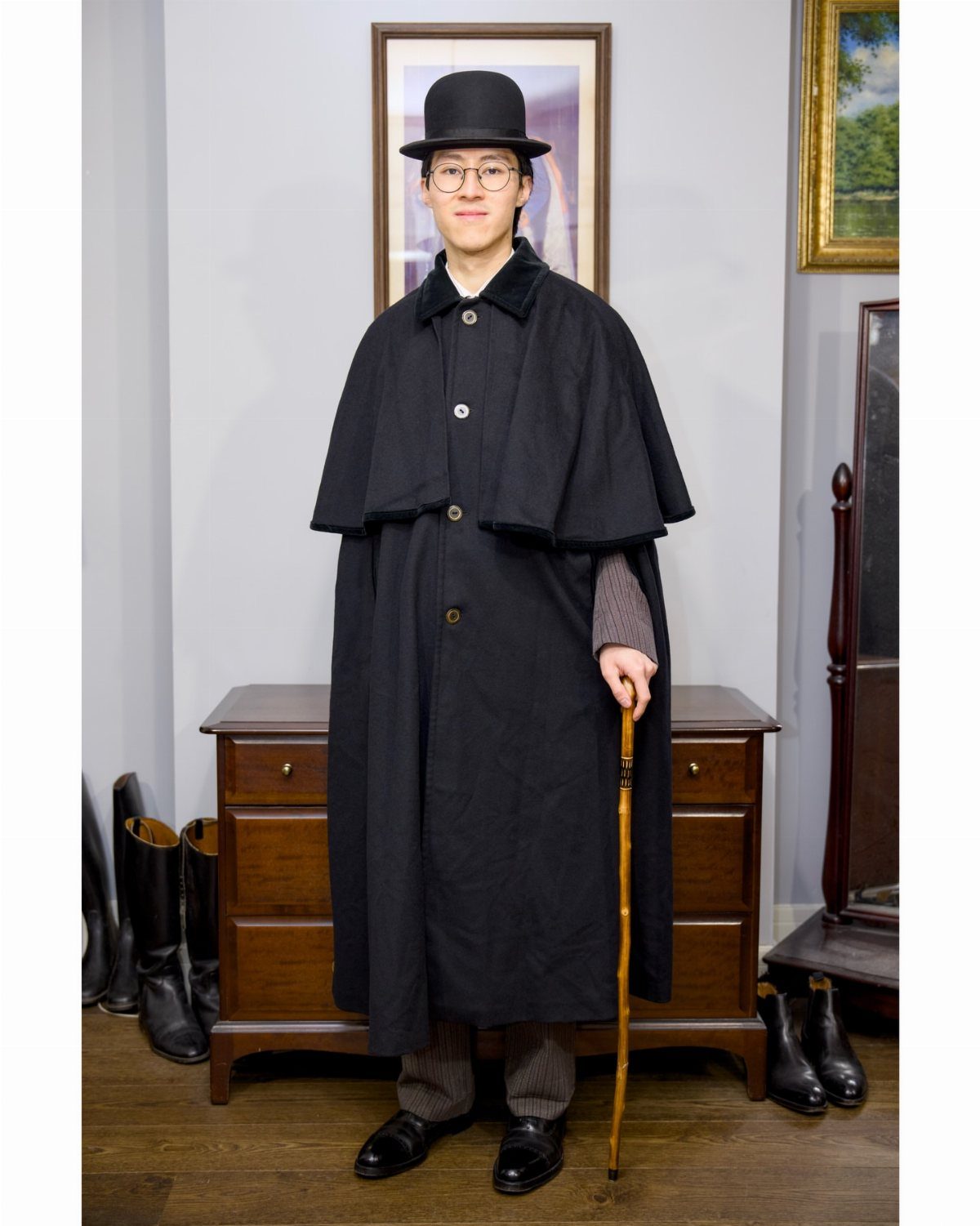
Hanging from the shoulders over a long coat, the Inverness cape adds a dramatic outer layer that hides the coat’s shape and makes the whole figure look wider and darker.
It was a popular outer garment, and it is the easiest way to make a plain black outfit look period.
Glasses fit the look well too.
Wear it over a morning coat or a dark overcoat-length suit for evening, since the frock coat from entry 3 belongs to the daytime.
Dressing for Occasions
Victorian dress ran on a simple split: "dressed" versus "undressed."
Undressed meant clothes for work and ordinary tasks. Dressed meant the garments society considered right for a particular occasion, worn as a sign of respect.
If you are building a period look, decide first which of the two you are playing. A working man’s outfit and a formal one should not share the same pieces.
Status mattered too, since a man’s clothes were expected to suit his duties and place in society. Pick a character, then dress to that role.
Victorian Fashion Evolution
Compared with the Regency dandies who came before, men in the early Victorian years dressed quietly, in subdued colors and plainer shapes.
Queen Victoria took the throne in 1837, and a prosperous middle class wanted to look grave and serious, so showy dandyism gave way to sober, functional clothes.
Restraint is the accurate choice for a costume, since dark, plain and well fitted beats anything flamboyant.
Change came slowly, so a single outfit can borrow from several decades without looking wrong. Decide how much period accuracy you want before you start shopping.
Historical Context
Victoria’s reign ran from 1837 to 1901, so no single look counts as "the" Victorian man. Evening dress alone falls into 3 phases.
Regency showiness faded little by little between roughly 1840 and 1860.
From about 1860 to 1880, standards were strictly codified. Somewhere between 1880 and 1900 the dinner jacket showed up, and evening dress split into a formal tier and a less formal one.
Choose a phase before you choose pieces. In the 1840s, trousers were fuller, and by the end of that decade the strap at the foot was gone and the fly front had replaced the fall front.
Frequently Asked Questions
What did Victorian era men wear?
Most Victorian men wore a suit of 3 pieces: a coat, a waistcoat and trousers.
Coats varied by occasion, with the frock coat and morning coat for daytime and the tailcoat for evening. Trousers were narrow and high-waisted, and colors ran dark and plain, especially early in Queen Victoria’s reign.
How to dress like a Victorian gentleman?
Start with a coat, waistcoat and trousers, and keep the colors dark and the fit close.
For a Victorian gentleman’s daytime look, start with a black frock coat and dark trousers; together they make the long, narrow line most people imagine. A white shirt and a small, neat cravat or tie complete it.
Add a top hat for formal daytime, or a bowler for something lighter. Restraint wins here, since flashy pieces were what the early Victorians moved away from.
What is the 3-3-3 rule for men?
I can’t find a rule by that name in Victorian dress.
The closest idea is the three-piece Victorian suit: coat, waistcoat and trousers. The waistcoat is where a man could add contrast, such as a burgundy vest under a black coat with grey trousers.