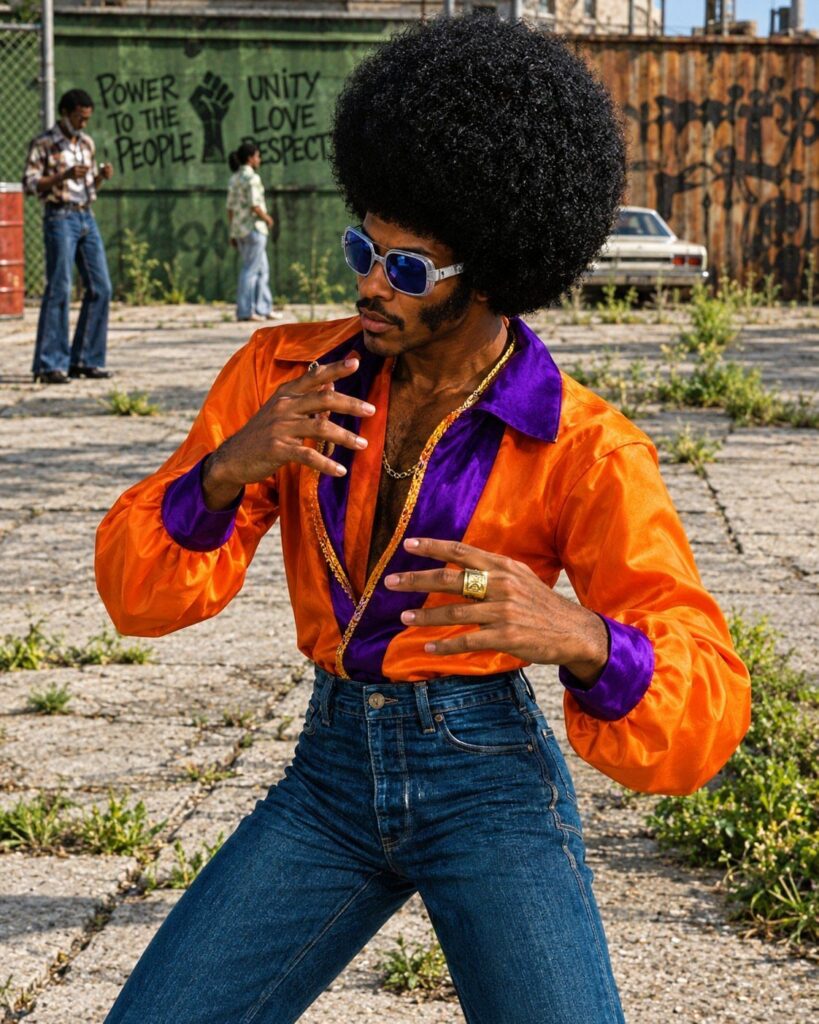
The ideas here run from a single silk shirt to a tailored waistcoat outfit, and where you’ll wear it decides which one is yours. Weekends and casual evenings suit patched denim, platform shoes and short shorts.
Dinners, parties and dates suit the velvet button-down and silk shirts, while an office calls for quieter pieces: a casual blazer, a casual suit, or a leather jacket worn with a tie.
Whatever you choose, keep one retro piece per outfit and let everything else stay current.
1. Flared Trousers
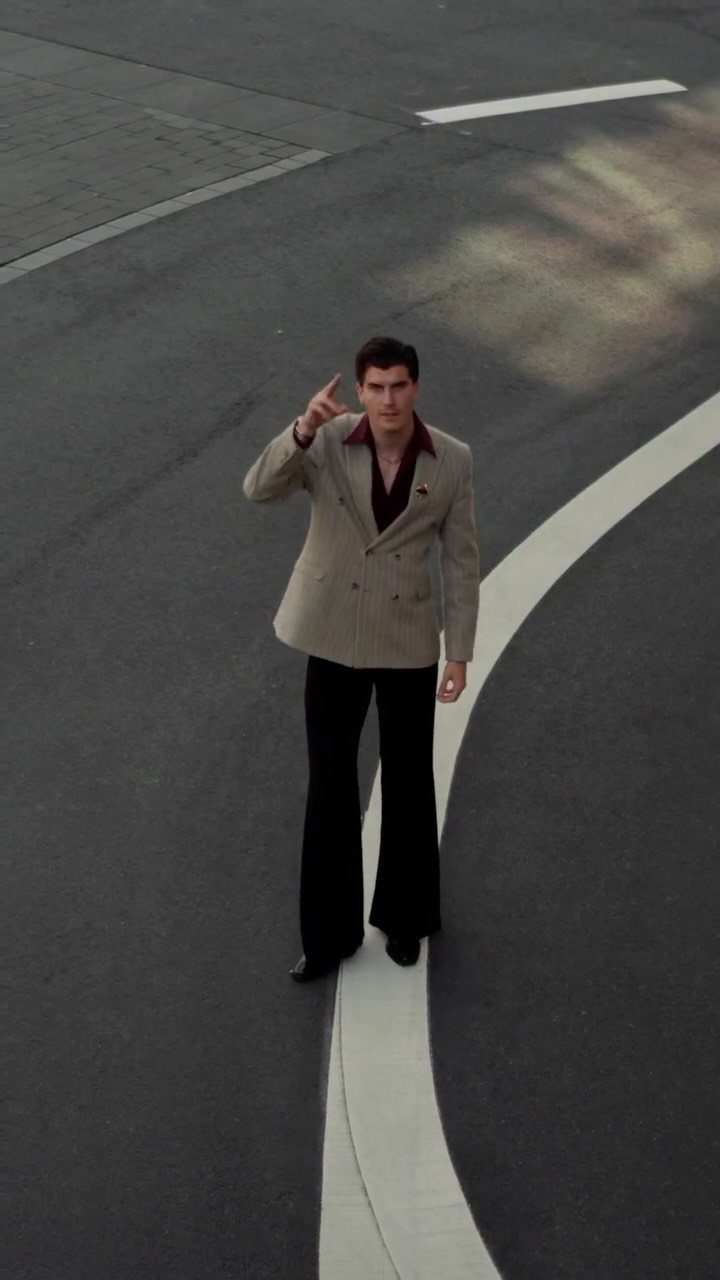
Black flares are the easiest way into the decade, because the cut does the work and the rest of the outfit can stay plain.
Pair them with a blazer and an open-collar shirt, as here, and the wide leg reads as deliberate rather than costume.
Keep the hem long enough to graze the top of the shoe. A short flare looks like a mistake, and a dark color makes the shape easier to wear on a normal workday.
2. Silk Shirts
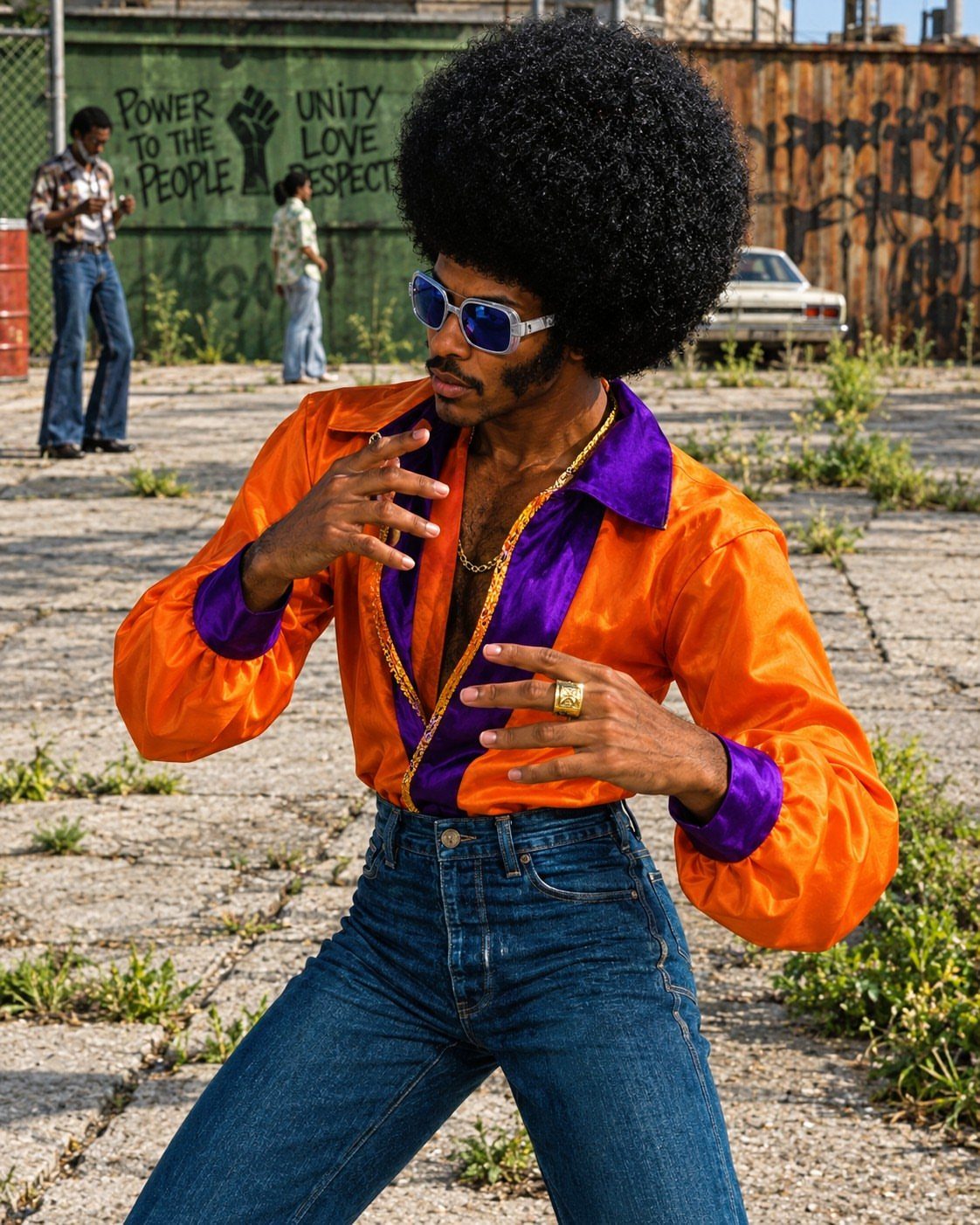
A silk shirt in orange and purple is loud, and I think that is the right call. The sheen catches light the way cotton never will, so the shirt does the talking and the jeans should stay a plain blue.
Tuck a silk shirt in. Left loose, the fabric hangs shapeless and reads sloppy; tucked, it keeps a clean line from collar to belt.
For a first try, pick one color family, not two, and save the bold pairing for a night out or a party.
3. Casual Suits
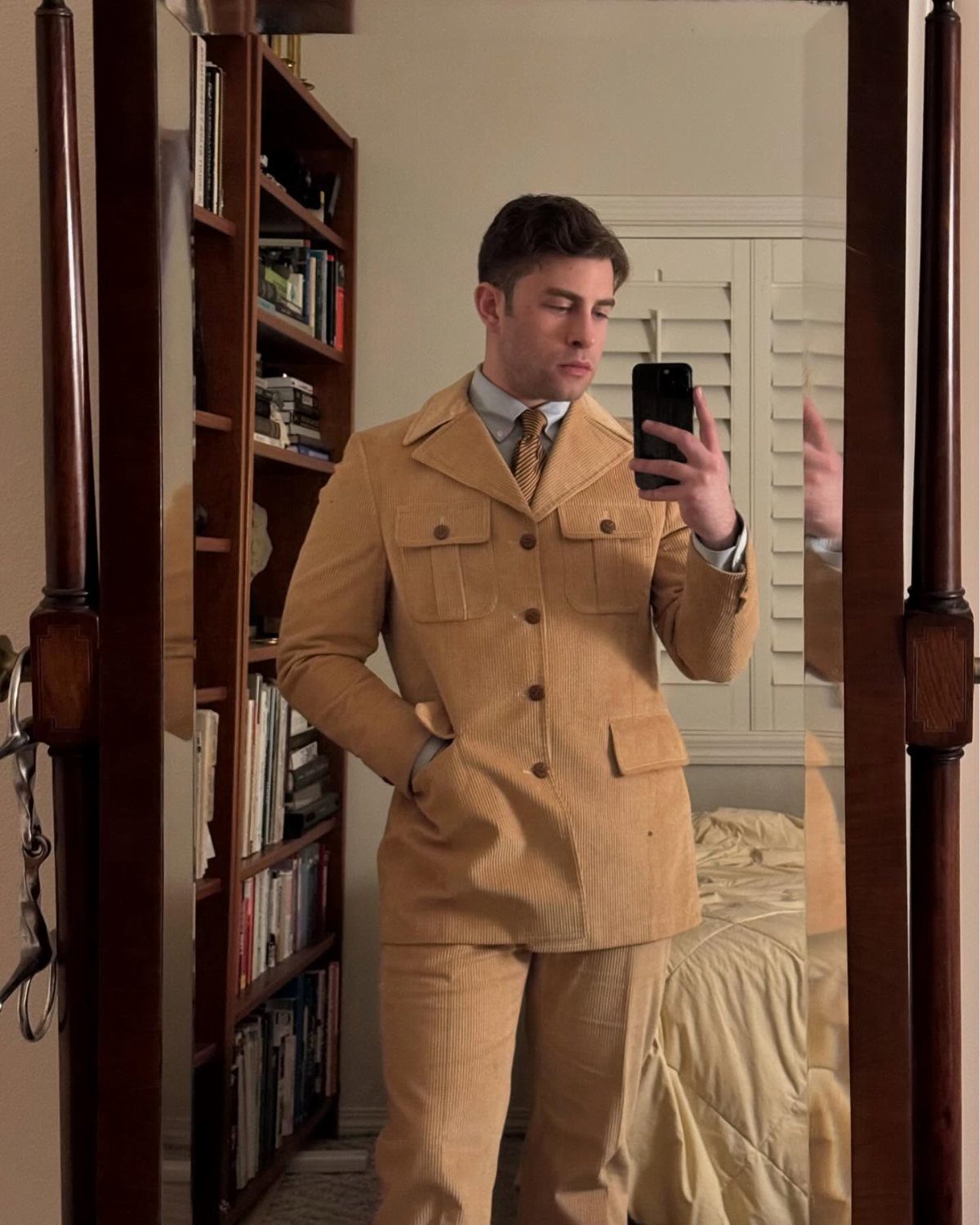
The texture of corduroy softens the formality, and the safari styling keeps it from looking like office wear.
I would choose a muted color like tan for the suit, with the tie carrying the pattern. It suits a casual event or a date better than a job interview, where a smooth wool suit still wins.
4. Casual Blazers
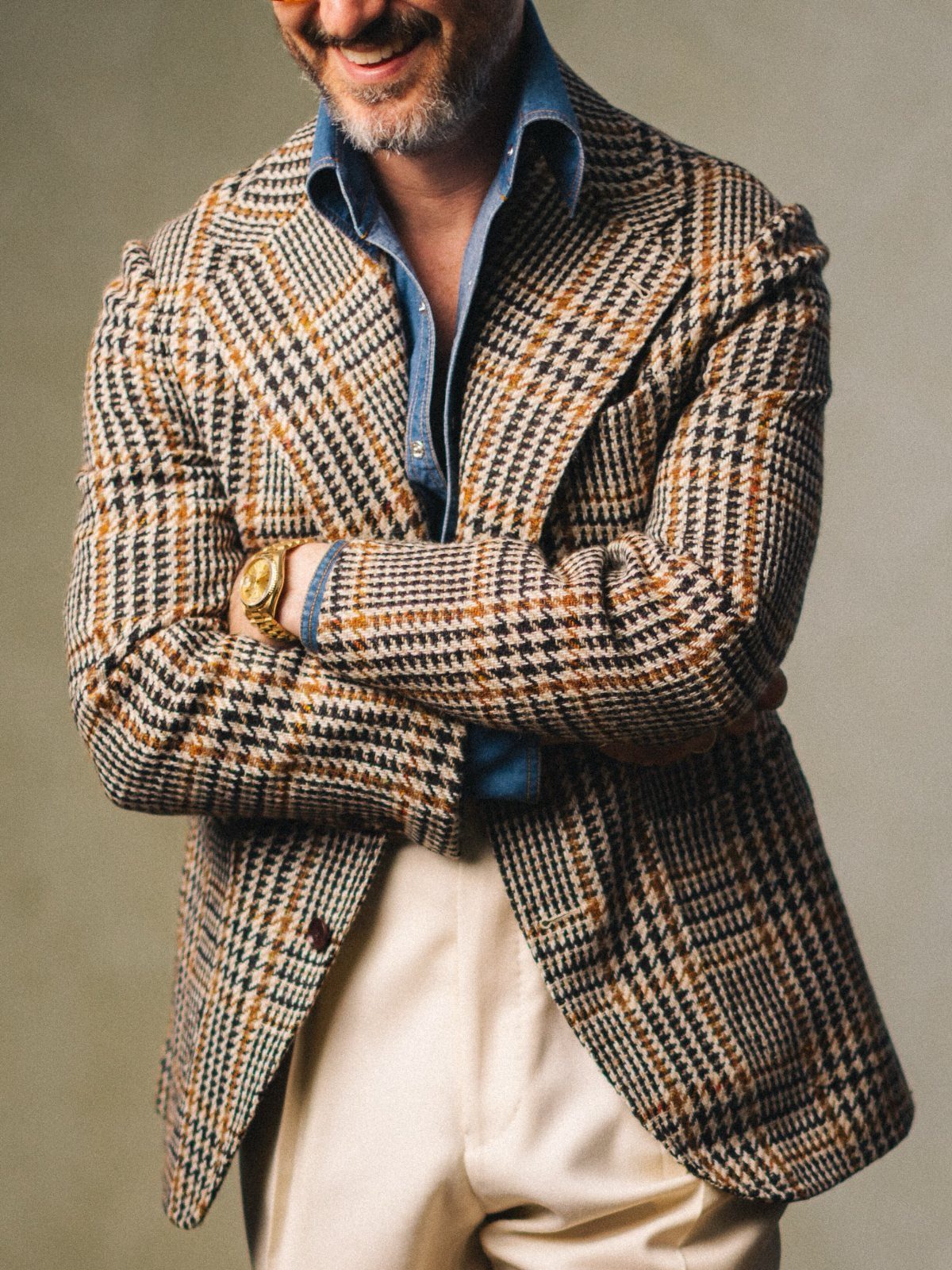
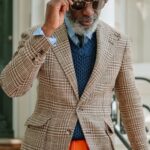
Houndstooth does a lot of work in a blazer, so everything under it can stay quiet. A denim shirt and cream trousers, as here, keep the pattern as the single loud piece.
Add a gold watch if you own one; it fits the warm tones. This is the most useful jacket on the list for a normal week, since it dresses up jeans and dresses down trousers without effort.
5. Wide Lapels
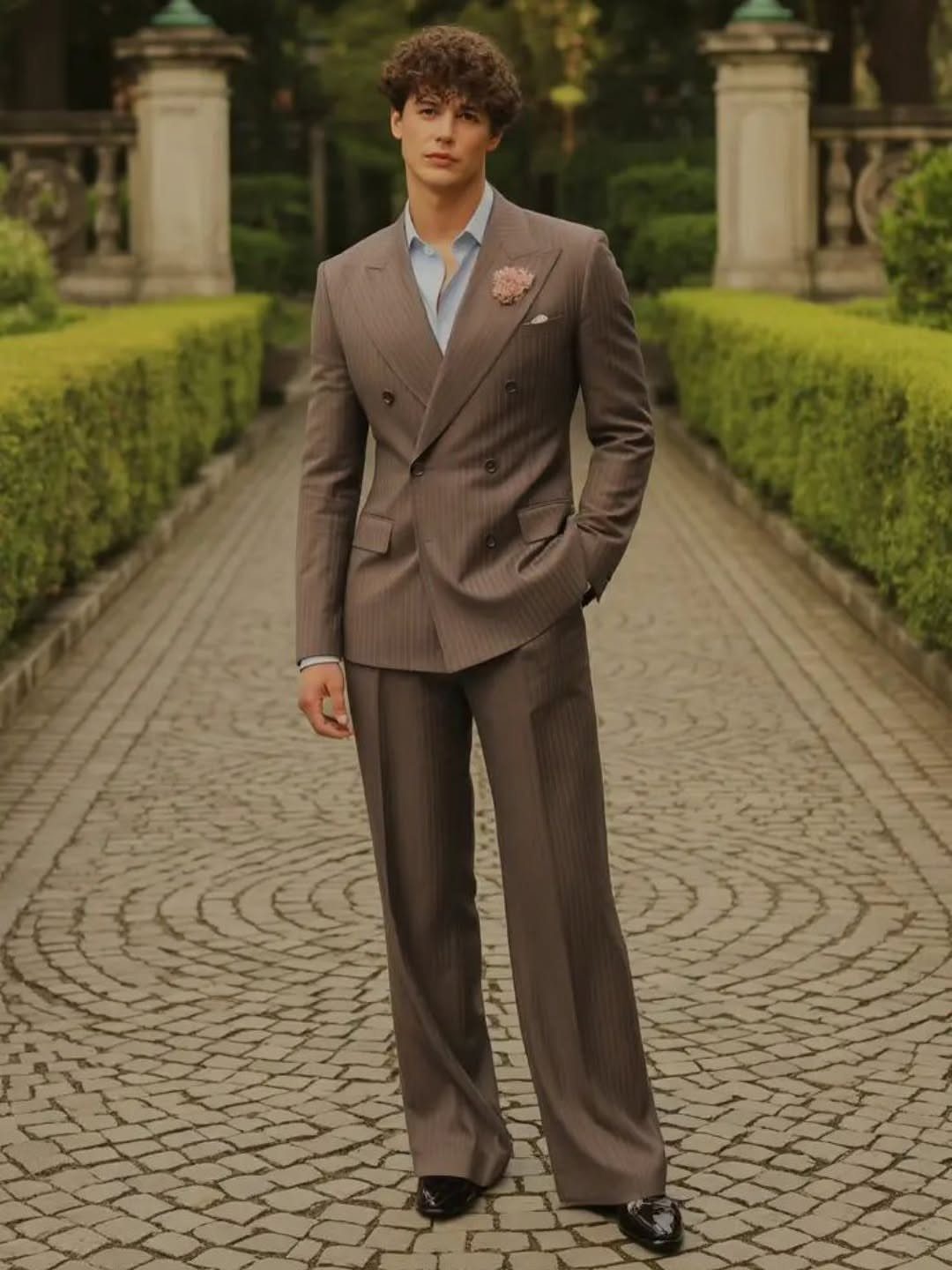
Wide peak lapels are what make a suit look 70s at a glance, and a double-breasted pinstripe pushes it further. The lapel frames the chest, so the suit looks broad and sharp even with the shirt collar left open.
Match the width of the lapel with a wide-leg trouser, or the proportions fight each other. Brown pinstripe is a softer choice than navy, and I like it for dinners and events where you want to stand out a little.
6. Patterned Knitwear
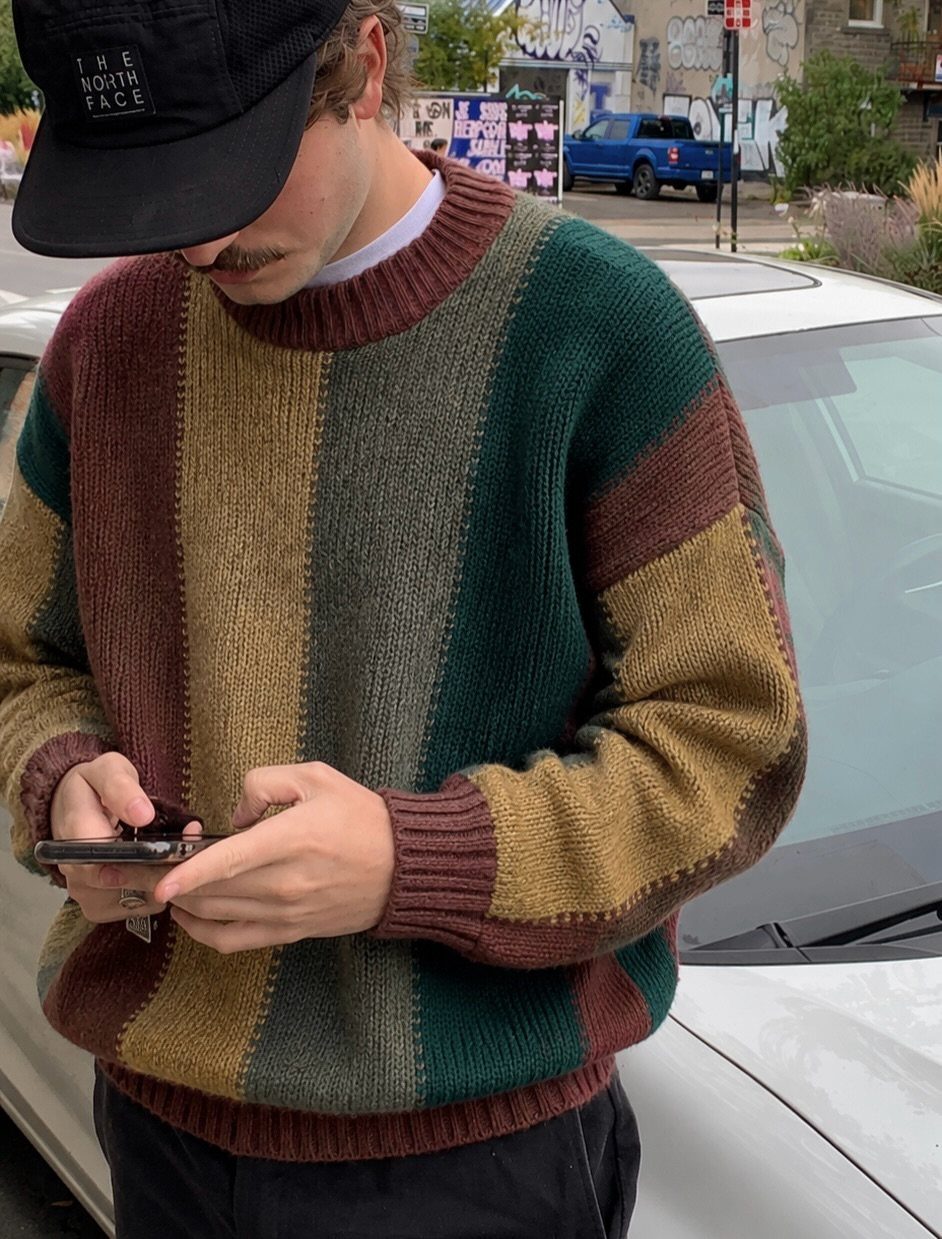
A thick knit in stacked stripes of several colors is the least fussy 70s piece here.
A patterned sweater goes over jeans with no other effort, and a plain cap in black or another solid color keeps the sweater as the center of attention.
Choose a chunky weave rather than a thin one; the heft is what makes it look of the era. With solids everywhere else, it works for a casual weekend with no planning.
7. Platform Shoes
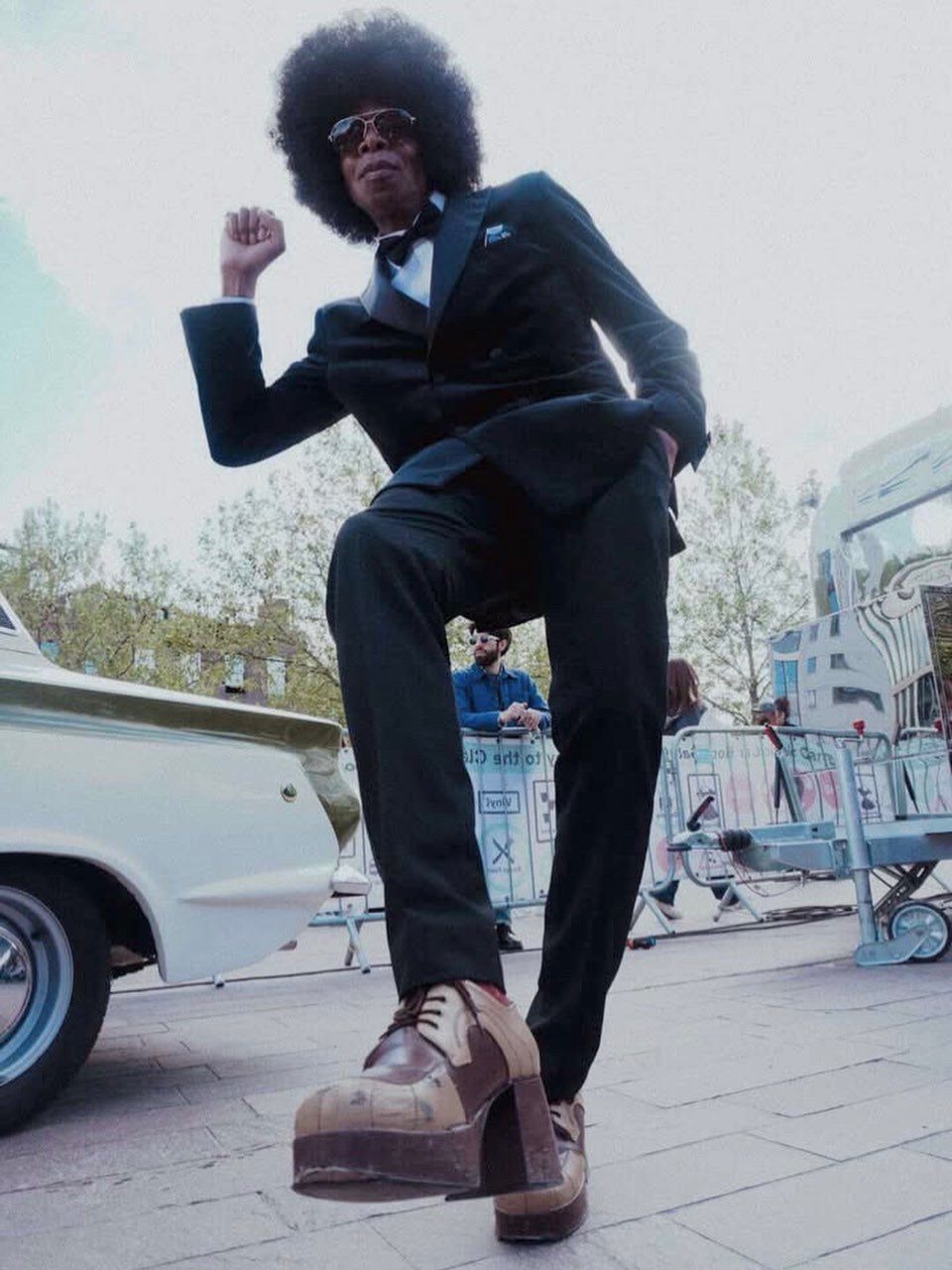
Platform shoes are the loudest thing a man could put on his feet in the disco years, and a black suit is the right backdrop for them.
Dark trousers cut wide enough to fall over the shoe keep the look sharp rather than costume, so the two-tone or brown leather gets all the attention.
Wearing them takes practice, so walk around the house first. For a modern night out, I would pick a plain suit and a simple shirt, with the sole as the only surprise.
8. Casual Footwear
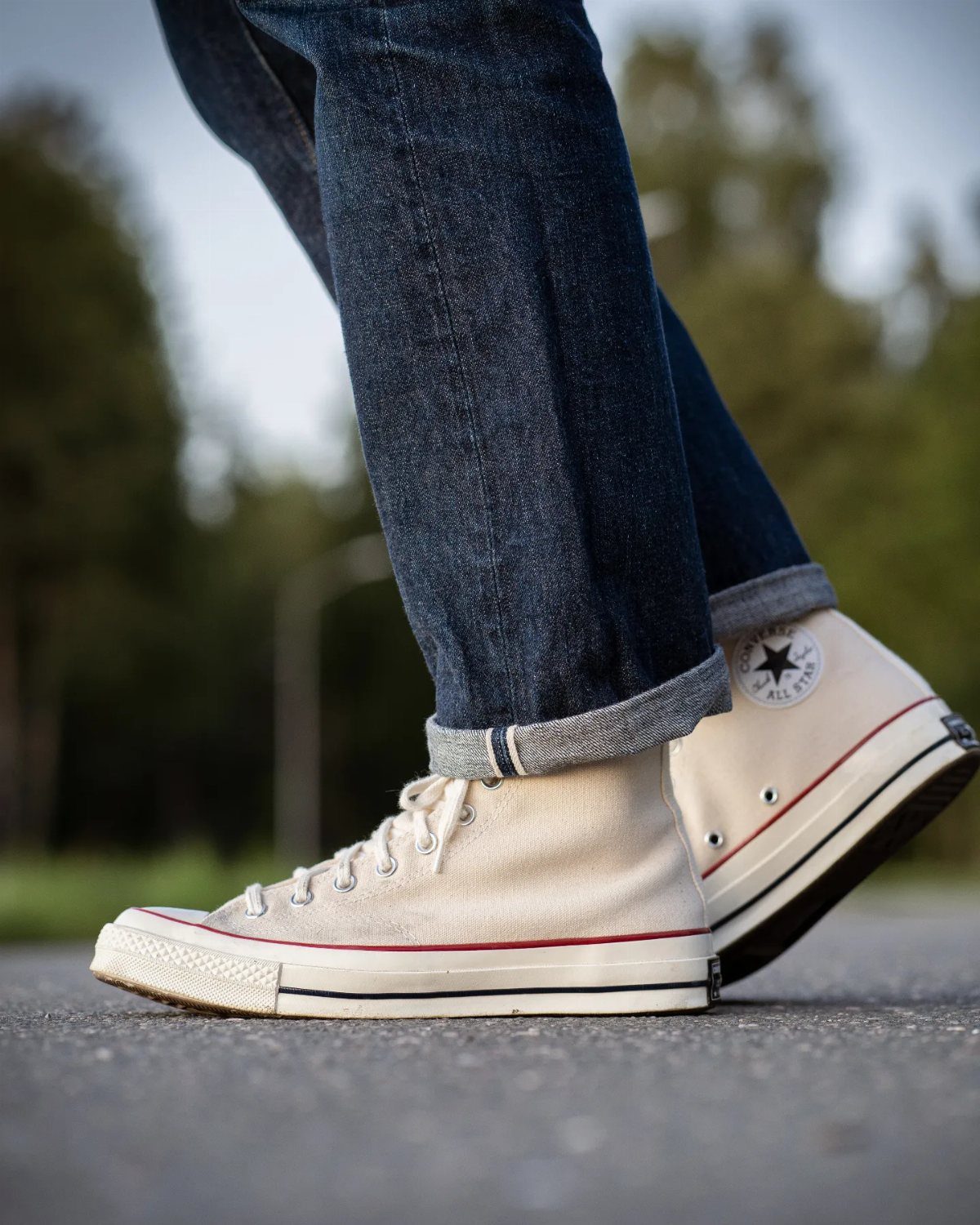
Off-white high-top canvas sneakers are the easiest pair on this list to wear on an ordinary day.
Cuffing dark denim once or twice, as here, shows the shoe and the ankle, and the cream against dark blue gives a clean contrast.
Keep the rest plain: a tee or a flannel is plenty. I like these best for weekends, and they trade away any chance of passing at a dressy event, where leather still wins.
9. Short Shorts
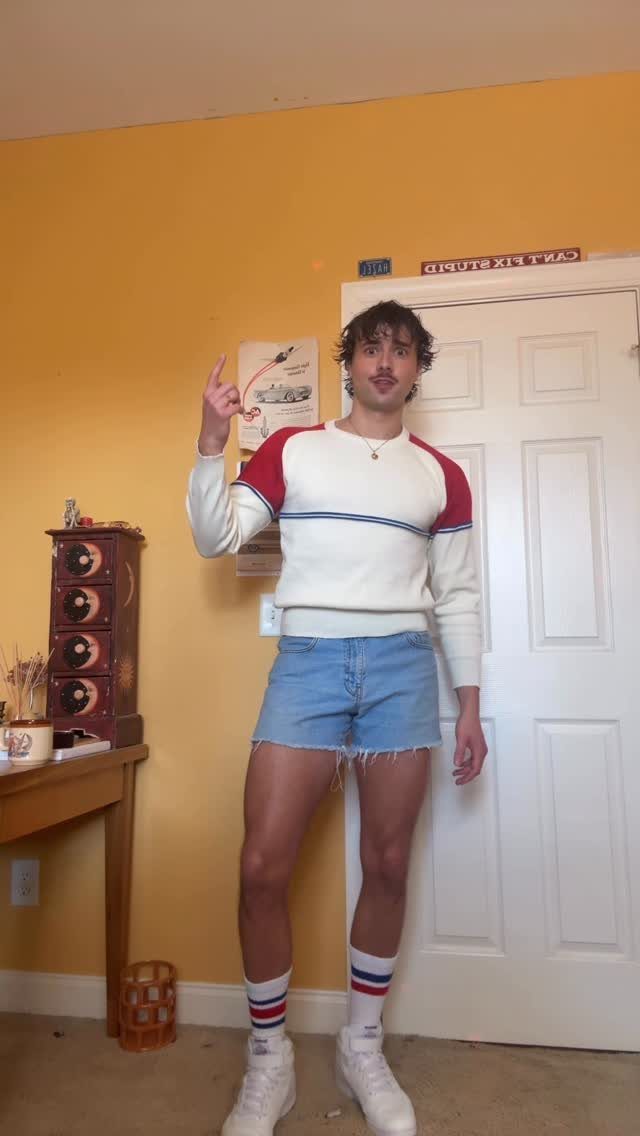
Short shorts are the boldest item here, and I would only try them with the rest of the outfit kept simple.
Start with a hem that sits mid-thigh if you feel unsure. This is a summer piece for a beach day or a casual party, not for work, and it takes some nerve.
10. Watches
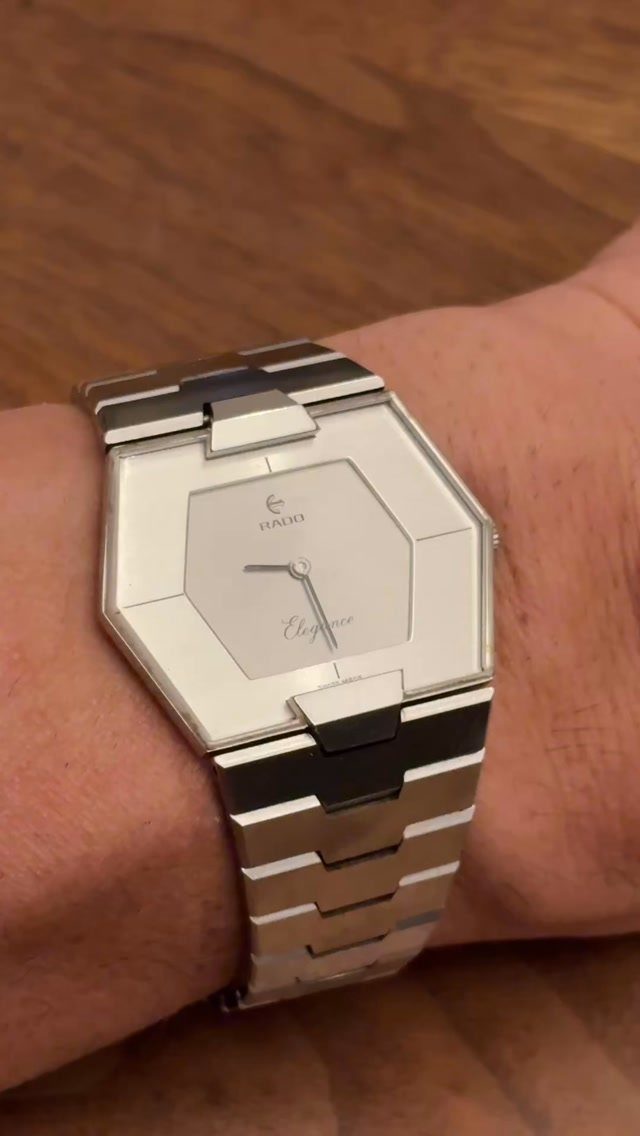
An angular, octagonal case on a linked metal bracelet turns a watch into a piece of jewelry, which is the 70s idea in one object.
Silver suits cool colors and plain shirts, so I would wear it with a simple knit or a crisp white shirt and nothing else on the wrist.
The maker of this piece notes a case about 36 mm at its widest, which sits well on a modern wrist. Wrists up to about 19 cm fit the bracelet, so check yours before buying a similar one.
11. Geometric Patterned Jacket
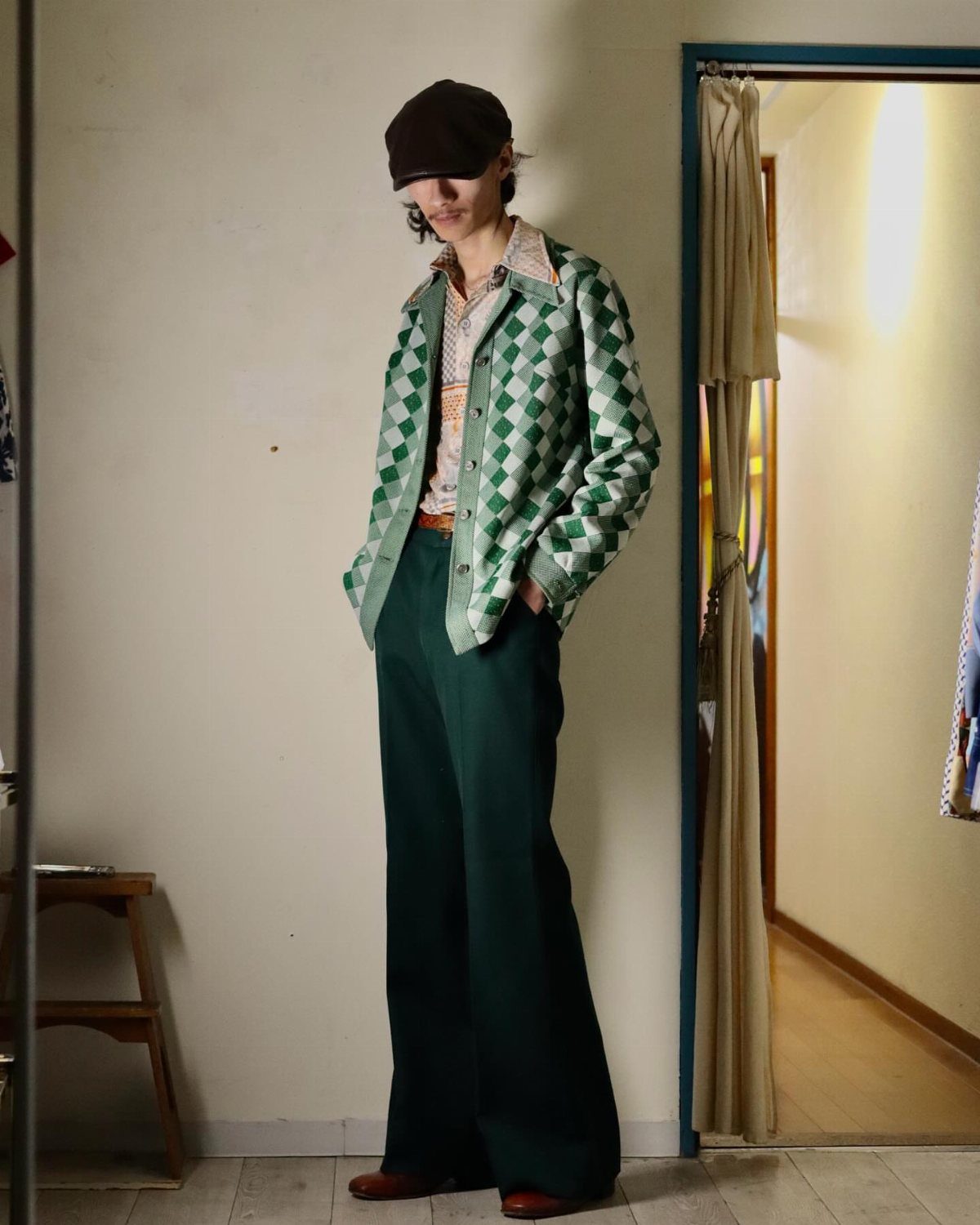
A green and white geometric knit jacket does the work of an entire outfit, so the trousers should stay a single dark shade. Dark green wide-leg trousers, as here, keep the palette tight and make the pattern look planned.
Wear a patterned shirt underneath only if its colors sit close to the jacket, and make the scale of the pattern smaller than the knit.
I would add a dark cap and stop there. It suits a casual evening better than the office.
12. Tailored Waistcoat Outfit
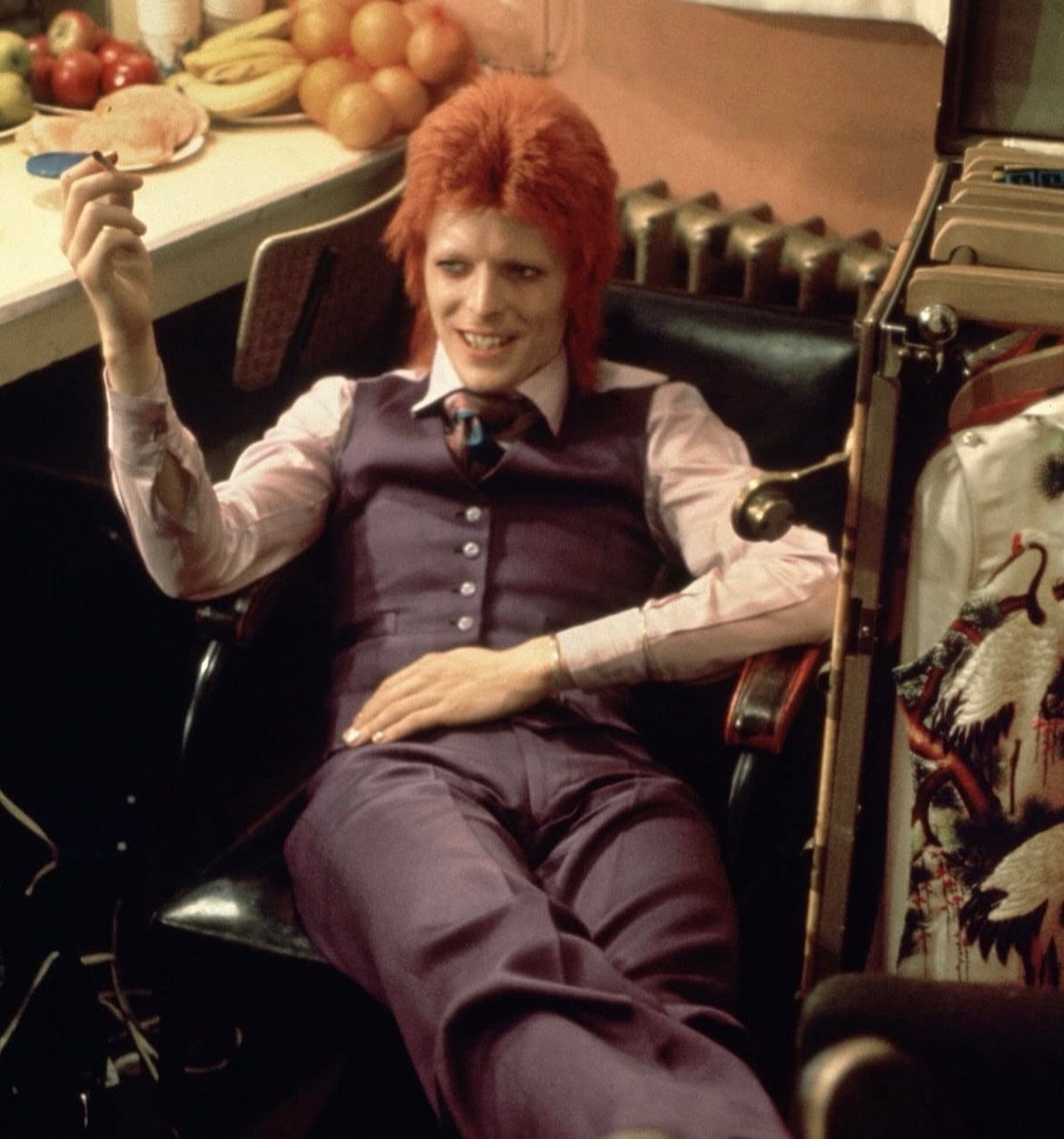
A purple waistcoat with matching trousers is a three-piece without the jacket, and it gives you the sharp line of a suit with less heat and bulk. Worn over a collared button-down, it looks tailored without feeling stiff.
Keep the waistcoat fitted, since a loose one ruins the shape.
Matching trousers make the color look intentional. I would wear this to a dinner or a party, where purple can be the main event.
13. Leather Jacket with Tie
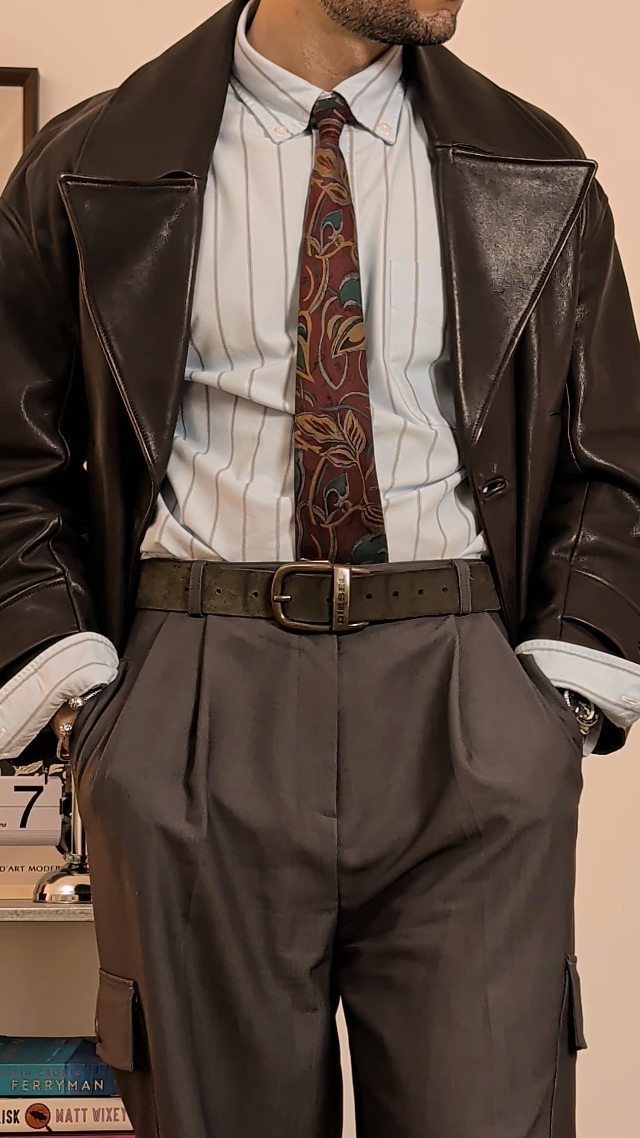
A dark leather jacket over a striped shirt and a patterned tie turns a biker piece into something close to office wear. Grey pleated trousers do the smoothing here, so the jacket reads as outerwear rather than attitude.
Keep one pattern loud and the other quiet: a fine stripe on the shirt lets the tie carry the design.
I would knot the tie snug and wear the belt in a matching dark leather. It suits a casual workplace or a dinner better than a formal event.
14. Retro Patterned Button-Down Shirt
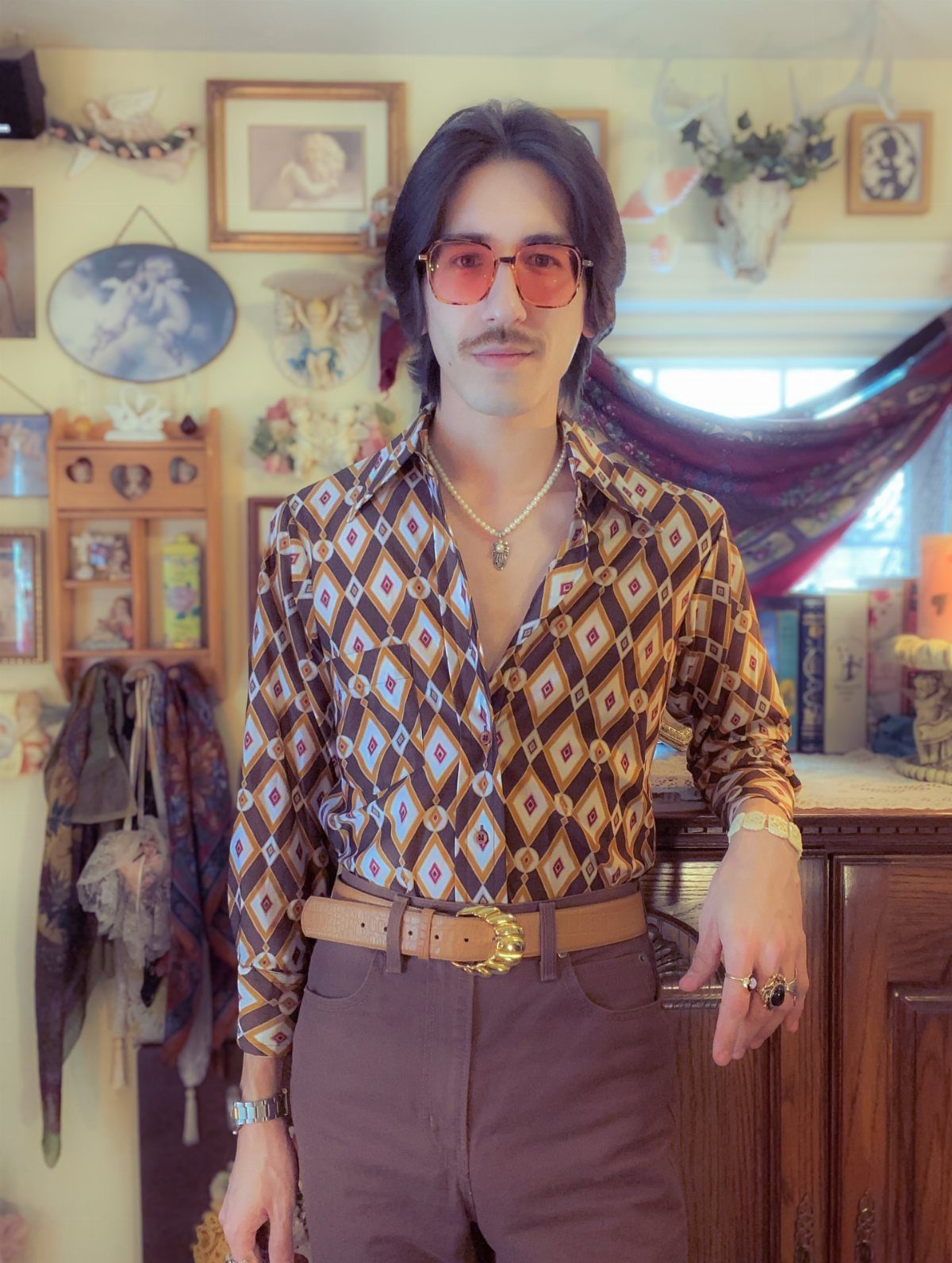
Brown on brown is the quiet way to wear a printed shirt, and a geometric pattern in that family looks like the decade without shouting. Matching brown trousers keep the print as the only busy thing on the body.
A wide belt with a statement buckle is the one accent I would allow.
Tinted glasses finish it, though they are optional. Wear it open at the collar for a date or a party, and skip it for anything formal.
15. Embroidered Patch Denim Jacket
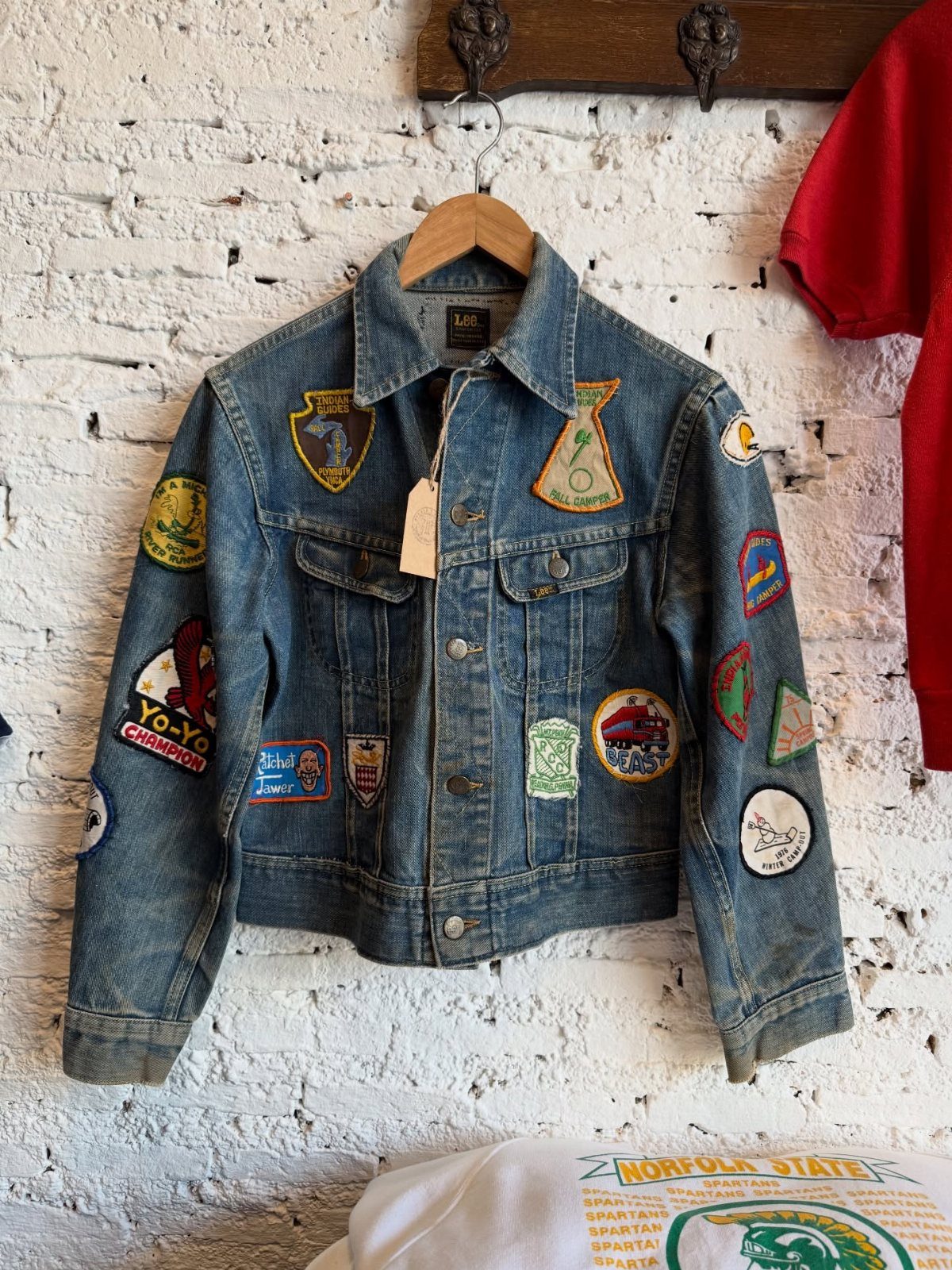
A blue denim jacket covered in embroidered patches is a one-piece personality, and the plain denim underneath is what lets the mess of colors work.
Patches like "Yo-Yo Champion" and "BEAST" are the fun of it: pick ones that amuse you rather than matching a theme.
Wear it over a white tee and dark jeans, and stop there. Patches mean a busy jacket, so I would keep it for weekends, not the office.
16. Velvet Button-Down Shirt
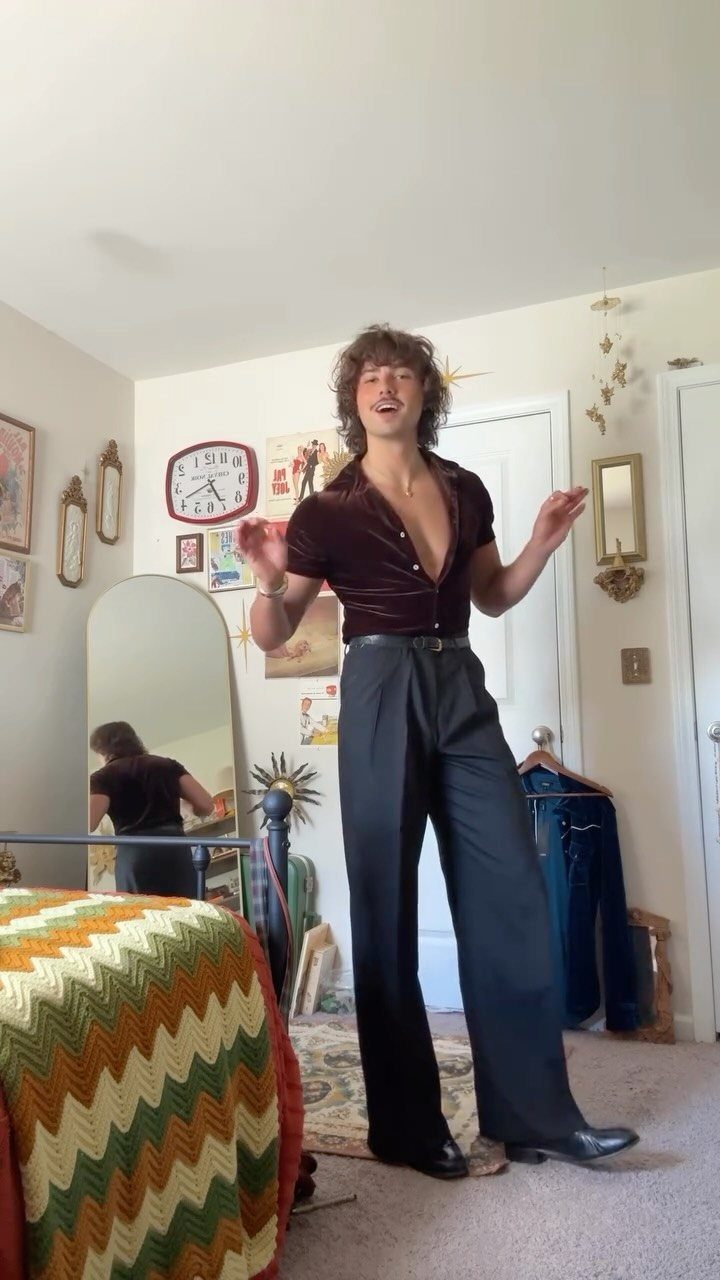
Burgundy velvet gives a button-down a depth that cotton can’t, and the nap catches light like a darker version of silk. High-waisted black wide-leg trousers and black boots keep the color in one place, which is the right call.
Leave the shirt open a few buttons, with nothing loud underneath. Velvet suits evenings, dinners and parties, and it runs warm, so I would not pick it for a hot day or the office.
Modern Styling Tips
Balance is the whole method: one retro piece per outfit, with everything else cut the way men wear it now.
Flared trousers look sharpest with a slim-fit shirt on top, so the leg gets the attention and the torso stays clean.
To bring the decade into a modern outfit, put a wide-lapel blazer or a vintage leather jacket over plain, current pieces and let that one layer do the talking.
Platform shoes are a stretch for most men now, so I reach for boots with a modest heel, which gives you the same 70s lift without the clunk.
Accessories are the easiest entry point: a wide belt, a bold watch or statement sunglasses. Start there if a full retro piece feels like too much.
Fashion Influences
Music and film set the look of the decade, and you can borrow from both without dressing in costume.
David Bowie and Marc Bolan made glam rock a fashion movement built on flamboyance, theatricality and androgyny, so the lesson from them is confidence in color and shine.
Disco and "Saturday Night Fever" pushed the other way, toward sharp, dressy shapes for the dance floor.
Punk arrived late in the decade with a rebellious, edgy look, and it is the best reference if you want 70s attitude without the flare.
Early in the decade, the hippie style of the late 1960s still ruled. Tailoring took over around 1975, and the leisure suit, with its wide collar and matching trousers, ended up as the decade’s signature look.
The disco music genre spawned its own fashion craze in the mid- to late 1970s. Young people gathered in nightclubs dressed in new disco clothing that was designed to show off the body and shine under dance-floor lights.
Fabric Choices
Polyester became the fabric of the decade because it lasted and was easy to care for.
That still holds: a polyester shirt survives the wash better than most silk, though I would check the label, since cheap versions run hot and look flat.
For velvet, the classic colors were deep purple, royal blue, emerald green and burgundy, mostly on sports coats. Velvet also showed up in trousers, bowties, scarves and even shoes.
For a first try, buy a single velvet piece in a dark shade like navy, forest or burgundy, and let everything around it stay matte. A bowtie or scarf is the lowest-risk way to try it.