The ideas here run from one small piece, like a single gold rope chain or a pair of white high-tops, to a full costume, such as a Miami Vice pastel blazer or a double-breasted pinstripe power suit.
The occasion picks the version: a themed night or party can take the whole look, while an ordinary weekday calls for one piece worn over plain, quiet basics.
Tommy Hilfiger’s 1985 label and MTV’s 1981 launch are the dates that explain why the decade’s color and sportswear still look current.
1. Rocker Style
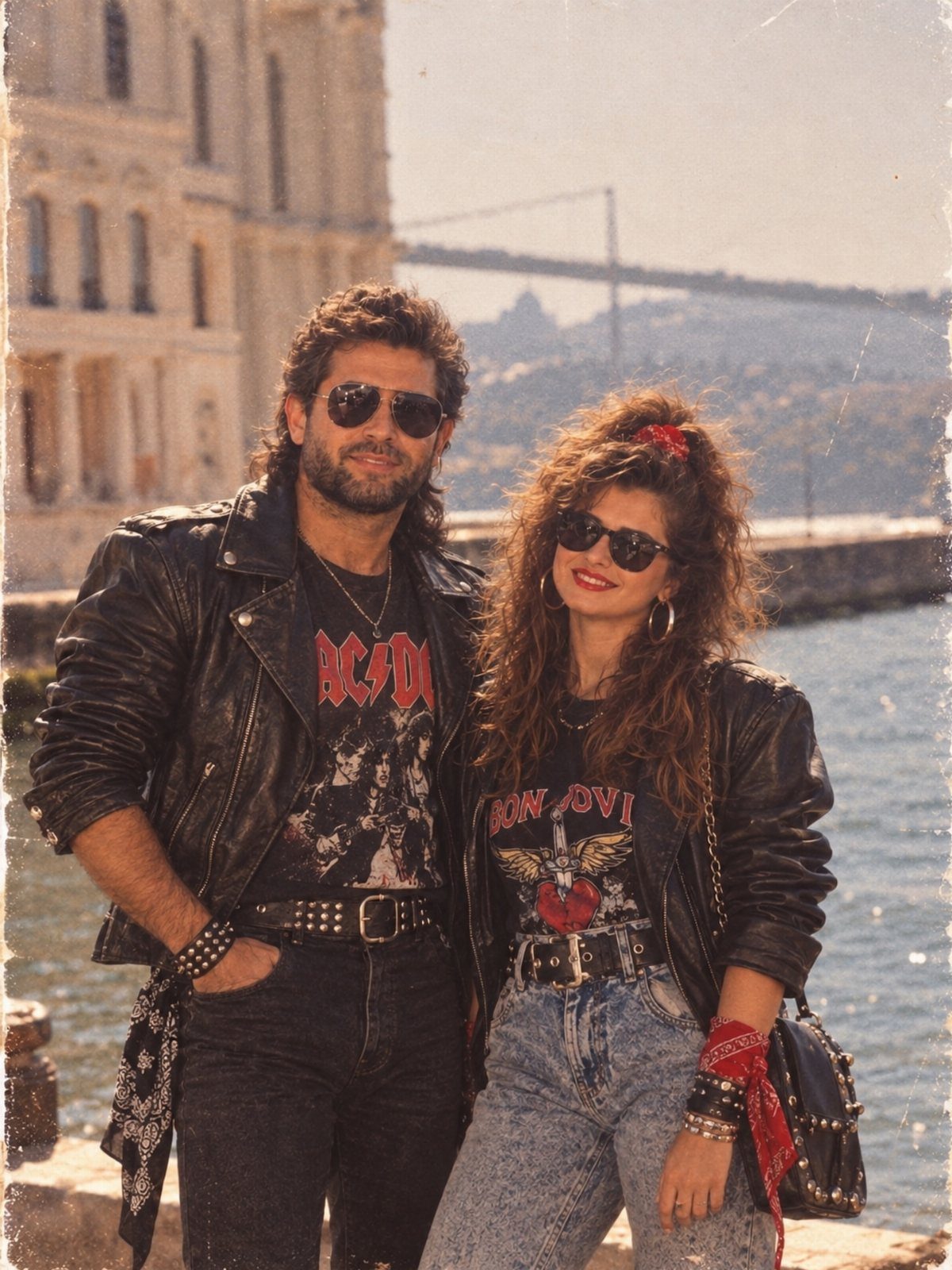
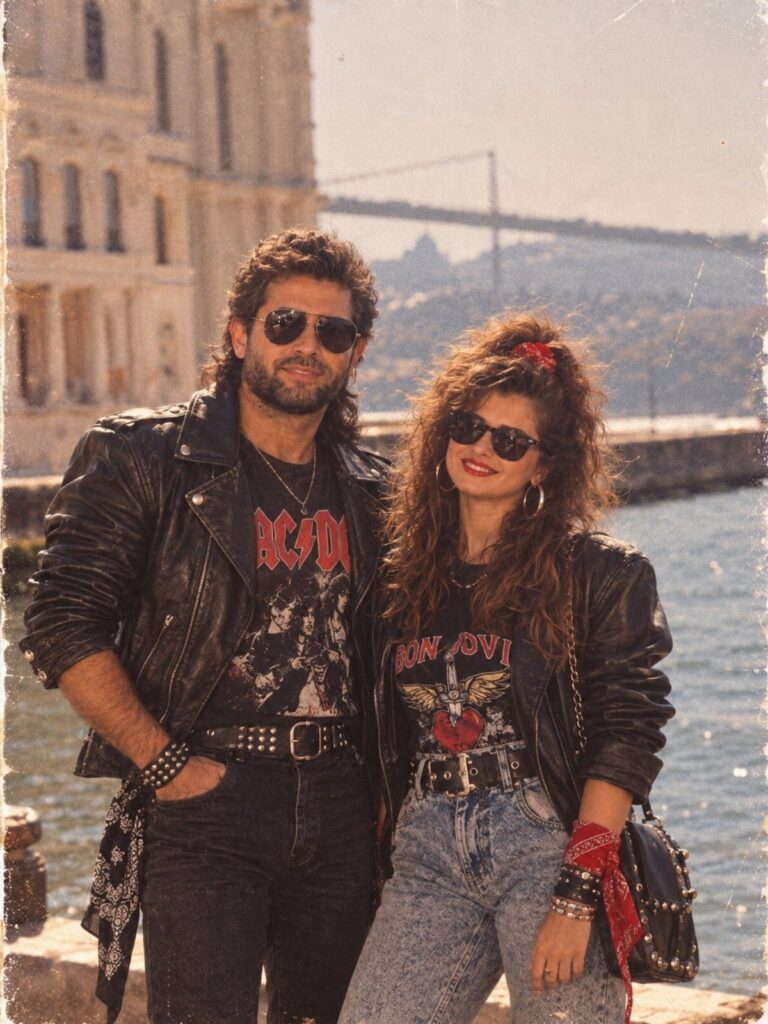
Band tees under a leather jacket are the whole formula, and sunglasses finish it.
Pick a shirt from a band you actually listen to, since AC/DC and Bon Jovi read as real fandom only when you can name a song.
Black leather over a black or faded gray tee keeps the look simple. I’d skip the extra studs and chains unless the event is a costume party; loud works best when one piece does the shouting.
2. Athletic Windbreakers
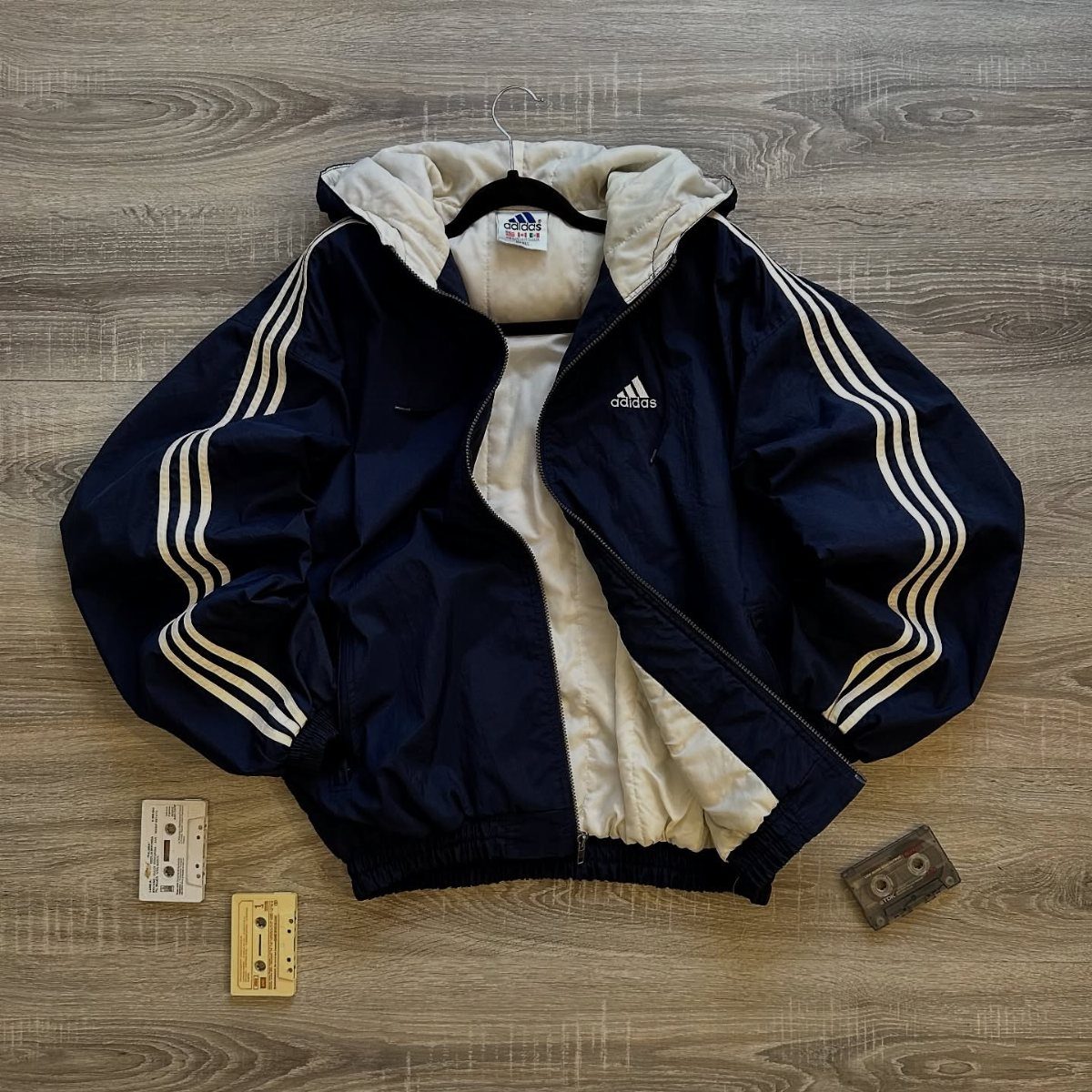
Tracksuit culture grew out of this one piece, and a single windbreaker over a plain tee and jeans borrows the look without the full set.
Wear it with plain jeans or dark trousers, not the matching pants, and the look stays current instead of costume-like.
Navy with white sleeve stripes is the safest color pairing, because it goes with almost everything in a normal closet. Zip it halfway over a white tee.
A full matching set suits a themed night, where going all in is the idea.
3. Graphic Tees
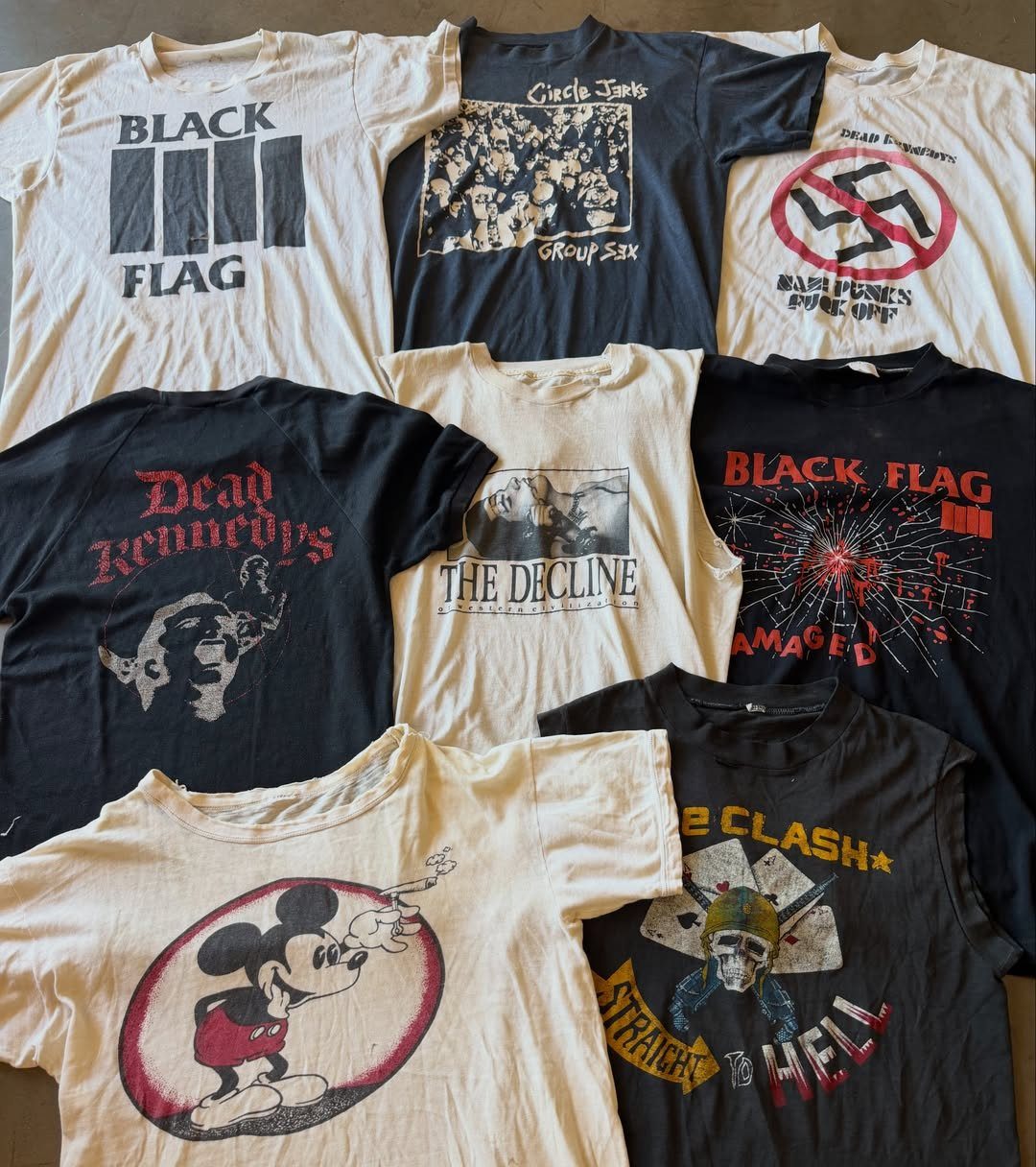
A graphic tee does the work of a whole outfit: one bold print, and everything else can stay quiet.
Punk band logos like Black Flag, Dead Kennedys and The Clash carry the most 80s attitude, while a Mickey Mouse shirt is the lighter, friendlier route.
Choose a faded, slightly worn shirt over a crisp new one. Pair it with dark jeans so the graphic is the only loud thing in the outfit.
I’d wear one print at a time, never two.
4. Acid-Wash Jeans
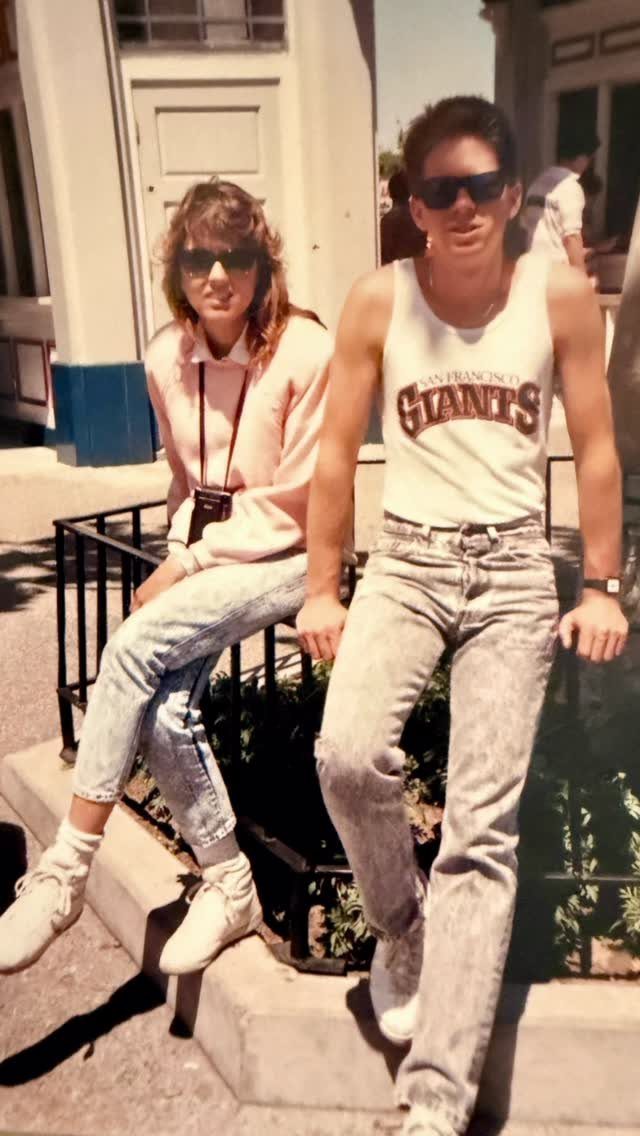
Acid-wash jeans are denim with a bleached, mottled fade, and light-colored pairs like these are the clearest version of the idea. They are loud on their own, so keep the top simple: a white tank or plain tee is enough.
Fit matters more than the wash. Choose a straight or relaxed leg rather than skinny, which fights the look.
Sunglasses add the right attitude. If a full pair feels like too much for daily life, a denim jacket in the same wash gives you a smaller dose.
5. Michael Jackson
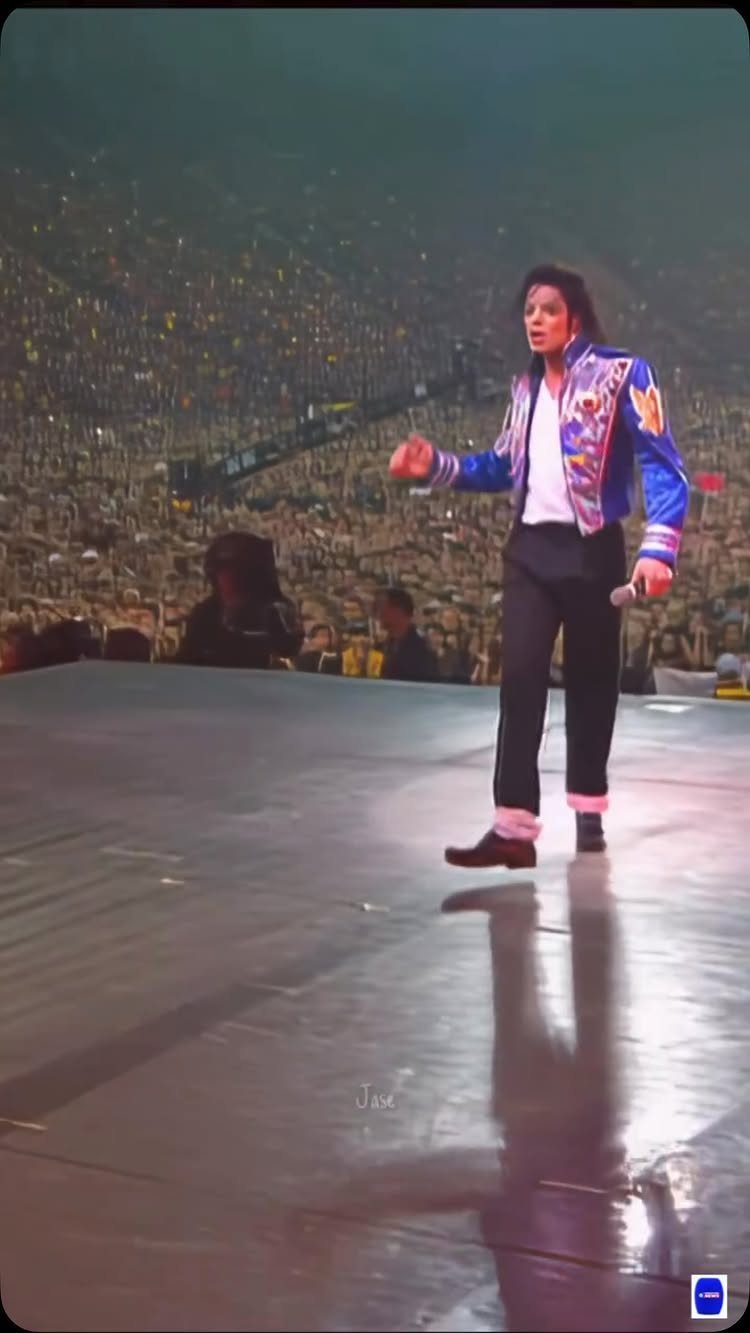
Few outfits from the decade were copied as often as Michael Jackson’s stage look, and the formula is easy to borrow: an embellished jacket, a white shirt and black trousers.
The jacket carries everything, so the other 2 pieces should stay plain and sharply fitted.
Look for a blue jacket with embroidered or beaded detail rather than a costume-shop sequin version. For a themed event, this reads clearly without needing a single prop.
6. Footwear Trends
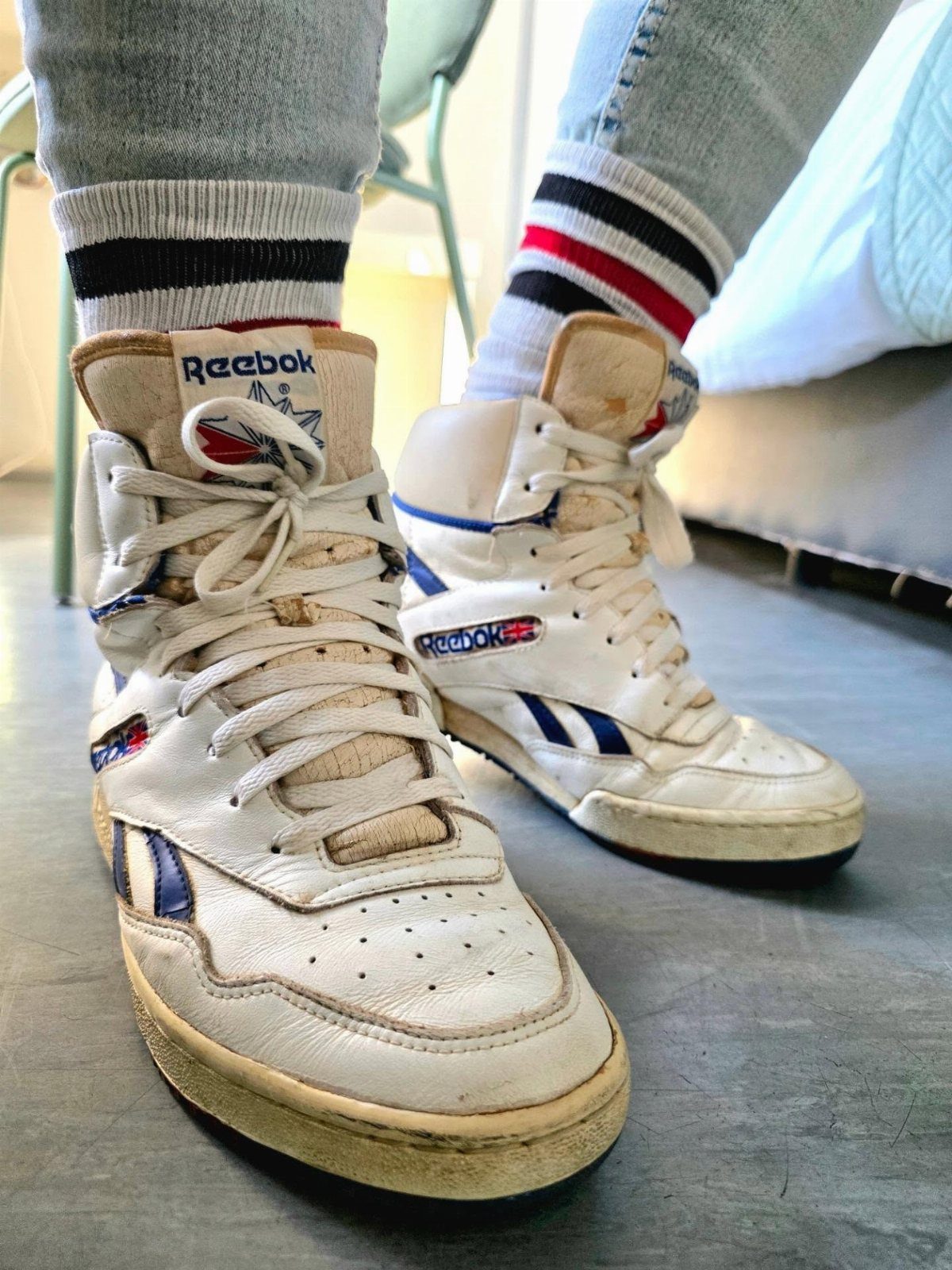
Sneakers became a real fashion statement in this decade, and white high-tops are the pair to start with. Reebok-style leather high-tops look best with light blue jeans, slightly cuffed so the shoe stays visible.
Striped athletic socks, pulled up high enough to show, make the outfit feel period-correct. I’d keep the shoes clean and bright white, since a scuffed pair loses the point.
7. The Miami Vice Suit

Pastel jackets over a plain tee, sockless loafers and sunglasses make up the Miami Vice look, and it works because everything stays light. A white blazer over a light blue tee with light gray trousers is the easy, wearable version.
Keep the trousers slim enough to show the loafers. I’d skip the socks entirely for a themed night, though thin no-show liners are a reasonable compromise on a long day.
8. Power Suit
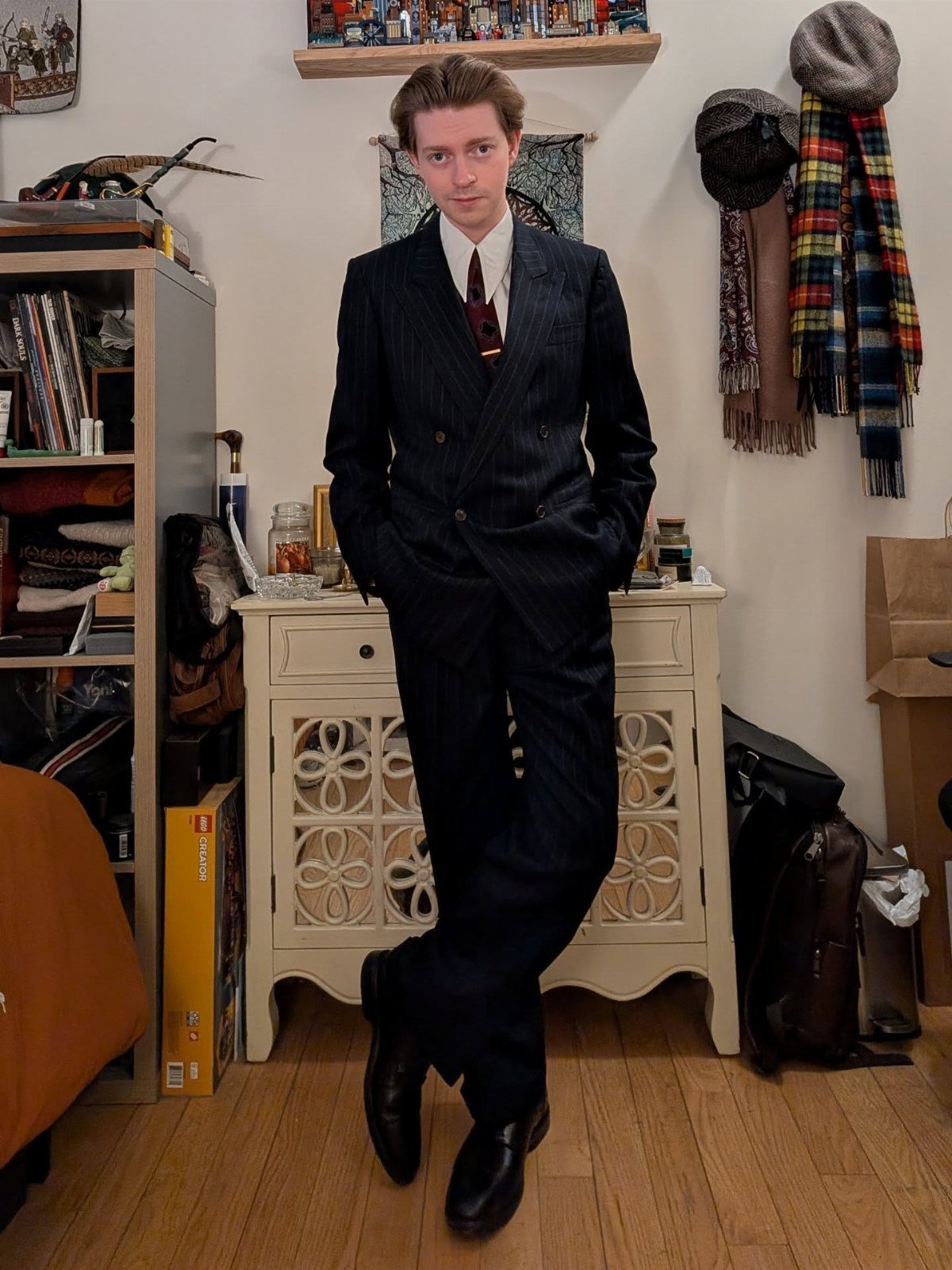
Wide shoulders, a dark pinstripe and a double-breasted front: that is the power suit, built to say wealth, ambition and authority before the wearer speaks.
A white shirt and a red tie are the classic pairing, and I wouldn’t change either.
Buttoned, the double-breasted front is a lot of fabric, so the fit has to be sharp. Have a tailor check the shoulders first.
For a themed event, the suit alone does the job. No props needed.
9. Hip-Hop Style
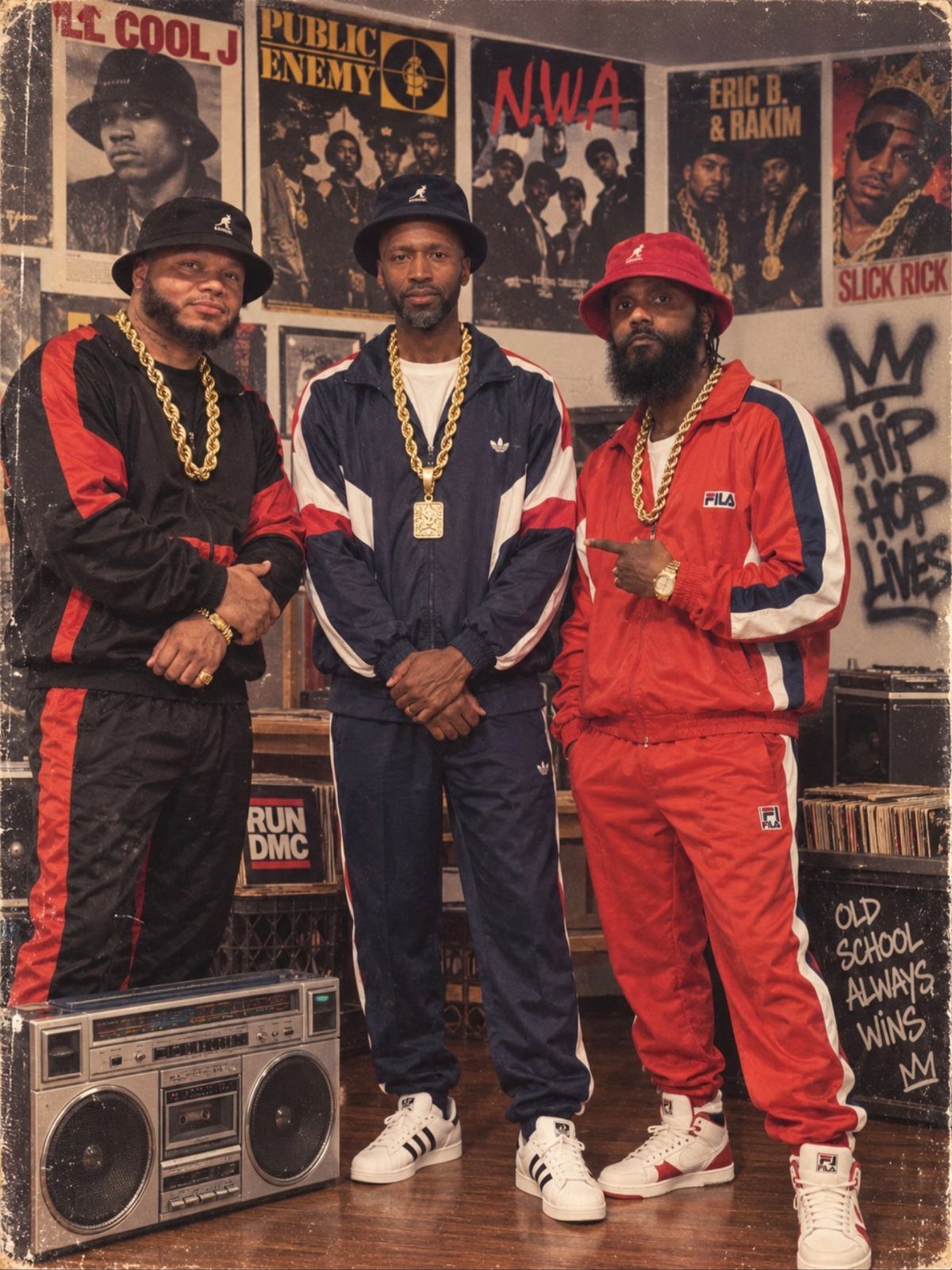
Streetwear started here, and hip-hop gave it the pieces: color-blocked tracksuits, bucket hats, gold rope chains and retro sneakers.
Pick one loud element and let the rest support it. A bold tracksuit with clean sneakers is easier to pull off than every piece at once.
Gold rope chains carry the most attitude per ounce, so start with one. Run DMC, LL Cool J and N.W.A are the right names to have in your playlist.
Wear the full set for a party; for daily life, take only the hat or the chain.
10. Feathered Hair Look
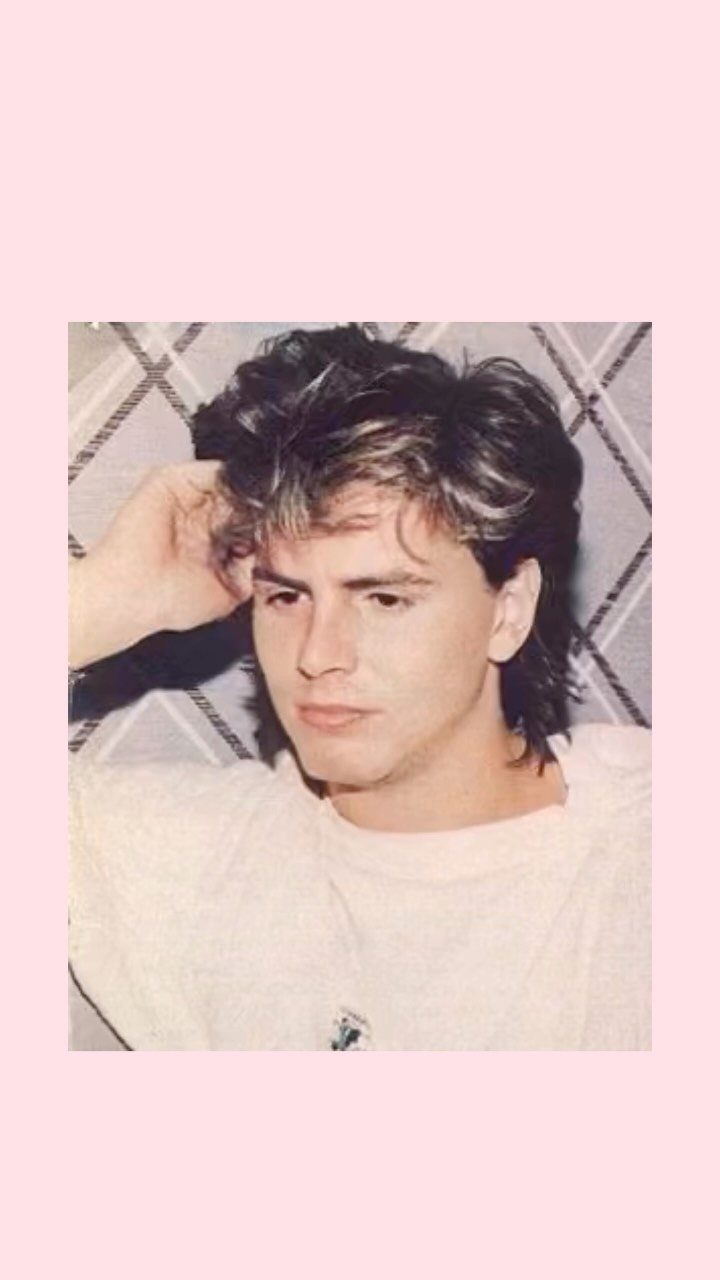
Feathered hair is the one 80s look that starts at the head: long, layered and swept back from the face with plenty of volume. Keep the clothes quiet, and a plain white crewneck tee is all it needs.
Ask a barber for layers rather than a single length, since the layers create the lift. Blow-dry it back and shape it with your fingers.
I’d skip heavy product. This look depends on soft movement, and stiff hair reads as a wig.
80s Fashion Icons
Designers shaped the decade as much as celebrities did. Polo Ralph Lauren sold a prep-school version of luxury that still felt relaxed, and the pony on the chest turned into a fixture in plenty of closets.
Tommy Hilfiger started his label in 1985, and the early pieces leaned on American classics: red, white and navy, with loud color blocking and stripes.
Calvin Klein made its name on tight, plain design, and most of that reputation came from jeans and underwear ads. Levi’s brought in stone washing, which made denim softer and easier to wear.
Prince blended rock, funk and R&B into an eclectic, androgynous style that challenged traditional masculinity.
Bruce Springsteen wore plain denim and worn leather, which made him the rugged, down-to-earth counterpoint to all that polish. Tom Cruise and Harrison Ford added the Hollywood side.
For a first pick from this group, I’d go with Springsteen’s approach: denim and leather are easy to wear on an ordinary day.
Power suits, athletic wear as everyday clothing, and the rise of designer labels defined the era, encapsulating a time of economic prosperity and cultural shifts. The 1980s fashion legacy continues to influence modern trends, demonstrating the decade’s lasting impact on men’s style.
Neon as a Trend
Neon works best in small doses. Hot pink, electric yellow and acid green turned up on tracksuits, graphic tees and accessories; I’d stick to one piece and let the rest of the outfit stay quiet.
An accessory is the easiest entry point. Pick one neon item and let everything else stay navy, black, gray or white, so the color reads as a choice rather than a costume.
Neon is also back in 2026 streetwear, so a bright tee or a tracksuit top won’t look like a costume today.
MTV’s 1981 launch pushed these colors into the mainstream, and the playful, futuristic feel is the reason to wear them: they suit parties, concerts and weekends better than the office.
Casual Vs. Formal Wear
The decade’s casual wear leaned on sports. Tracksuits, sneakers and logo sportswear moved into everyday dressing, helped by the fitness craze.
Layering is the 80s habit I’d borrow first: a plain tee under an open button-down works, and so does a sweater knotted over the shoulders.
A polo or a Henley with chinos or corduroys looks relaxed without looking sloppy, which is what I want from smart casual.
For outerwear, I’d pick one of three: a bomber, a denim jacket or a windbreaker. Each gives a different character, so choose by how you dress the rest of the week.
Cargo and utility pants were the alternative to jeans. Dark, straight-cut pairs are the easiest to wear with a plain tee.
Frequently Asked Questions
What is 80s retro style for men?
It mixes bold color, loud prints and big, confident pieces like the double-breasted power suit, leather jackets, windbreakers and acid-wash jeans.
The decade had many looks at once, from rocker to preppy to hip-hop, so I’d pick one loud piece and keep everything else quiet. That keeps it wearable instead of costume-like.
What were the biggest fashion trends of the 80s?
The big ones were power suits, rocker leather and band tees, athletic windbreakers and tracksuits, hip-hop streetwear, preppy polos, and neon color. Each trend had its own people behind it, from Wall Street to punk clubs to MTV.
What is the 80s casual dress code?
Casual meant sportswear and denim: graphic tees, acid-wash jeans, windbreakers, bombers and sneakers, helped along by the fitness craze. For a modern version, I’d keep jeans dark or straight-cut and let one piece carry the 80s attitude.
What accessories were popular in the 80s?
Sunglasses did the most work among 80s accessories, and Wayfarers and aviators are the 2 shapes I’d start with. Digital watches in metallic or bright colors, leather or metal bracelets, studded belts with big buckles, and bandanas also showed up.
Gold rope chains came from hip-hop. I’d wear one or two at a time so the outfit doesn’t turn into a costume.