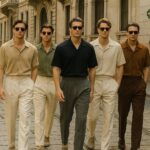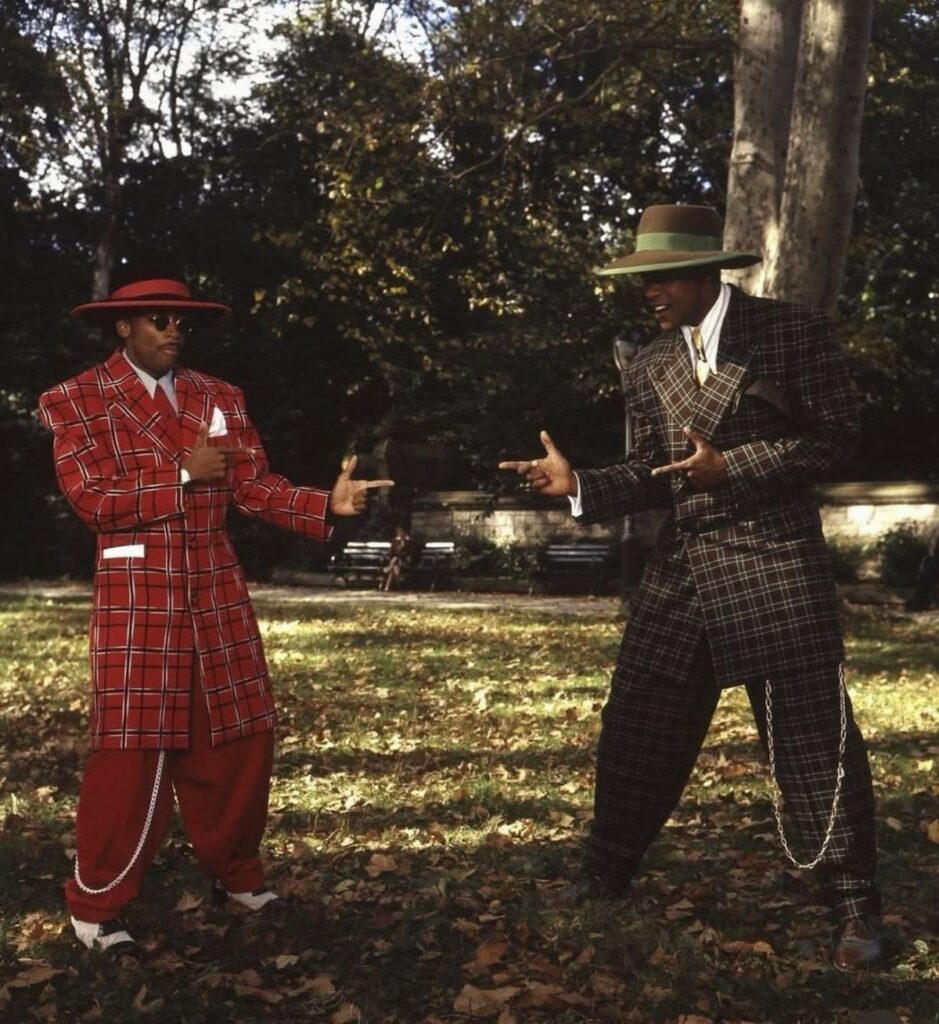
Where you wear it decides which of these looks is yours: zoot suits and two-tone shoes belong at events, dinners and nights out, while a three-piece suit, a double-breasted suit or a long overcoat with a fedora can handle an ordinary workday.
The range runs from a zoot suit with exaggerated shoulders to a plain pair of suspenders over a crisp shirt, and the 1920s and 1930s did not dress alike, so pick your decade before you shop.
1. Zoot Suits
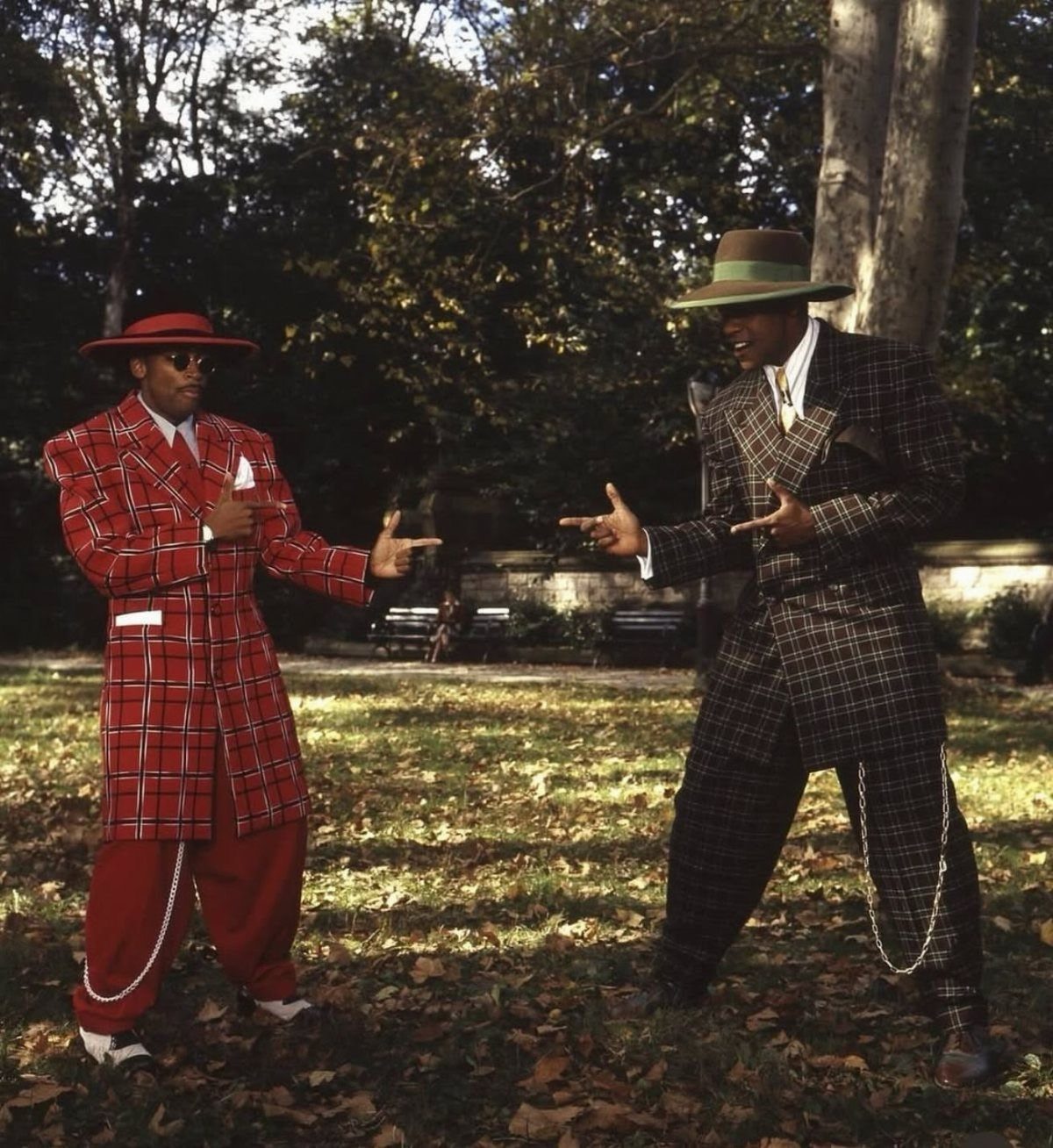
Zoot suits are all about volume: a long, roomy jacket, high-waisted pleated trousers, and a pocket chain that drapes low.
Pick one bold piece and keep everything else quiet. A fedora and a chain finish the look, but a plain shirt keeps it from turning into a costume.
This is a style built for young men who want to be noticed. It is not a subtle office option, and I wouldn’t try to make it one.
2. Two-tone Shoes
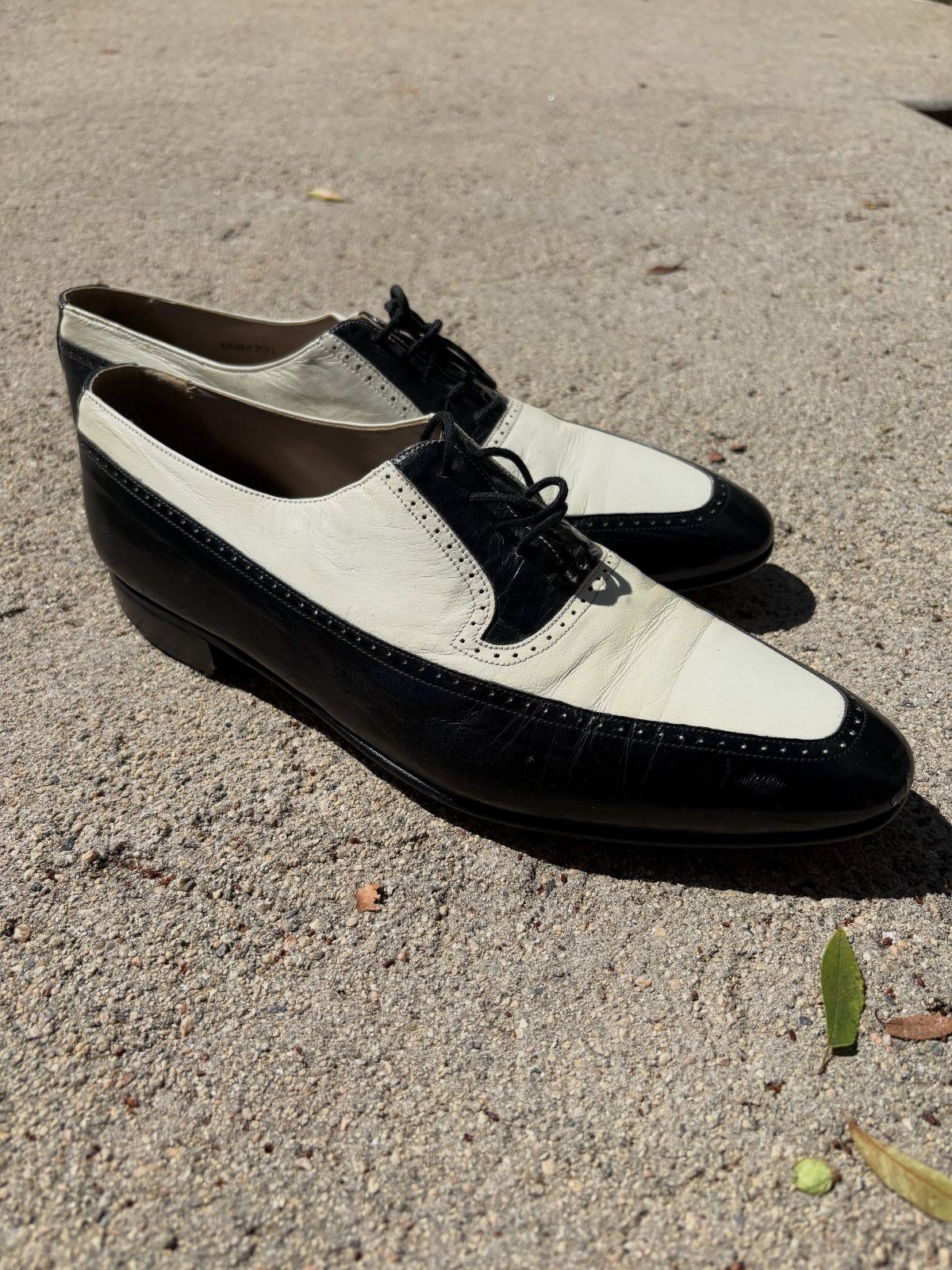
Black and white spectator shoes do one job: they make the feet the loudest part of an outfit.
Pair them with a calm, solid-colored suit in a dark or neutral shade. Let the shoes carry the contrast, and keep your socks and belt simple so nothing competes.
Two-tone shoes are limited in range: they pair well with a light summer suit or cream trousers, and they fight with almost everything else in a normal closet.
They work for events, dinners and a night out, but they won’t blend in at a regular workday. I’d treat them as a statement piece and wear them with confidence.
3. Three-piece Suits
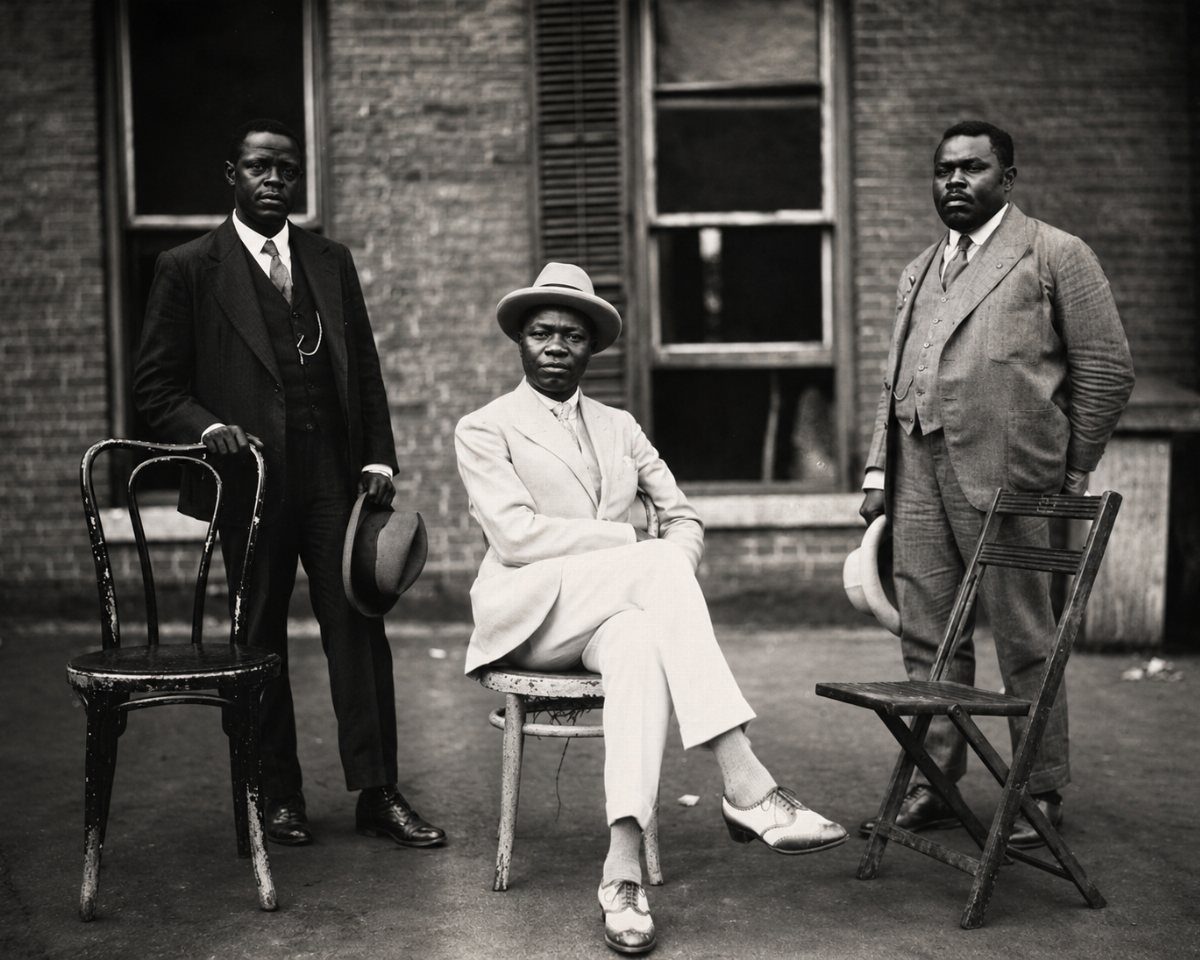
A three-piece suit, with its jacket, vest and trousers, looks best when the fit is exact. Pale or dark, the effect comes from the clean line the vest creates at the waist.
Have the vest sit snug enough to lie flat, with the bottom point just covering your trouser waistband. A good tailor matters more than the fabric.
I like the contrast of a white suit beside darker ones, but for a first suit, a single dark three-piece gives you three ways to wear it: together, or split into a jacket and trousers.
4. Suspenders
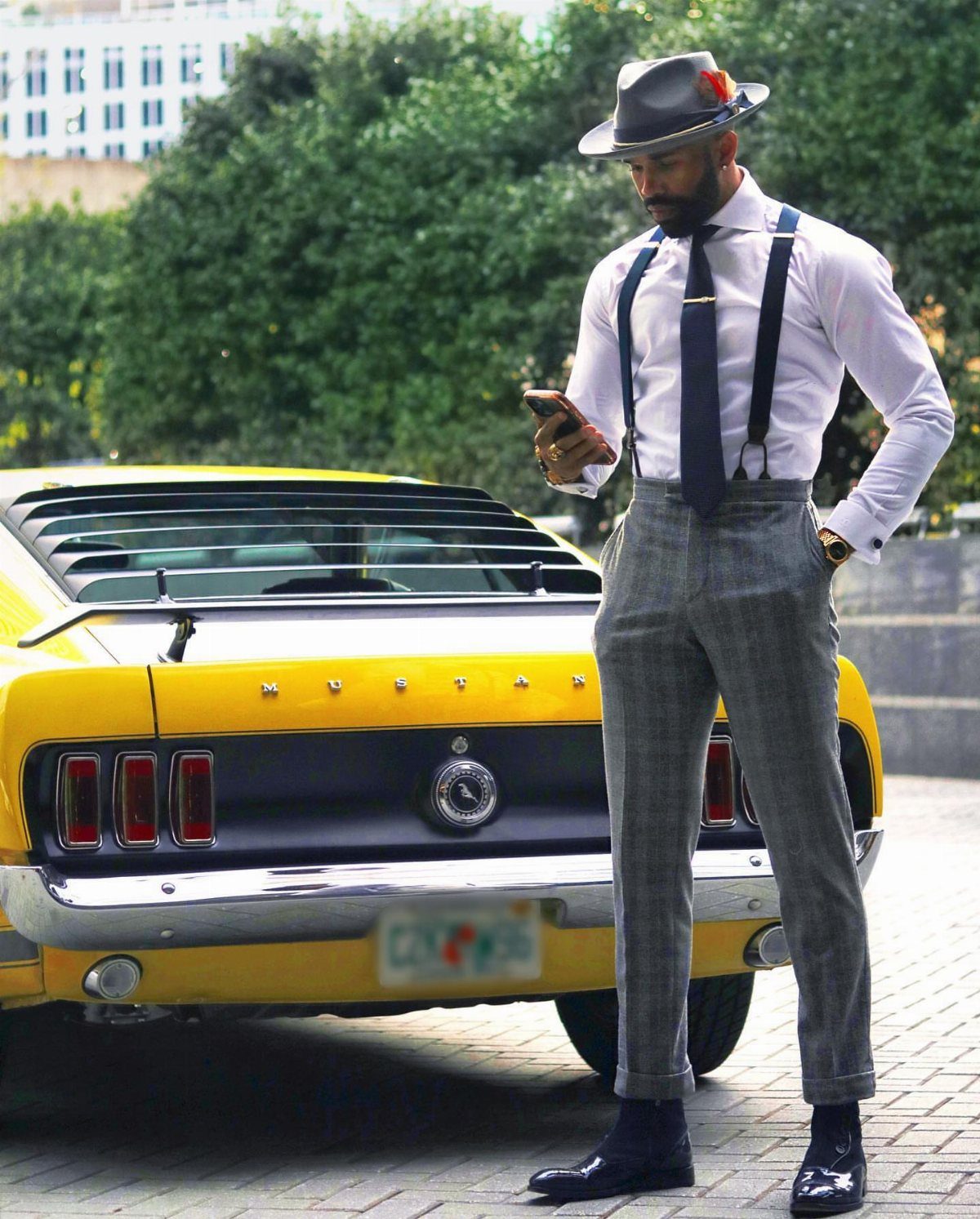
Suspenders hold trousers up from the shoulders, so the waistline stays smooth without a belt cutting across the shirt. That is why they pair so well with a dress shirt, a tie and high-waisted trousers.
Skip the belt entirely when you wear them. Wearing both muddles the look.
Suspenders look sharpest against a quiet trouser, such as a grey pattern, and a fedora adds the vintage feel if you want it. They are practical first and stylish second, which is the best order.
5. Double-breasted Suit
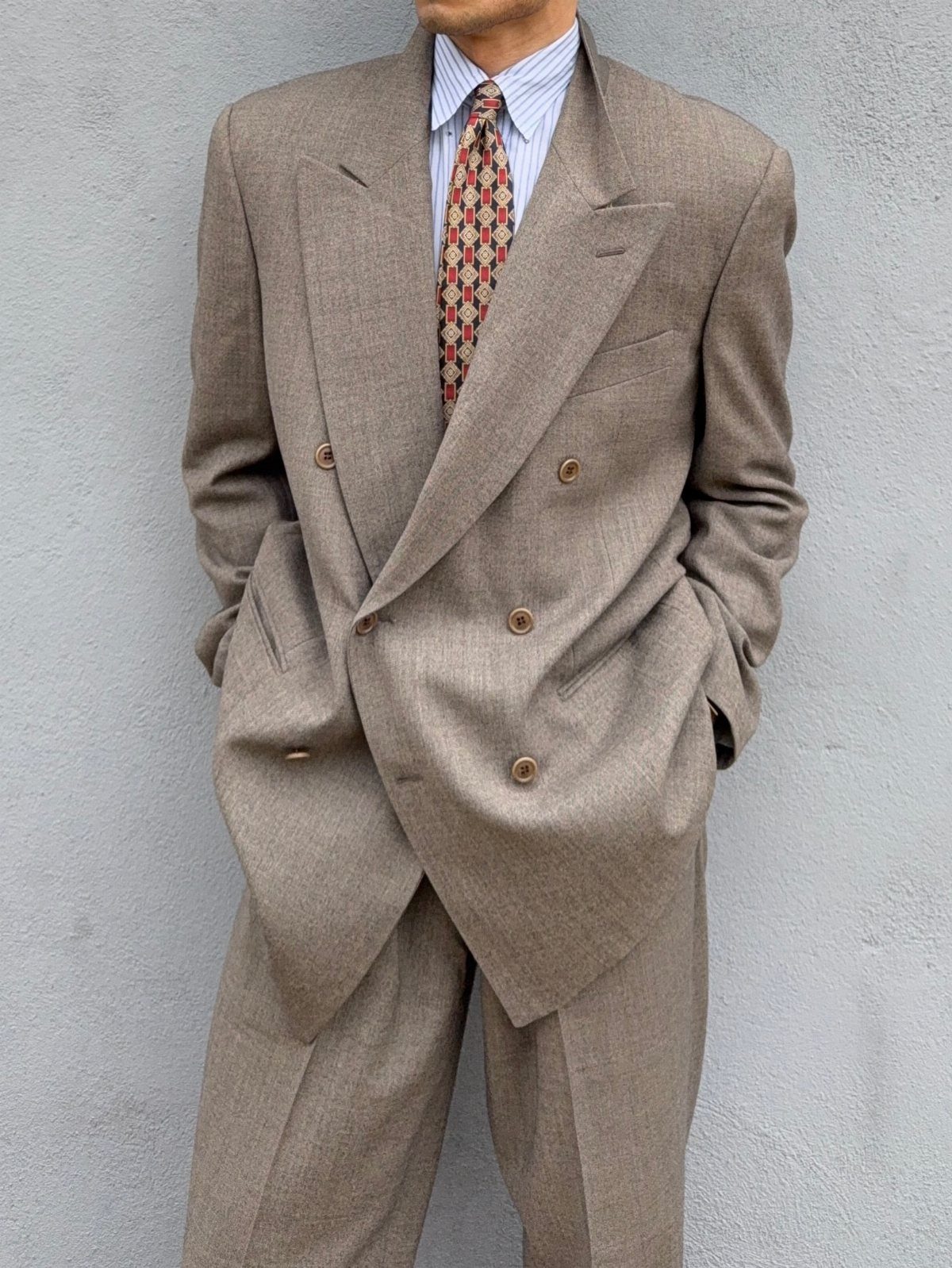
Wide lapels and a jacket that overlaps across the chest give the double-breasted suit its weight. An oversized cut in taupe or tan, as above, leans fully into the vintage look.
Keep the buttoned front closed when you stand, since that overlap is what the cut is built around. A striped shirt and a patterned tie add interest, but choose just one bold pattern if you’re new to this.
Oversized fits swallow slighter frames, so shorter men should test the shoulders and length before buying.
6. Long Overcoat with Fedora
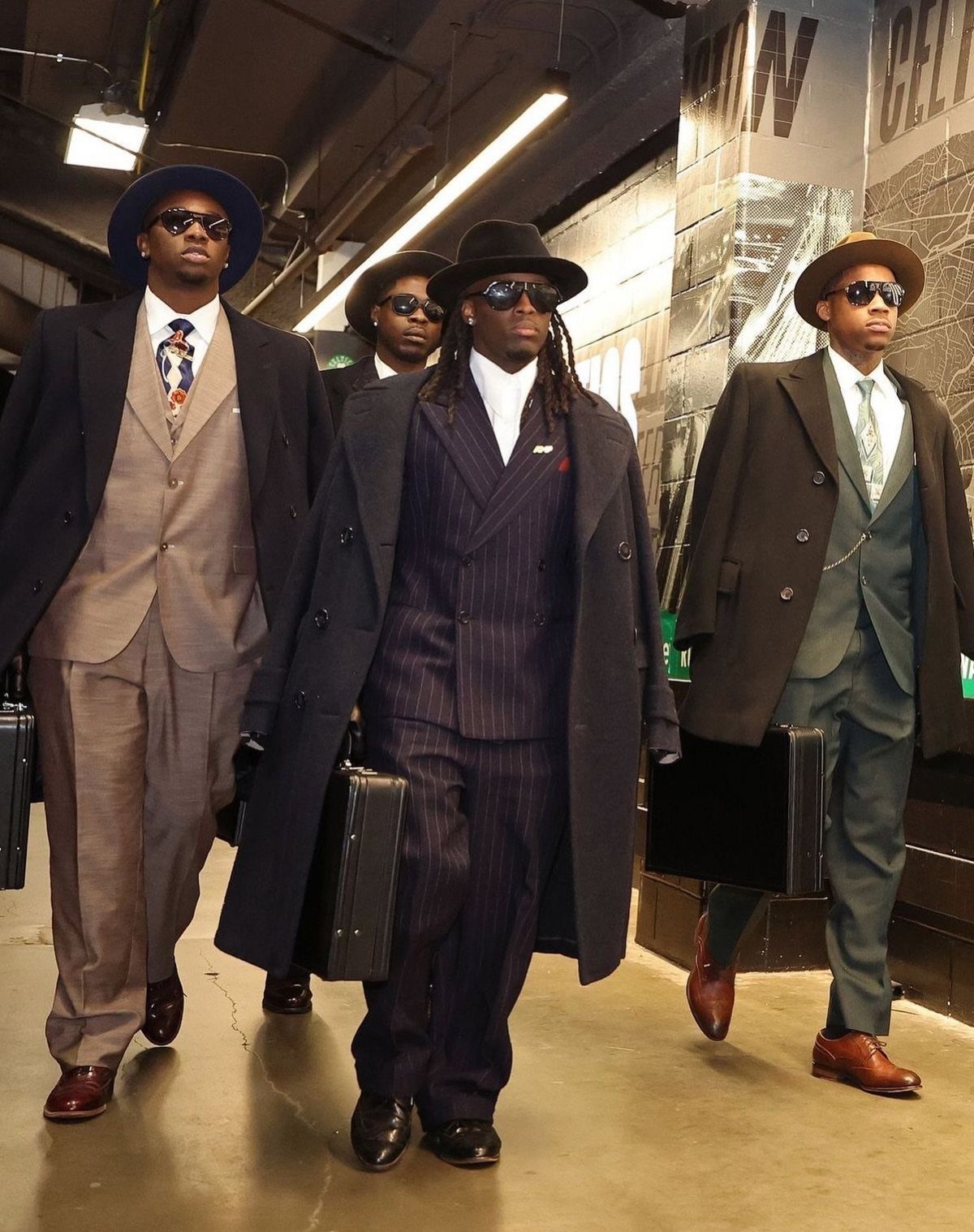
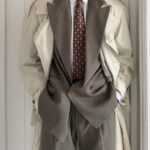
A long dark overcoat over a tailored suit, topped with a fedora, looks put together on a cold walk to work or an evening out, and it takes no more effort than pulling on a coat.
The coat covers the suit and the hat finishes the line.
Choose a coat that falls past the jacket hem so no suit fabric peeks out below it. Dark colors keep it flexible.
Add sunglasses and a briefcase, and the outfit reads as complete. I’d still pick this over a modern puffer, because a long overcoat keeps the whole outfit in one clean line from collar to hem.
Cultural Significance of Fashion
Clothing in Harlem carried an argument. Tailored suits and good hats said that Black men in the city saw themselves as dignified and prosperous, whatever the wider culture said about them.
That history changes how I’d wear these pieces.
A suit from this era is about presence and pride, so fit and condition matter more than labels. Pressed, brushed, and cut to your body, it does the work.
Money made the style possible. As Harlem grew, it filled with newspapers, theaters, and businesses, and skilled tailors made custom suits for the people who lived there.
If you want a personal touch, a single piece with real meaning to you beats a costume-shop accessory.
Influence of Jazz Culture
Jazz clubs were crowded, hot, and loud, and the clothes had to keep up. Men’s formalwear was meant to look sharp while the wearer danced and moved through a room.
For a modern night out, that means checking movement before you buy.
Raise your arms, sit down, and take a long step. If the jacket pulls across the back or the trousers grip your thighs, the fit is wrong for any evening that involves dancing.
Breathable fabrics help in a packed room. Wool in a lighter weight is more comfortable than a heavy flannel when the space fills up.
Dress for the event, but pick clothes that let you enjoy it. A suit that looks good standing still and restricts you on the dance floor misses what the era was about.
Historical Context
Harlem, in New York City, was the center of the Harlem Renaissance, which lasted from roughly 1920 through the 1930s.
Writers of the day called it the New Negro Movement, and it brought a burst of new literature, music, and visual art.
Knowing the dates helps you shop.
Pieces labeled "1920s style" and "1930s style" are not the same thing, so decide which decade you’re borrowing from before you start. Reading about the writers and musicians of the period will sharpen your eye for what they actually wore.
After World War I, large numbers of African Americans left the South for northern cities, and Harlem filled with painters, poets, musicians, and thinkers; how they dressed was part of how they introduced themselves to the world.
Treat the look with that respect. Wear it because you like it and understand where it came from.
Frequently Asked Questions
What fashion was popular during the Harlem Renaissance?
Men leaned on tailored suits, including three-piece and double-breasted cuts, plus zoot suits, fedoras, suspenders and black and white two-tone shoes.
Long dark overcoats worn over a suit were common for cold weather. In Harlem, a well-cut suit was a public statement: Black men wore them to show they were proud, successful, and fully in charge of how they were seen.
What are two-tone shoes and how do you wear them?
Spectator shoes, usually black and white, pull the eye straight down, so the shoes end up carrying the whole outfit.
Keep everything above them quiet: a solid suit in charcoal, navy, or another dark neutral works, and so do a light summer suit and cream trousers. Keep socks and belt simple.