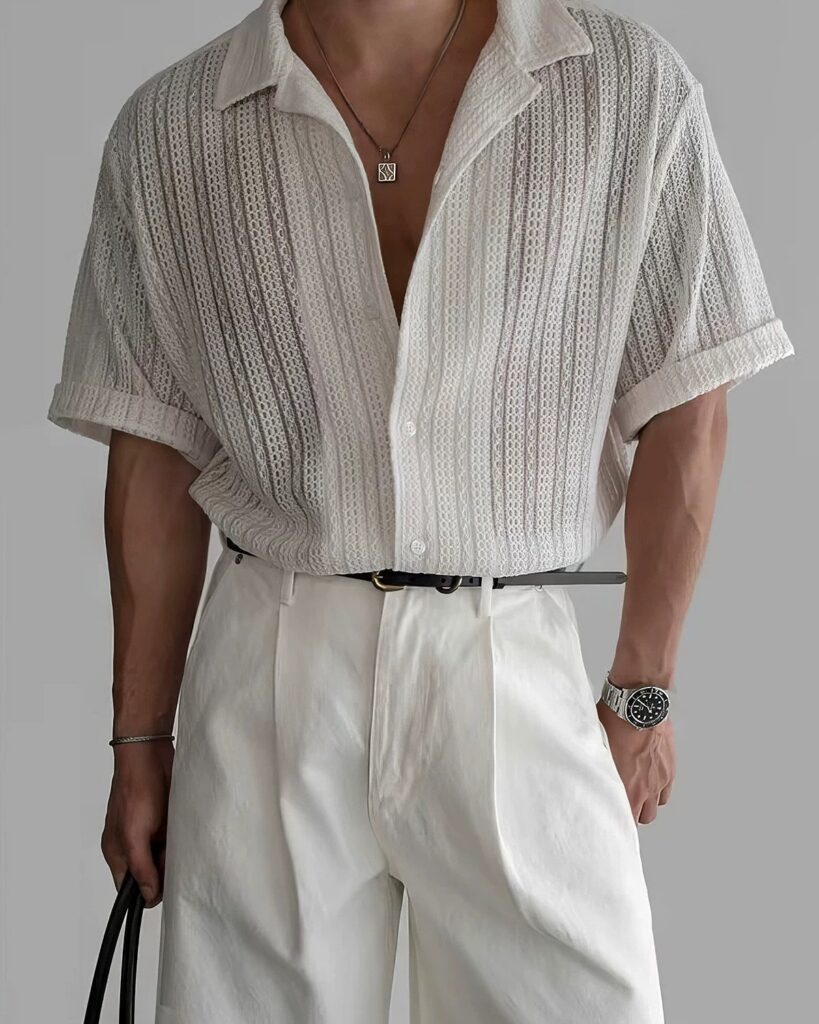
Korean menswear in this list runs from long coats and wide-leg trousers to tailored suits, and the piece that fits depends on where you’ll wear it: a workday with a dress code calls for the suit, while weekends and warm days leave room for ripped jeans or a graphic back-print tee.
The shared thread is tonal color and careful proportion, so a pair of wide-leg trousers or a long coat does more than any loud piece. Individuality comes from fabric and fit.
1. Long Coats
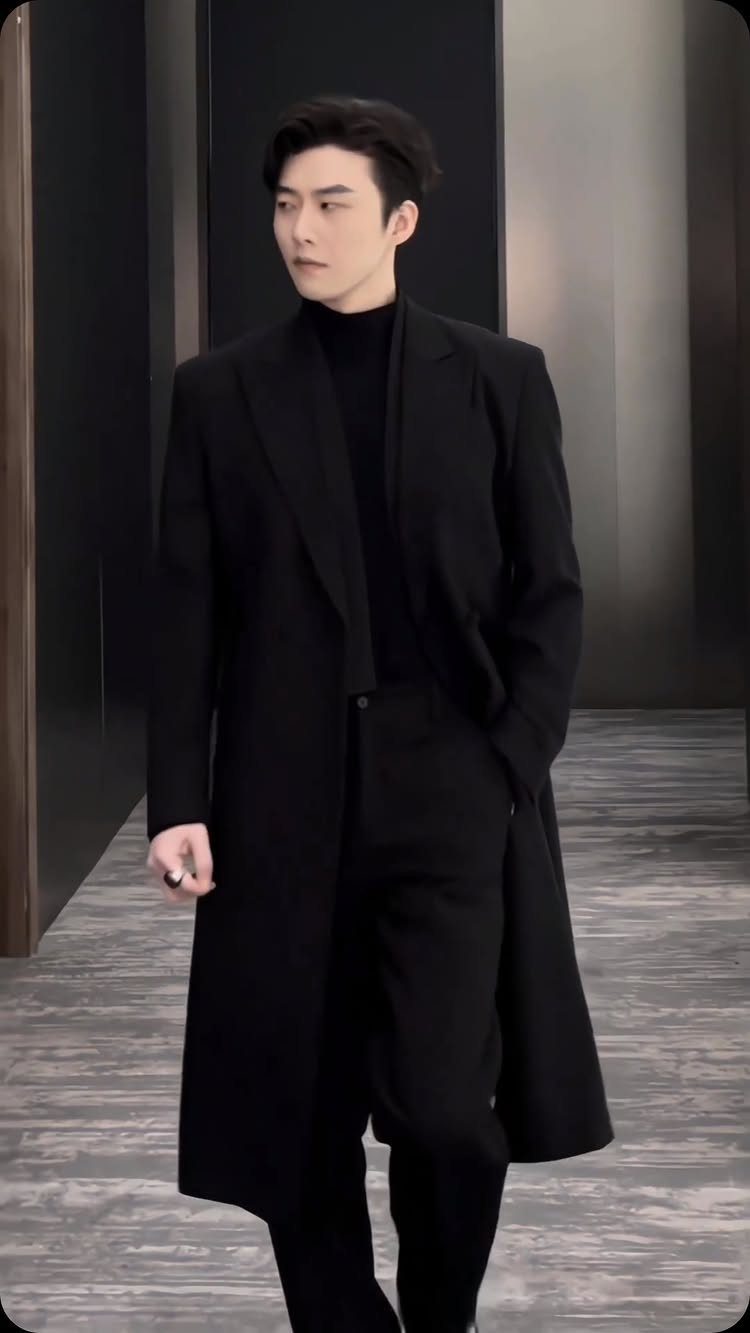
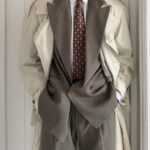
A long coat over a turtleneck and trousers in one color does more work than almost any other outfit I know. The black coat falls well past the hips, so the whole look becomes a single vertical line.
Keep everything under it simple: a fine-knit turtleneck, straight trousers, nothing with a logo. The coat carries the outfit, and busy layers underneath fight it.
Black is the easiest version to repeat, though dark gray or navy would work the same way.
2. Wide-Leg Trousers
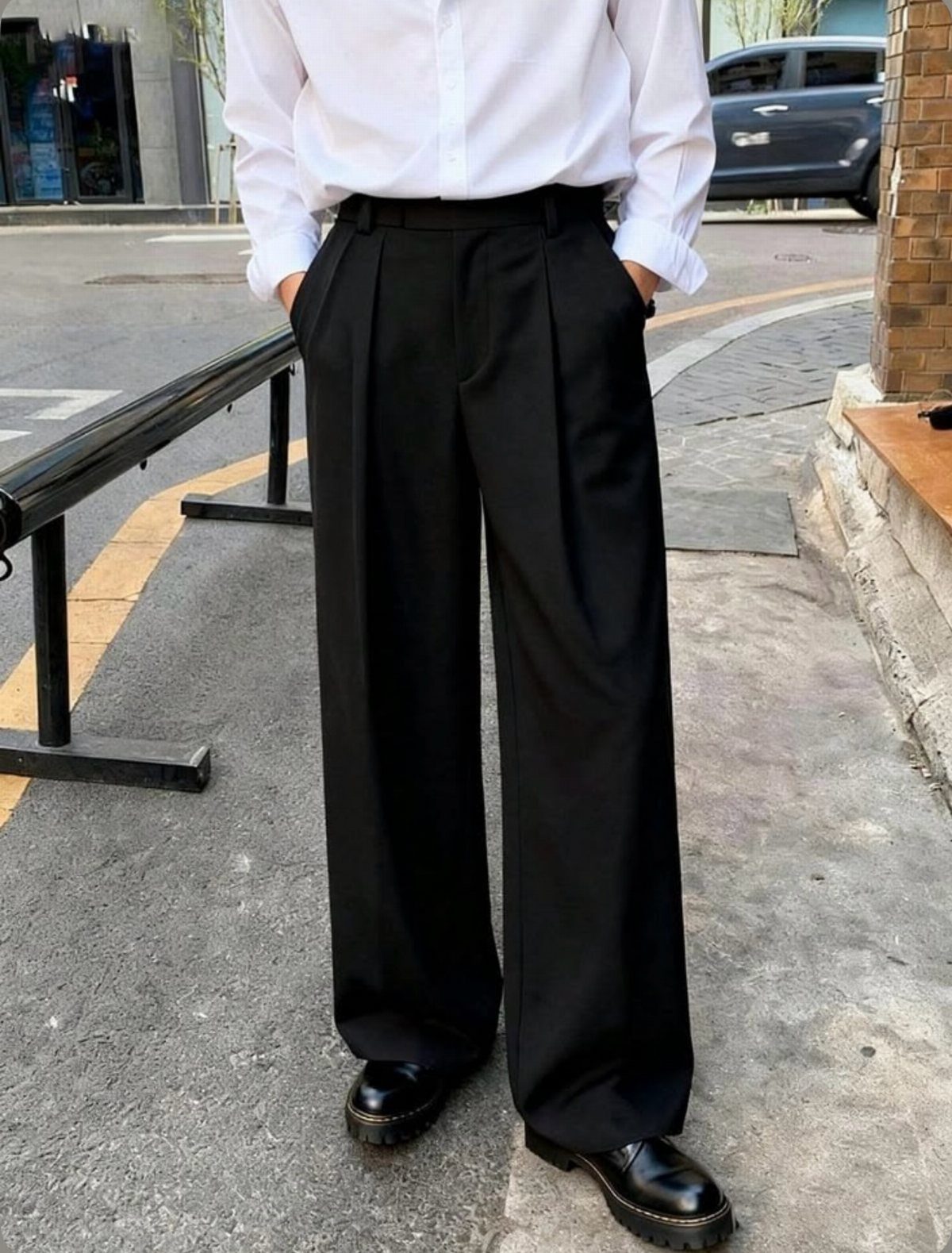
Wide-leg trousers are the piece I would buy first if you want the Korean look. Pleats at the waist and a full leg give you drape that slim pants can’t, and the shape reads as relaxed without looking sloppy.
Wide-leg trousers work best with a plain white collared shirt and a chunky leather shoe, which give the width of the leg something solid to balance against. Let the hem land on the shoe with a slight break.
Black is the most forgiving color, and it hides wrinkles better than lighter shades.
3. Casual Fashion
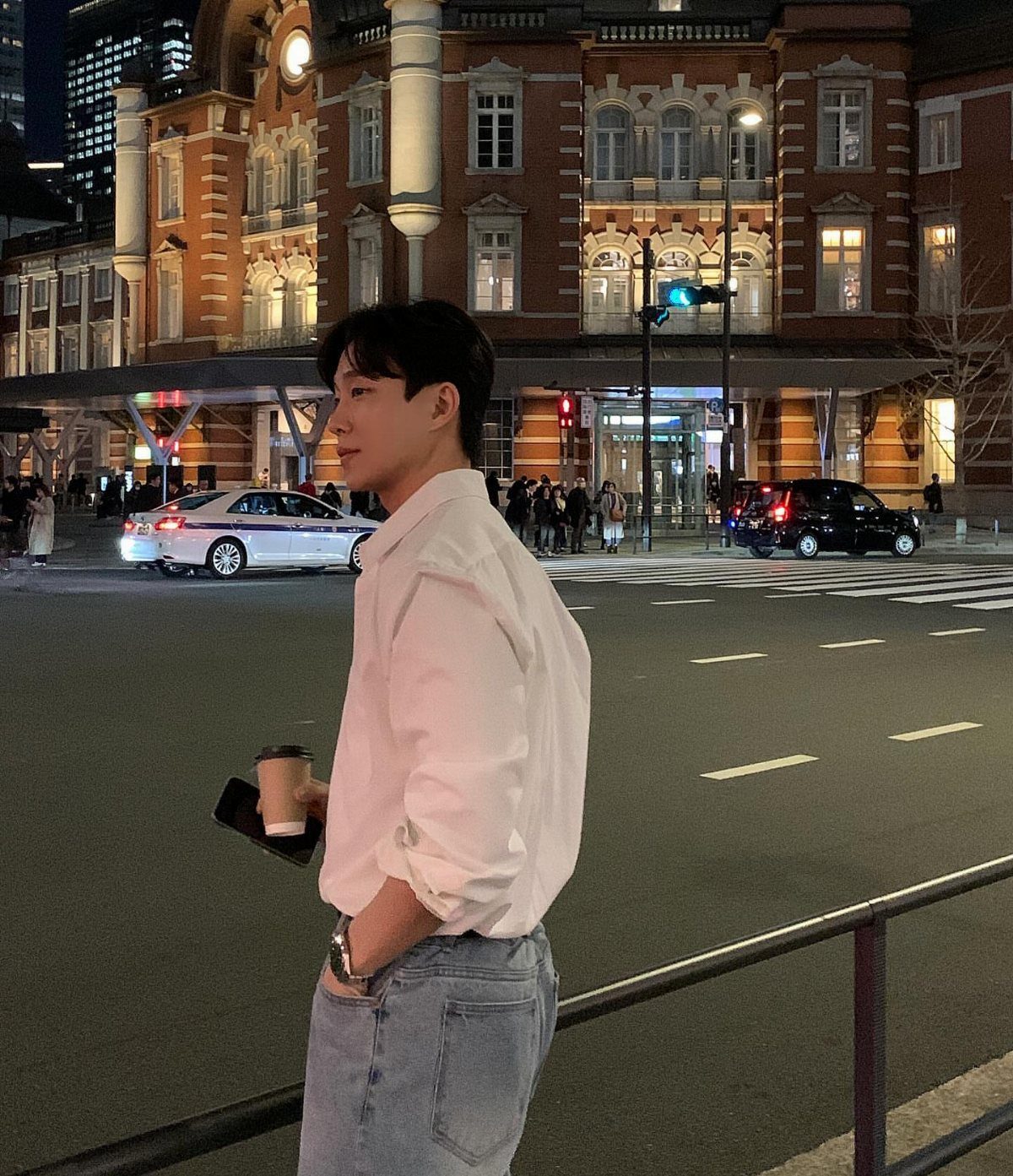
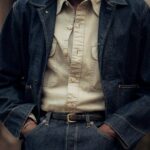
White button-down, light-wash jeans, and nothing else: that is the whole formula, and it holds up because each piece is clean. Tucking the shirt in sharpens the waist and keeps a basic outfit from looking like laundry day.
Press the shirt, and choose jeans free of fading patches or heavy distressing. Plain pieces only look deliberate when they are crisp.
A coffee in one hand and a relaxed stance finish it. I would skip a belt with logos here, since the simplicity is the point.
4. Clean Sneakers
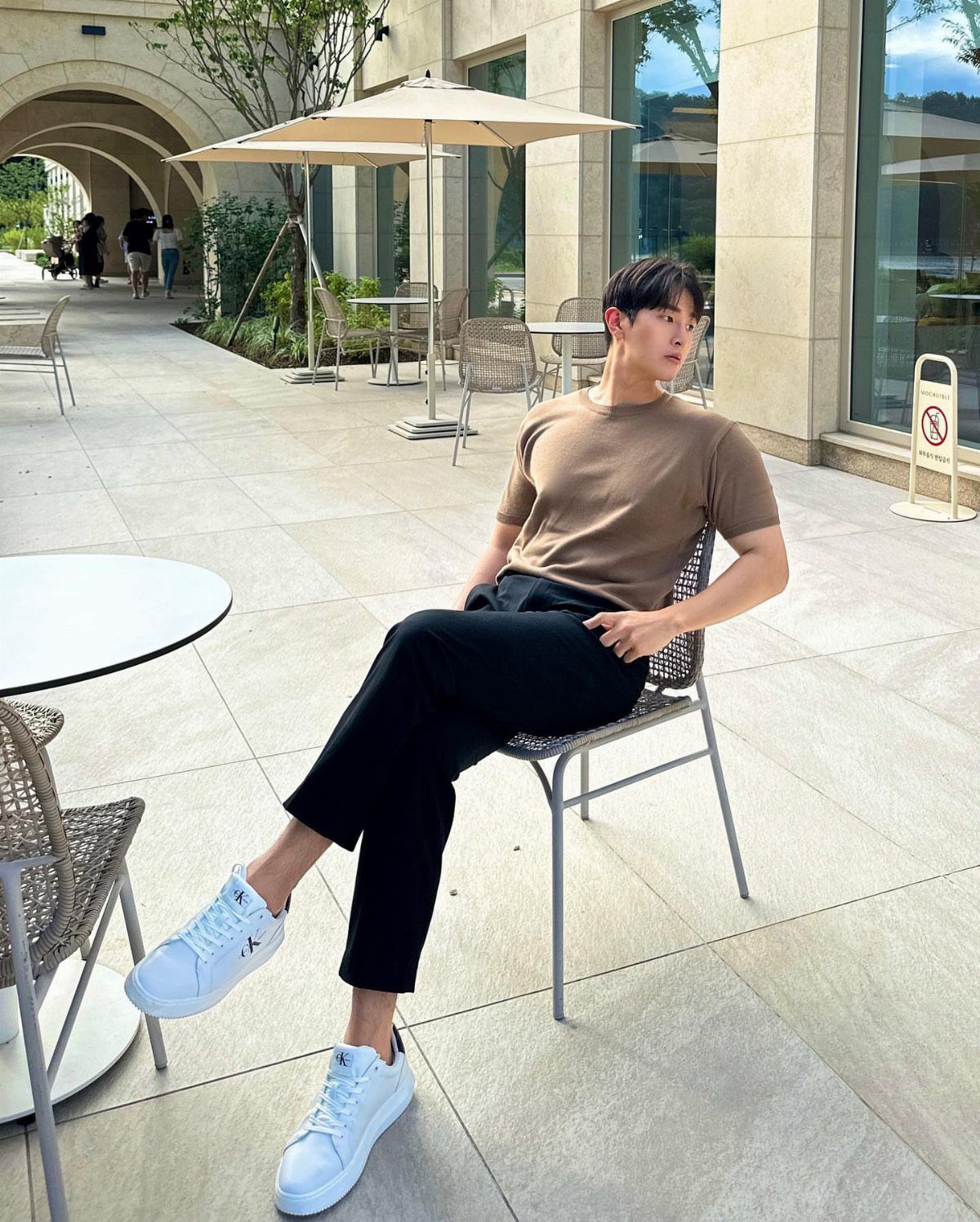
Bright white sneakers are the cheapest way to make a plain outfit look finished. Against cropped black trousers they pull the eye down and show off the ankle, which keeps the look light.
Choose a low profile in smooth leather or a close equivalent, in white or off-white, with a clean sole. Wipe them down often, because a scuffed white shoe undoes everything above it.
Cropped trousers matter as much as the shoes: the hem should stop above the ankle so the sneaker is visible.
5. Tailored Suits
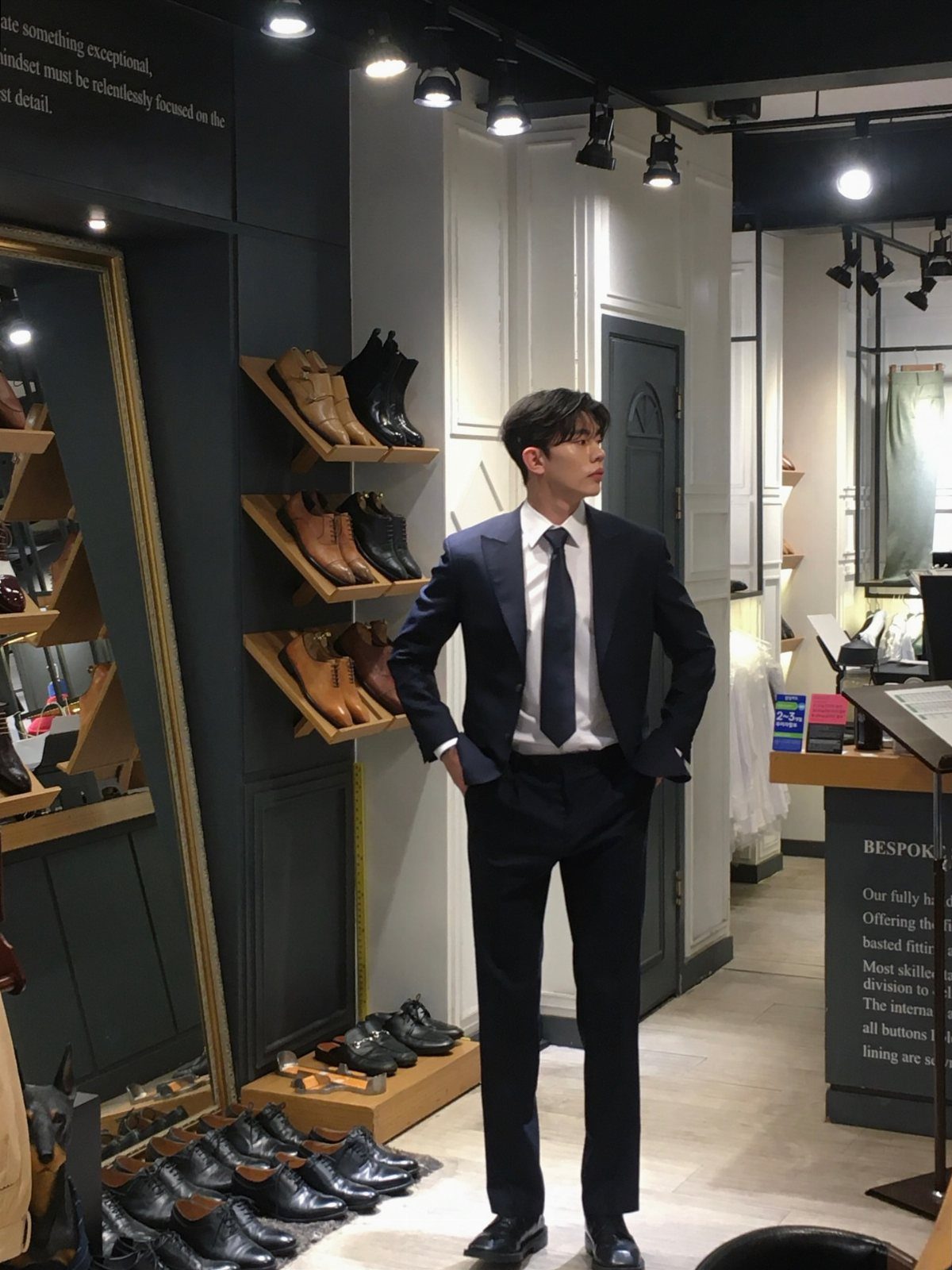
A dark navy suit, cut close, is the safest office choice, and the tailoring is what you are paying for. Shoulders should end where yours do, and the jacket should show a defined waist without pulling at the button.
Wear it with a white shirt and a plain tie, then let the shoes do the talking. Leather dress shoes in black or dark brown keep it sharp.
Budget for alterations on top of the suit itself. A mid-priced suit fitted well beats an expensive one left off the rack.
6. Ripped Jeans
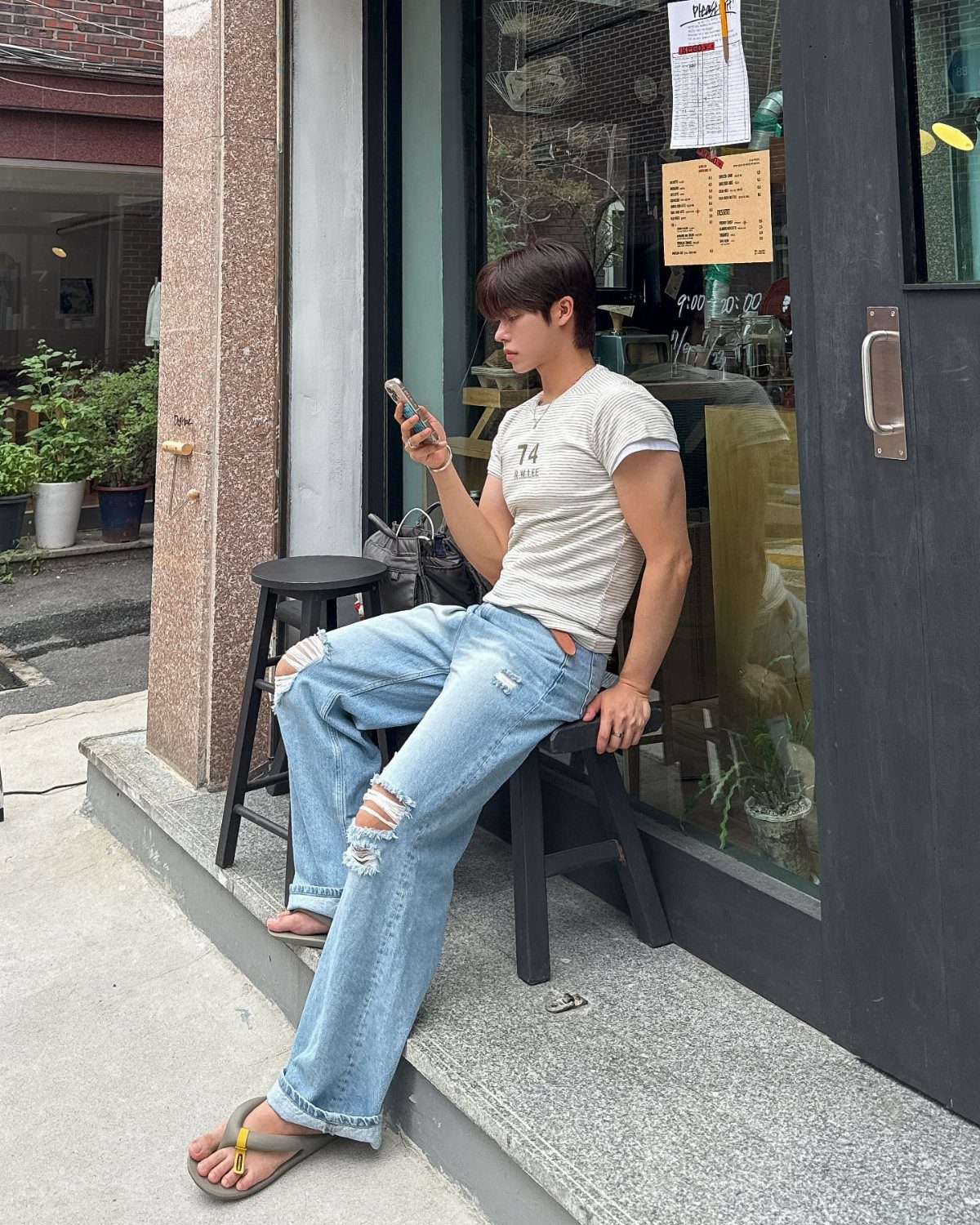
Light-wash ripped jeans work best when everything else stays quiet. A graphic or striped tee and a pair of sandals keep the look easy, and the rips supply the attitude on their own.
Look for small, controlled tears at the knee rather than shredded legs. Big gaps catch on things and get worse fast.
I would keep this for weekends and warm days. It is a casual outfit, and it does not belong anywhere with a dress code.
7. Tucked-In Polo and White Trousers
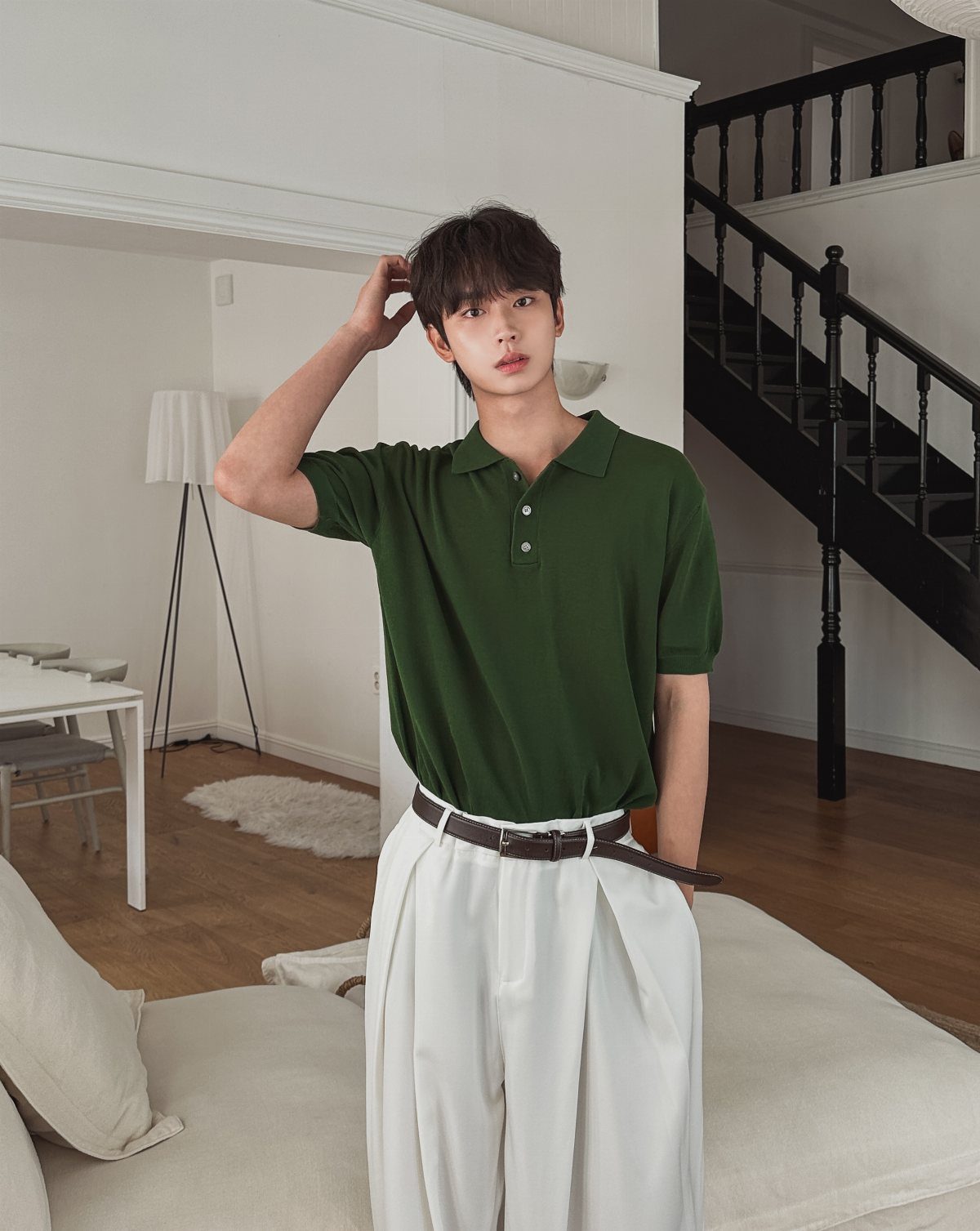
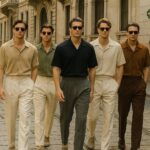
A dark green polo tucked into white trousers is a cleaner look than it has any right to be.
The tuck and a leather belt give the high waist a clear line, and the green stops all that white from going bland.
Choose a polo with a flat, structured collar and a body that lies smooth when tucked. White trousers need a full pleat so they hang straight rather than cling.
Keep the belt simple, in a color that matches your shoes.
8. Open Shirt Over T-Shirt
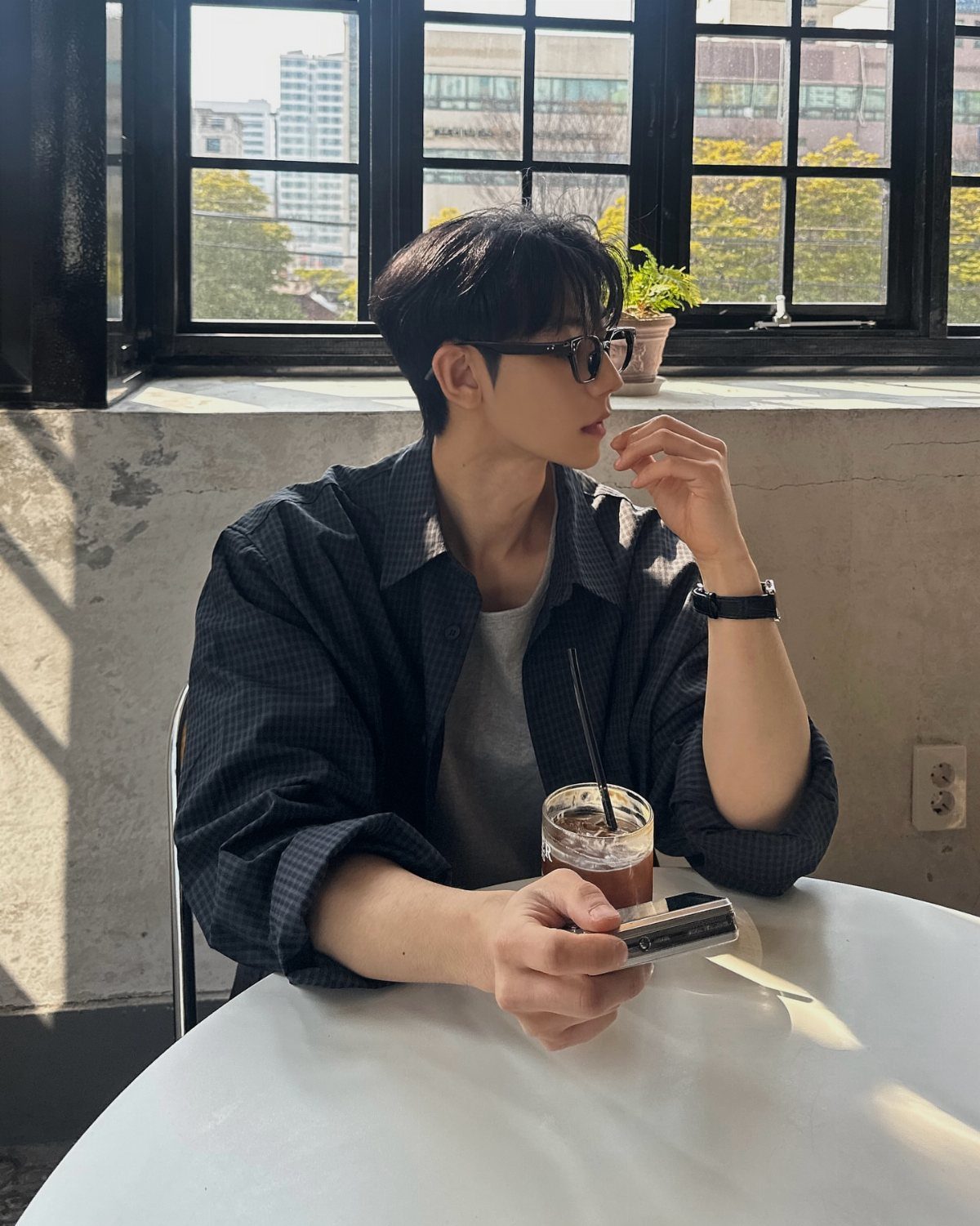
An unbuttoned patterned shirt over a plain gray tee is the lowest-effort layer I know. The shirt acts as a light jacket, and the tee underneath keeps the pattern from taking over.
A dark check or stripe works well because the tee gives the eye a quiet place to rest. Leave every button undone, with the shirt hanging straight down.
Sleeves rolled once or twice make it feel less stiff in warm weather.
9. All-Black Streetwear
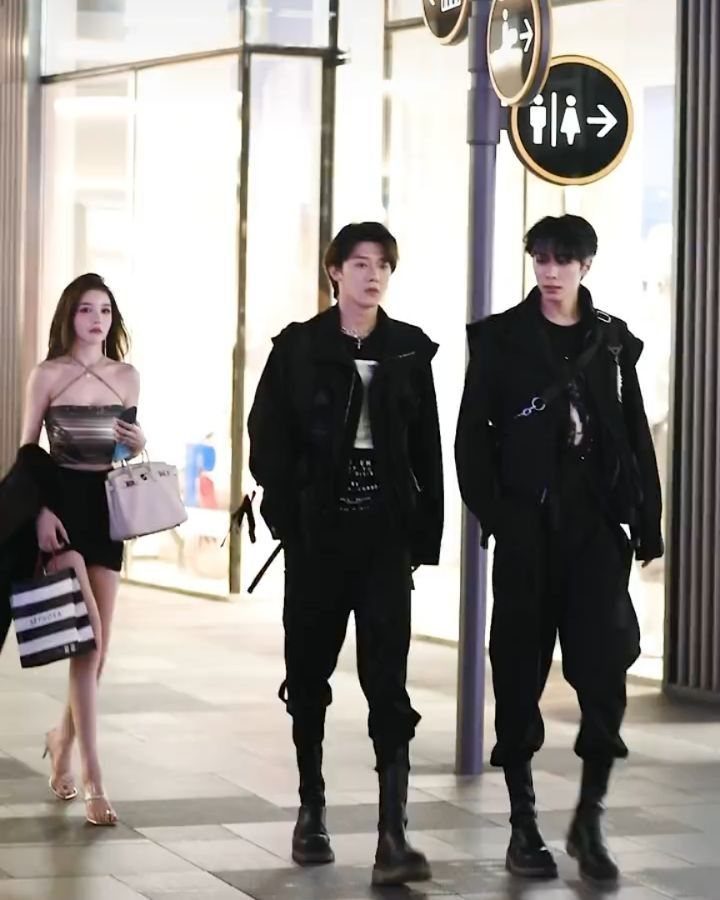
Black on black only looks intentional when the shapes differ. A jacket, relaxed trousers and tall boots each add their own outline, so the outfit reads as layered rather than flat.
Mix textures to keep it from turning into one dark block: a matte jacket against leather boots does the job. Let the trousers fall loose over the boot shaft.
I like this best after dark, when the whole look sinks into the street.
10. High-Waisted Pleated Trousers Outfit
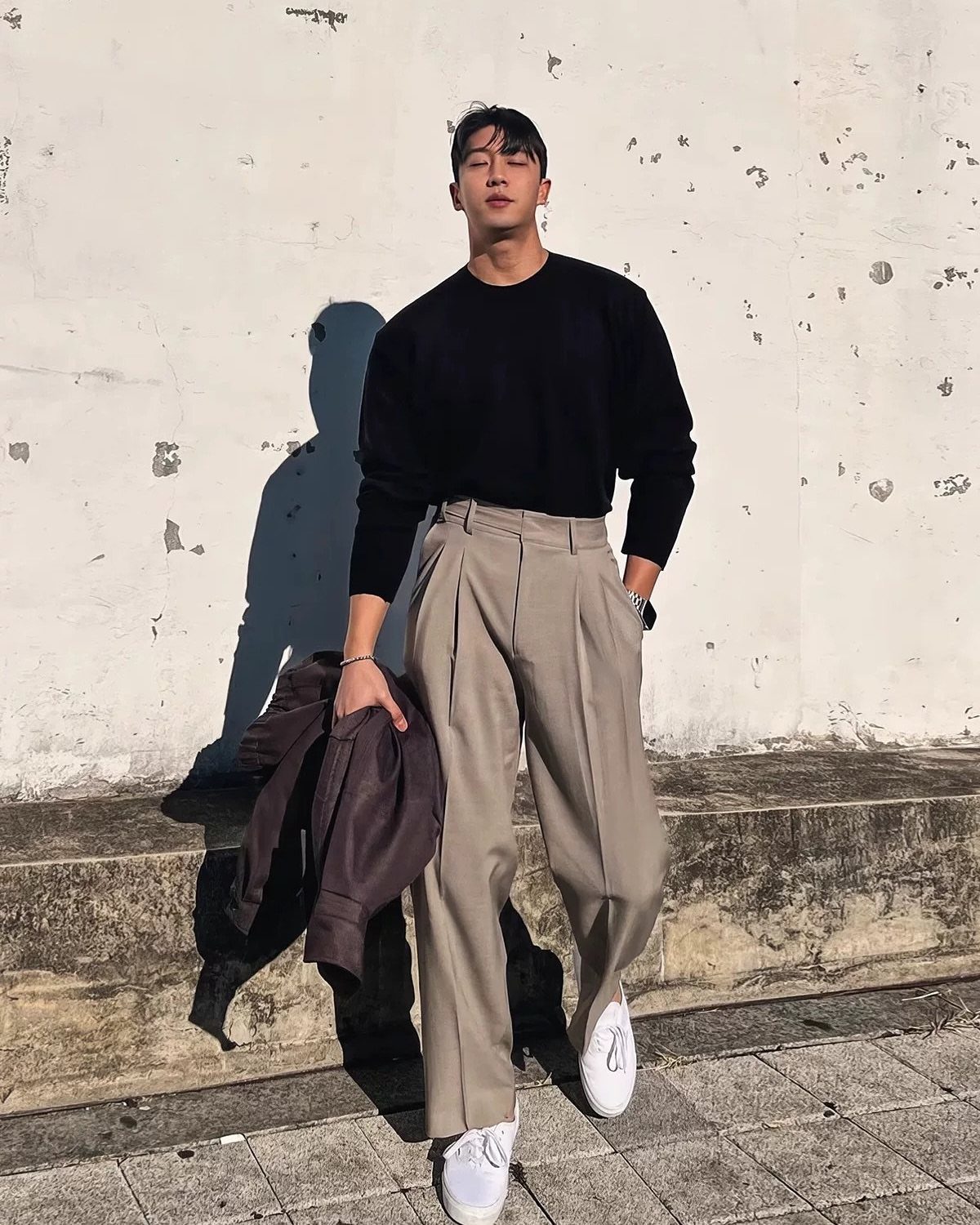
Beige pleated trousers with a high rise are the best partner I know for a black long-sleeve top.
Tuck the top in, and the waist sits high, which lengthens the legs and gives the dark and light halves a clear dividing line.
White sneakers keep the bottom of the outfit light. Carry a dark jacket over your arm for cooler evenings.
Pick trousers in a soft, matte fabric, since a shiny one makes the beige look cheap.
11. Embroidered Button-Down and White Trousers
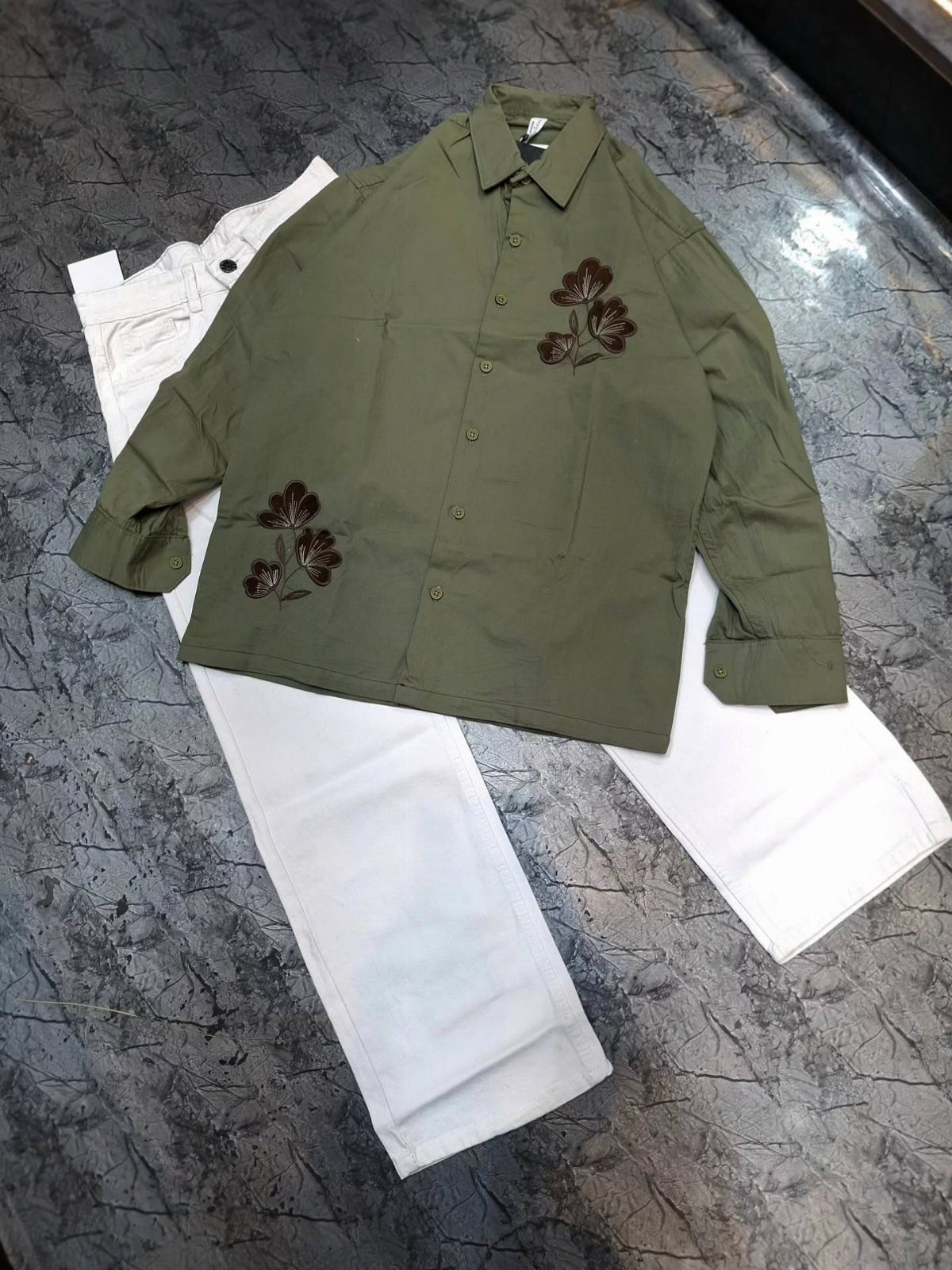
An olive shirt with floral embroidery turns plain white trousers into a complete outfit. The stitching supplies the detail, so nothing else needs to be loud.
Wear the shirt untucked or tucked, but keep the trousers crisp and pressed, because white shows every crease. Simple shoes in white or brown are enough.
Embroidery is delicate, so wash the shirt gently and iron it inside out.
12. Graphic Back-Print Tee
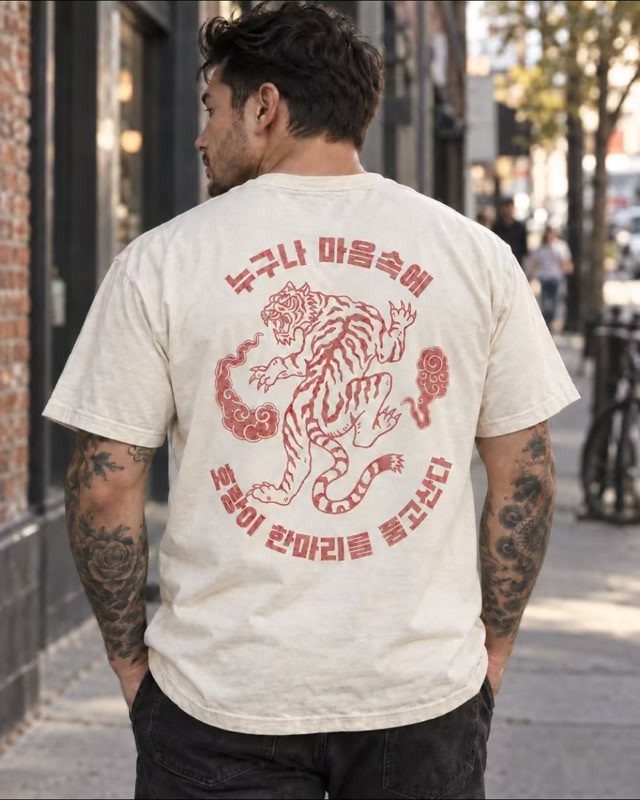
Turn your back on the camera and the tee does everything. An oversized cream shirt with a red tiger and Korean lettering across the shoulders is a statement piece worn from behind.
Because the print sits on the back, keep the front plain and the trousers simple. Cream makes the red read sharper than white would.
Check the print’s size before buying: it should span the shoulder blades, not sit low like a patch.
Impact of K-pop on Fashion
Korean menswear reached a wide audience through the Korean Wave, when K-pop idols and Seoul street style put a soft, tonal, carefully proportioned look in front of people far from Seoul.
K-dramas pushed it further, so the look now shows up on racks well outside Korea.
Korean style leans on soft, smooth fabrics, easy shapes, and a tight color range where the shades sit right next to each other. Copy that, not any single outfit, and the look will hold up on its own.
I’d also say the appeal is practical. Individuality here comes from proportion and fabric rather than loud pieces, so a man can follow it without looking like he’s in costume.
How to Incorporate Korean Fashion
Begin with plain basics in neutral colors, and swap one pair of slim pants for a wider cut.
Because the palette is muted and the cuts are loose, this style slides into a normal American workday without anyone pinning a label on it.
Plain tees, jeans and a hoodie are enough for a first round, since they mix with almost everything. Once those work, add layers by pairing different textures, such as a sweater over a button-down.
Accessories come last. Pick a single loud item, whether sneakers, a bag, or a hat, and let everything else stay quiet.
Odds are nobody will say your outfit looks Korean-inspired. What they’ll register is a clean, current outfit with good proportions, and that’s the result I’m after.
Difference from Japanese Fashion
Korean and Japanese menswear get lumped together, but they pull in different directions. Korean style favors clean, smooth textures, tonal palettes, and fits that are relaxed but controlled.
Japanese style leans toward workwear textures, oversized proportions and earth-tone vintage influences. Japanese style tends to push texture and experiment more, while the Korean version stays softer and more polished.
If you want an outfit that reads sharp with little effort, I’d go Korean.
If you like rougher fabrics and a heavier, lived-in feel, the Japanese direction suits you better. Pick one lane per outfit, because mixing smooth, polished pieces with heavy workwear tends to muddy both.
Frequently Asked Questions
Where can I find Korean style clothes?
For affordable pieces from small local labels, I’d start with the street shops around Hongdae, Edae and Myeongdong in Seoul.
Their designer picks tend to be European, like Lemaire and Acne Studios, or Japanese, like Comme des Garçons and Visvim.
How to style Korean pants for men?
Wide-leg trousers with a neutral top and clean sneakers are the simplest version. Beige, off-white and charcoal all work, though black is the easiest because it hides wrinkles.
What are traditional Korean outfits?
The traditional outfit is the hanbok, which pairs a short jacket called a jeogori with wide trousers called baji. A long overcoat, the durumagi, can be added for formal occasions.
What are some popular Korean fashion brands for men?
Ader Error and 99%IS come up most often.
Ader Error is known for bold graphics and streetwear-inspired designs. Stylenanda leans toward colors and playful patterns.
How is Korean fashion different from Japanese fashion?
Korean style tends to look softer and more finished, built on smooth fabrics, tonal color and fits that are loose without looking sloppy. Japanese style goes further on texture, with workwear fabrics, oversized shapes and earth-toned vintage references.